- 6min
- 1548
- 0
Contents
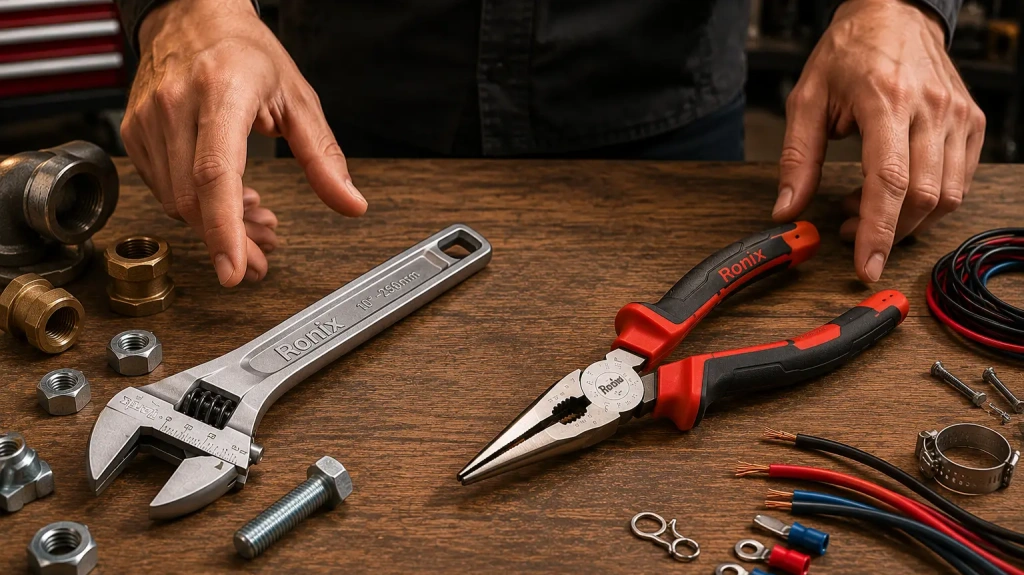
Imagine you’re working on your bike, fixing a loose chair, or trying to tighten a bolt at home. You open your toolbox and see a wrench and a pair of pliers. They both look useful, but which one is the right choice? Many beginners might get confused here!
The point is, it’s not about choosing the better option between wrench vs pliers; it’s about which tool fits the job. In general, a wrench is made for tightening and loosening nuts and bolts, while pliers are made for gripping, bending, pulling, or cutting. In this article, we’ll compare pliers vs wrench in a simple way and help you know exactly when to use each one and for what jobs.
Experience Soaring Sales with Top-Notch Wholesale Wrench
Quick Comparison: Wrench vs Pliers
| Feature | Wrench | Pliers |
|---|---|---|
| Main purpose | Tightening and loosening nuts, bolts, and fittings | Gripping, bending, pulling, twisting, or cutting |
| How it works | Applies turning force (torque) | Applies gripping pressure |
| Best for | Fasteners with fixed shapes and sizes | Objects with different shapes and sizes |
| Jaw design | Usually fixed or adjustable to fit fasteners | Open-and-close jaws for gripping |
| Common jobs | Plumbing, automotive repair, furniture assembly | Electrical work, DIY repairs, wire handling |
| Common types | Adjustable, combination, socket, pipe wrench | Combination, long nose, locking, cutting pliers |
| Main advantage | Strong and controlled turning force | Flexible grip and versatility |
| Not ideal for | Gripping irregular objects | Tightening bolts with precision |
| Risk if misused | Wrong size may slip or damage fasteners | Can round off bolt heads or slip under force |
What’s the difference between a wrench and pliers?
So, what really separates these two basic tools? Both wrench and pliers look similar at first glance as they handle parts that are hard to move by hand. However, what makes each tool useful in its own way is its design. Pliers have jaws that open and close to grab different materials, while a wrench is shaped to fit around fasteners and apply turning force. Let’s take a closer look at each.
Wrench
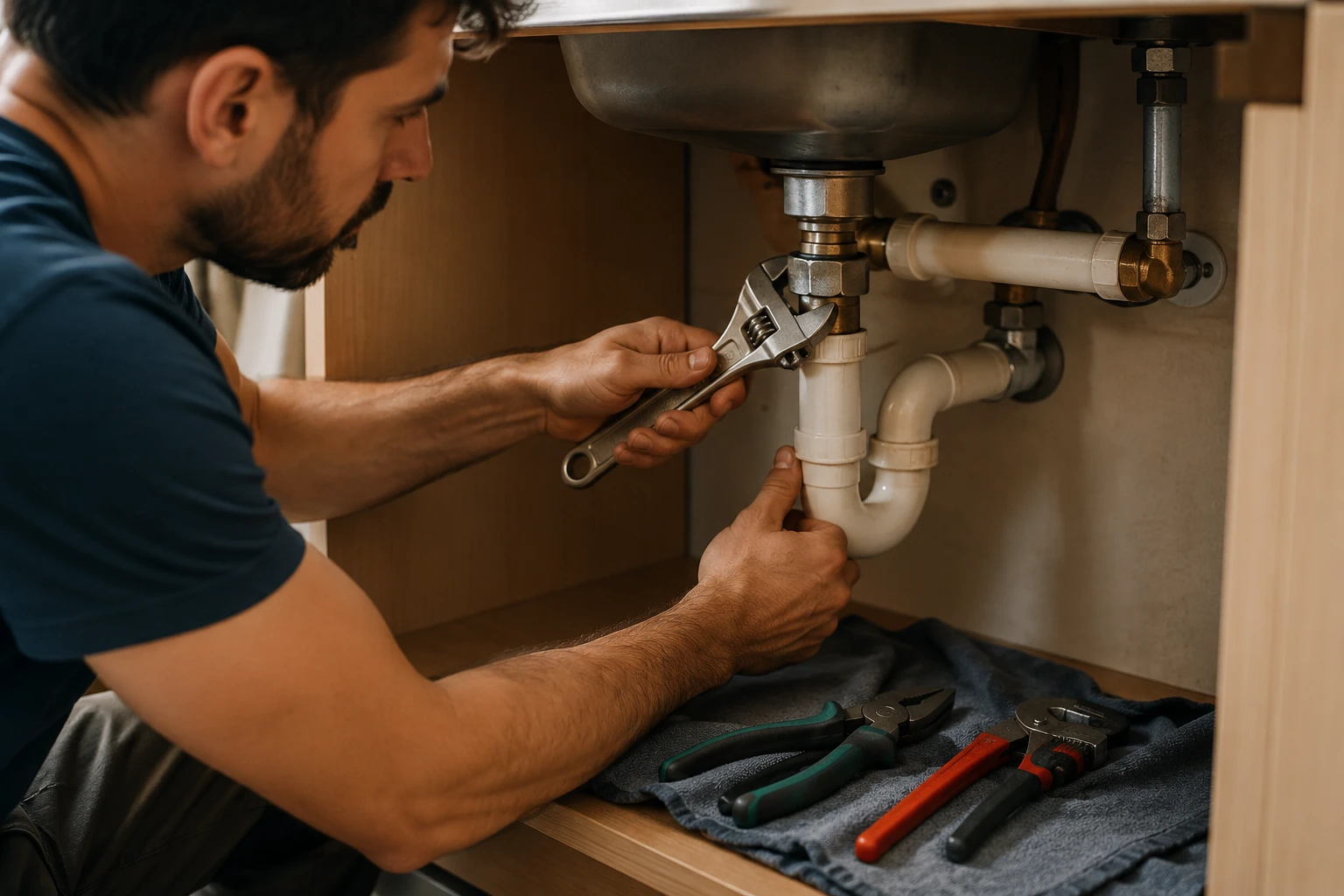
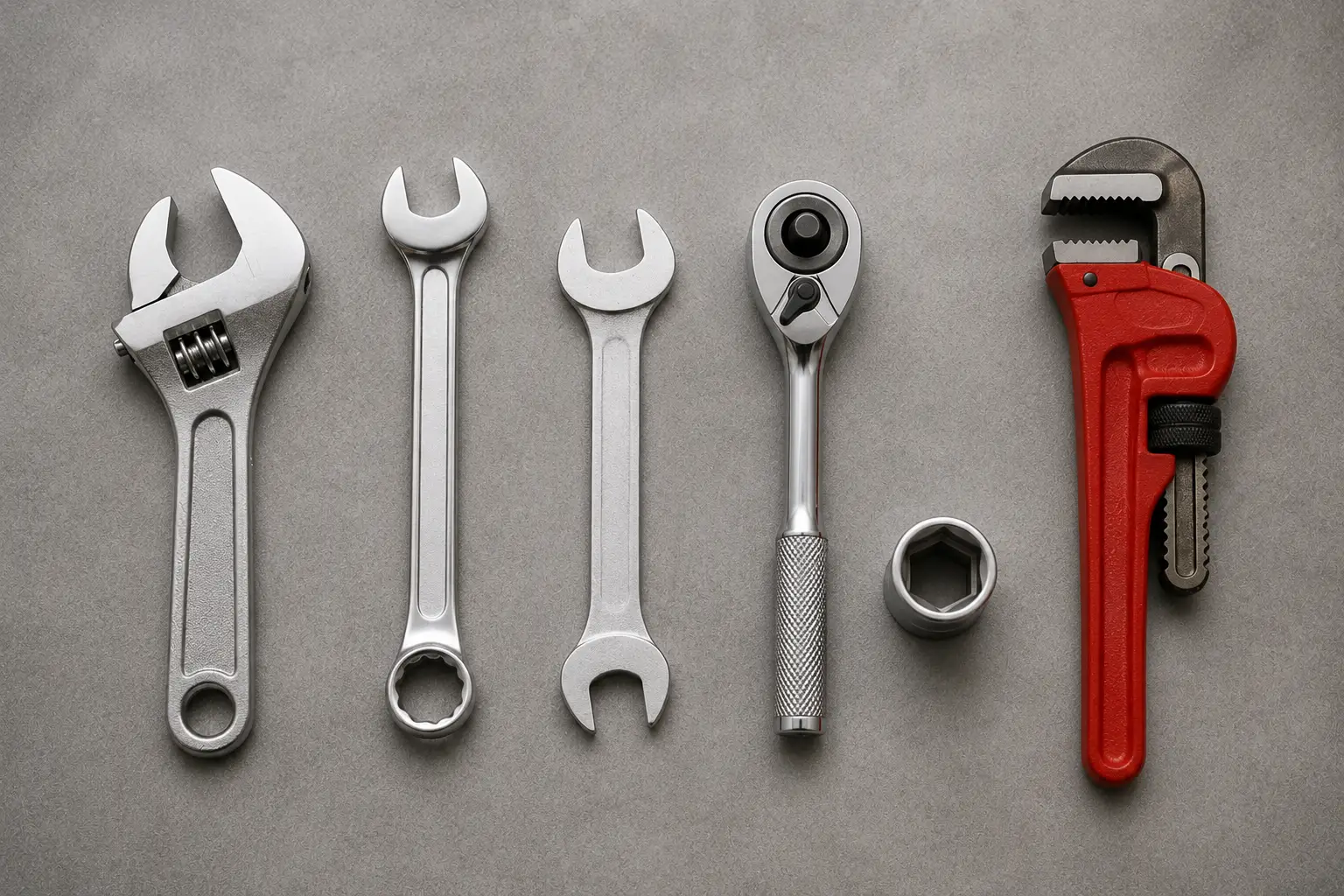
A wrench is built to fit around nuts, bolts, and fittings. Its design helps apply turning force with better control and less slipping.
- Designed mainly for tightening and loosening fasteners
- Usually fits a specific nut or bolt size
- Provides stronger torque and turning power
- Helps reduce damage to fastener edges
- Common types include adjustable, combination, open-end, socket, torque, and pipe wrenches

Pliers
Pliers work more like an extended grip for your hands. Their jaws open and close to hold, bend, twist, pull, or cut materials.
- Designed mainly for gripping and holding objects
- Can work with different shapes and sizes
- Offers flexibility rather than high torque
- Useful for bending, twisting, and cutting tasks
- Common types include combination, long nose, needle-nose, locking, slip-joint, and cutting pliers

When to Use Pliers
First, a simple rule:
Use pliers when the object doesn’t have a fixed shape for a wrench to fit around.
Generally, you can think of pliers as your extra-strong hand for gripping, bending, holding, twisting, pulling, and cutting. Here are some common uses of pliers:
1- Gripping: Holding objects firmly, pulling out pins or nails, and gripping small or irregular parts.
2- Bending and straightening: Bending wires, nails, sheet metal, or small parts into shape.
3- Cutting: Cutting wires, thin nails, and similar materials with cutting pliers or wire cutters.
4- Stripping and splicing wires: Removing wire insulation and helping join wires together, especially in electrical work.
When to Use a Wrench
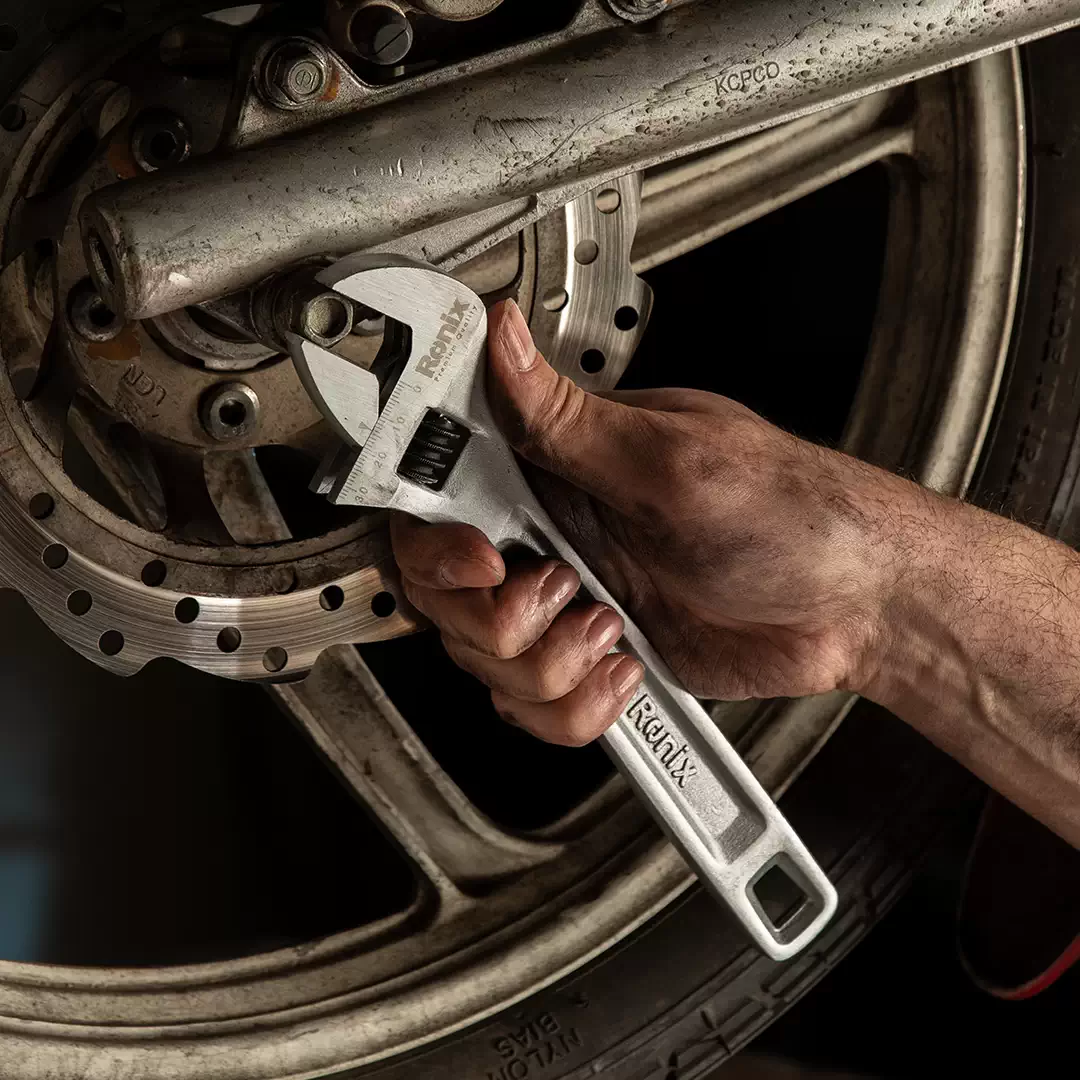
Now, let’s look at the other side of the wrench vs pliers comparison. A wrench is designed to fit around the fastener and apply steady turning force instead of gripping from any angle like pliers. Let’s take a look at some common uses of a wrench:
1-Tightening fasteners: For bolts, nuts, and fittings that need a secure hold.
2- Loosening fasteners: For removing stuck or tight nuts and bolts.
3- Working with pipes and fittings: Especially with pipe wrenches or adjustable wrenches.
4- Mechanical repairs: For bikes, cars, machines, and furniture assembly.
What Jobs Require Pliers?
Electricians, DIY users, mechanics, craft workers, and repairers all use pliers where their hands need a little extra help. Imagine trying to hold a tiny wire, pull out a small nail, or bend a thin piece of metal with your fingers. It would be difficult, and sometimes even unsafe. That’s where pliers come in.
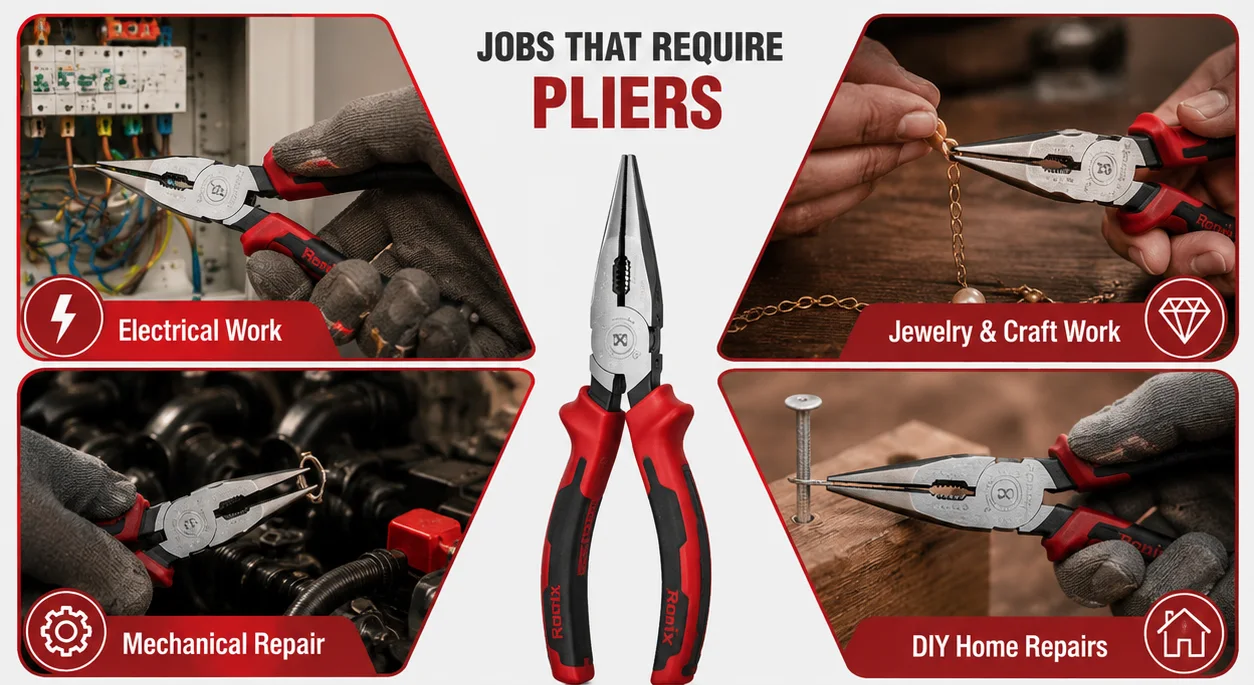
In simple words, if the job involves small parts, wires, or objects that are hard to grab by hand, pliers are usually the right tool.
What Jobs Require a Wrench?
Mechanics, plumbers, construction workers, and DIY users often use wrenches because they provide strong, controlled turning force. Think about fixing a bike, assembling furniture, repairing a car, or working on a pipe. In these jobs, you need a tool that can turn fasteners firmly and safely.

So, in the wrench vs pliers comparison, a wrench is the better choice for jobs that need tightening, loosening, or adjusting fasteners.
Can You Use Pliers Instead of a Wrench?
In some situations, Yes! When a wrench is not nearby you might use pliers to loosen or tighten a bolt. However, this is not always the best idea and may work for quick fixes. Pliers do not grip fasteners as securely as a wrench as they can slip, damage the edges, and make the job harder.
So, in the pliers vs wrench comparison, pliers can sometimes replace a wrench in emergencies, but for safer and more accurate results, a wrench is usually the better choice.
Safety Tips for Using Wrenches and Pliers
No matter which tool you use, safety should always come first. Wrenches and pliers may look simple, but using them the wrong way can damage your project or even cause injuries. A few simple habits can make your work safer and easier.
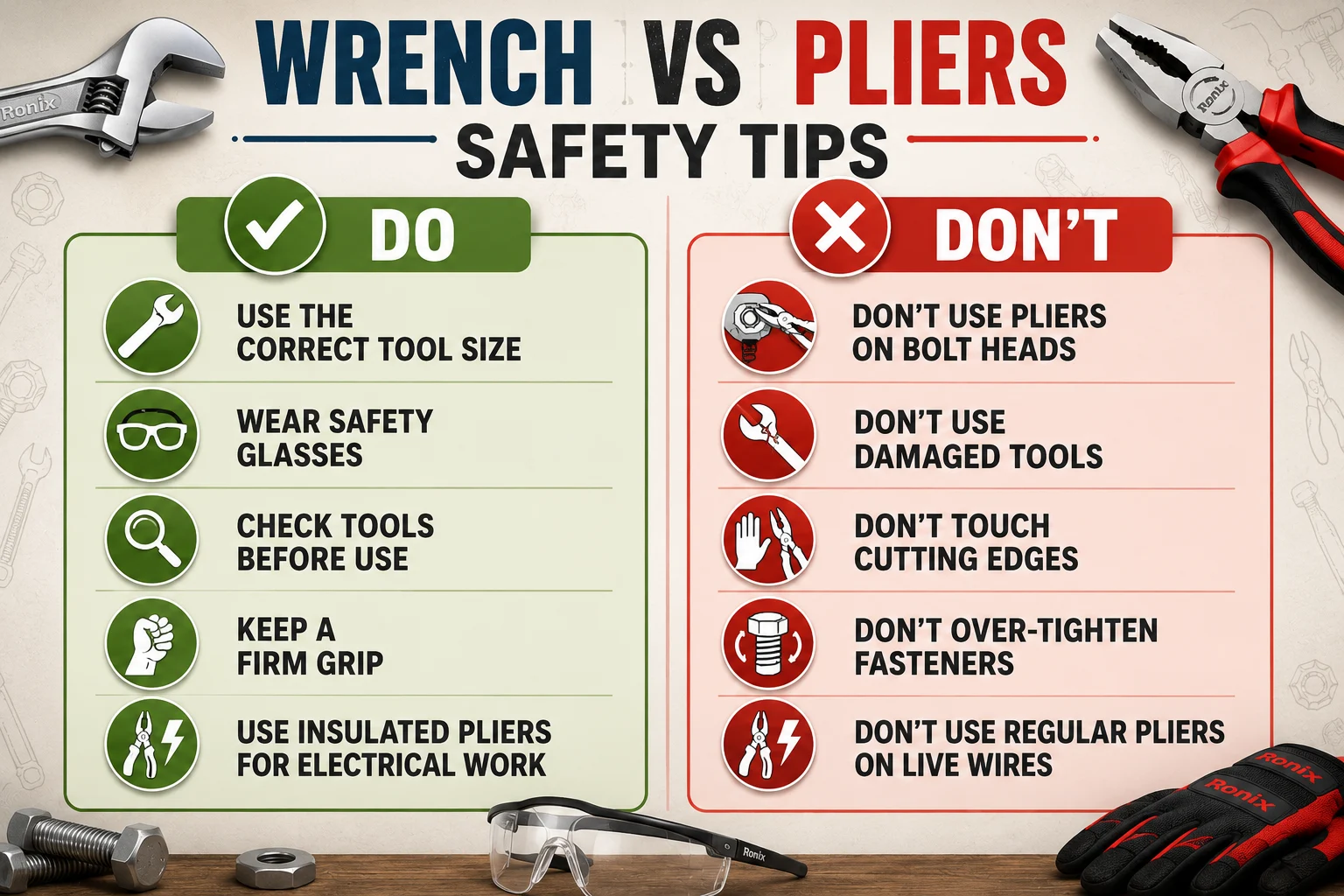
Using the right tool correctly not only protects you, but also helps your tools last longer and perform better.
Conclusion
At first, a wrench and pliers may seem similar, but once you start using them, the difference becomes clear. A wrench is designed for tightening and loosening nuts, bolts, and fittings, while pliers are better for gripping, bending, pulling, and cutting different materials.
The good news is that you do not have to choose one over the other. Most toolboxes need both. Understanding the difference between wrench vs pliers simply helps you work more safely, easily, and efficiently. When you use the right tool for the right job, every repair becomes smoother and more professional.

Scott
4 June 2026