- 14min
- 427
- 0
Contents
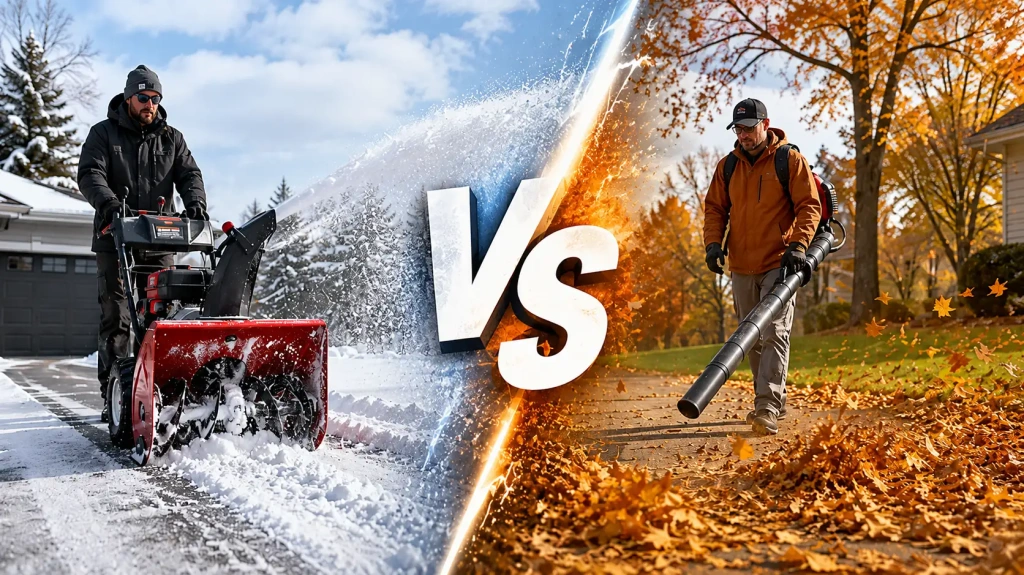
So, if it’s winter and you open the door and suddenly find yourself standing in front of piles of snow, thinking about using your leaf blower to move the snow, wait a second and hold tight. Also, if you’re thinking about buying one to use in every season, again, hold on for a minute. In this comparison of snow blower vs leaf blower, we’ll talk about the key differences, their uses, and which one you actually need.
What Is a Leaf Blower?
The easiest way to explain a leaf blower is to think of it as a vacuum cleaner working in reverse. Instead of pulling air in, it pushes air out with force.
A leaf blower uses a motor to send a powerful stream of air through a nozzle. This makes it easy to move leaves, grass clippings, dust, dirt, and other small debris into one neat pile. In simple terms, it is like holding a strong wind machine in your hands.
in a leaf blower vs snow blower comparison, the leaf blower is usually the lighter and simpler machine because it depends on airflow rather than a snow-throwing mechanism.
What Can You Use It For?
A leaf blower is one of those tools that may seem optional at first, but once you have one in your garage, you will probably find many ways to use it.
You can use it to:
- Clear fallen leaves from lawns, driveways, patios, and sidewalks
- Blow away grass clippings after mowing
- Remove light dirt, dust, and small debris
- Dry a wet car, bicycle, patio, or outdoor furniture, which many people do not realize
- Clear light snow or powdery frost
- Gather debris into piles for easier collection
- Clean workshops, garages, and outdoor equipment
As I said before, a simple tool with lots of uses!
When it comes to leaf blower vs snow, the leaf blower can only handle a very thin layer of light, dry, and powdery snow.
Supercharge your sales with a trusted Leaf Blowers supplier by your side
Types of Leaf Blowers
We live in a modern world where technology changes very quickly. New types of leaf blowers are constantly being introduced with different features and technologies. However, the main and most popular types are:
- Corded leaf blowers
- Cordless, battery-powered leaf blowers
- Gas-powered leaf blowers
There are also other options, such as backpack leaf blowers and walk-behind leaf blowers, which are designed for different uses.
What Is a Snow Blower?
Even thinking about using a shovel in the freezing winter weather can feel overwhelming. A snow blower is a powerful machine that scoops up snow and throws it out of the way.
It uses a motor to turn an auger or impeller that collects snow from the ground and pushes it through a chute. The chute then throws the snow to the side, helping you clear an area much faster than you could with a shovel.
What Can You Use It For?
A snow blower may only be useful during winter, but its value becomes very clear when you open your door and find so much snow outside that you can barely walk or move your car.
Believe me, when that happens, you will be very glad to have a snow blower in your garage.
You can use it to:
- Clear snow from driveways
- Remove snow from sidewalks and walkways
- Clear patios and other outdoor areas
- Create a path from your home to the street, garage, or shed
- Remove snow from around parked vehicles
- Clear entrances and access points
- Handle large amounts of snow more quickly than with a shovel
- Reduce the physical effort needed for winter snow removal
In a leaf blower vs snow blower situation, the snow blower is the better choice when the snow is deep, wet, heavy, or packed.
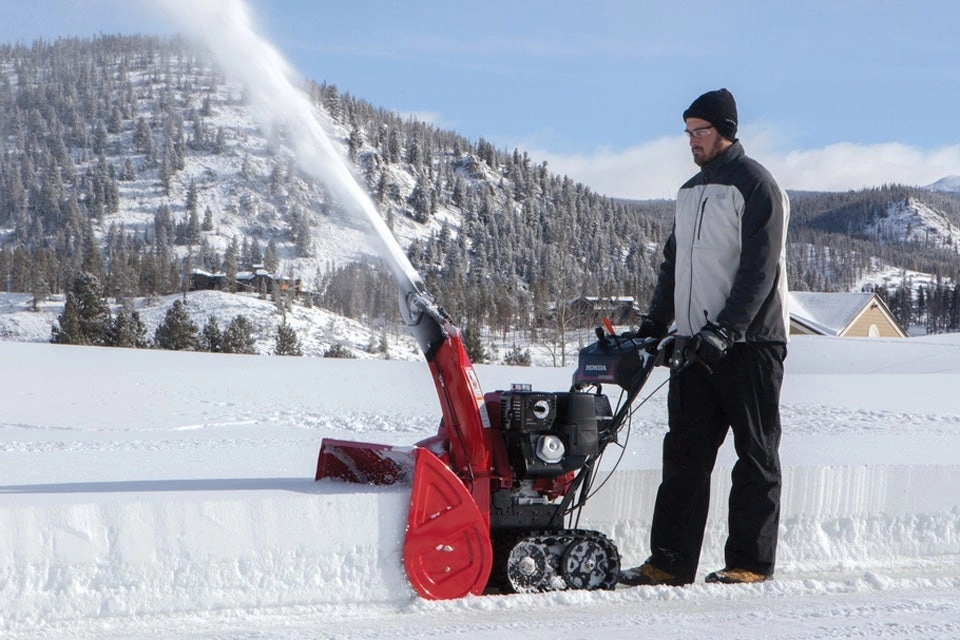
Types of Snow Blowers
Snow blowers are commonly divided into three main categories:
- Single-stage snow blowers
- Two-stage snow blowers
- Three-stage snow blowers
Single-stage models are usually suitable for lighter snow and smaller areas. Two-stage and three-stage models are more powerful and are designed for deeper snow, larger driveways, and more demanding winter conditions.
Snow Blower vs Leaf Blower – Key Differences
Now, let’s compare these two popular and useful tools to see which one you should use, where you should use it, and under what conditions each one performs best.
There are several important factors to consider when comparing a leaf blower vs snow blower. I have put them together below to help us reach a clear and practical conclusion.
So, let’s compare them one by one, section by section.
Power and Performance
When comparing a snow blower vs leaf blower, power and performance are very important because these two machines are designed to move completely different materials.
A leaf blower does not need to lift or collect anything heavy. Its main job is to create a strong flow of air that pushes leaves, dust and other light debris out of the way.
The performance of a leaf blower is usually measured by two main factors:
• CFM, which shows how much air the blower can move in one minute
• MPH, which shows how fast the air comes out of the nozzle
A higher CFM helps move larger piles of leaves, while a higher MPH helps loosen wet leaves, dirt, and debris that may be stuck to the ground.
A snow blower works in a very different way. Instead of simply pushing air, it must scoop up, lift, and throw snow through a chute. Because snow can be heavy, wet, and compacted, snow blowers usually need more motor power and stronger mechanical parts.
Snow blower performance is commonly judged by:
• Clearing width
• Clearing depth
• Throwing distance
• The amount and type of snow it can handle
• How quickly it can clear a large area
In simple terms, a leaf blower’s performance depends on how much air it can move and how fast it can move it. A snow blower’s performance depends on how much snow it can collect, process, and throw out of the way.
So, even if a leaf blower feels powerful in your hands, it does not mean it can replace a snow blower. One is built to move air, while the other is built to move heavy snow.
Design and Structure
At first glance, a snow blower vs leaf blower may both look like machines that push things out of the way, but their internal design and body structure are very different.
A leaf blower has a relatively simple design. It uses a motor and a fan to pull air in and push it out through a narrow nozzle. There are no blades touching the ground, and the machine does not collect the material it moves. It simply creates a strong stream of air and directs it where you want.
Because of this simple mechanism, leaf blowers are usually smaller, lighter, and easier to carry. Many models are handheld, while larger ones may be worn as backpacks or pushed on wheels.
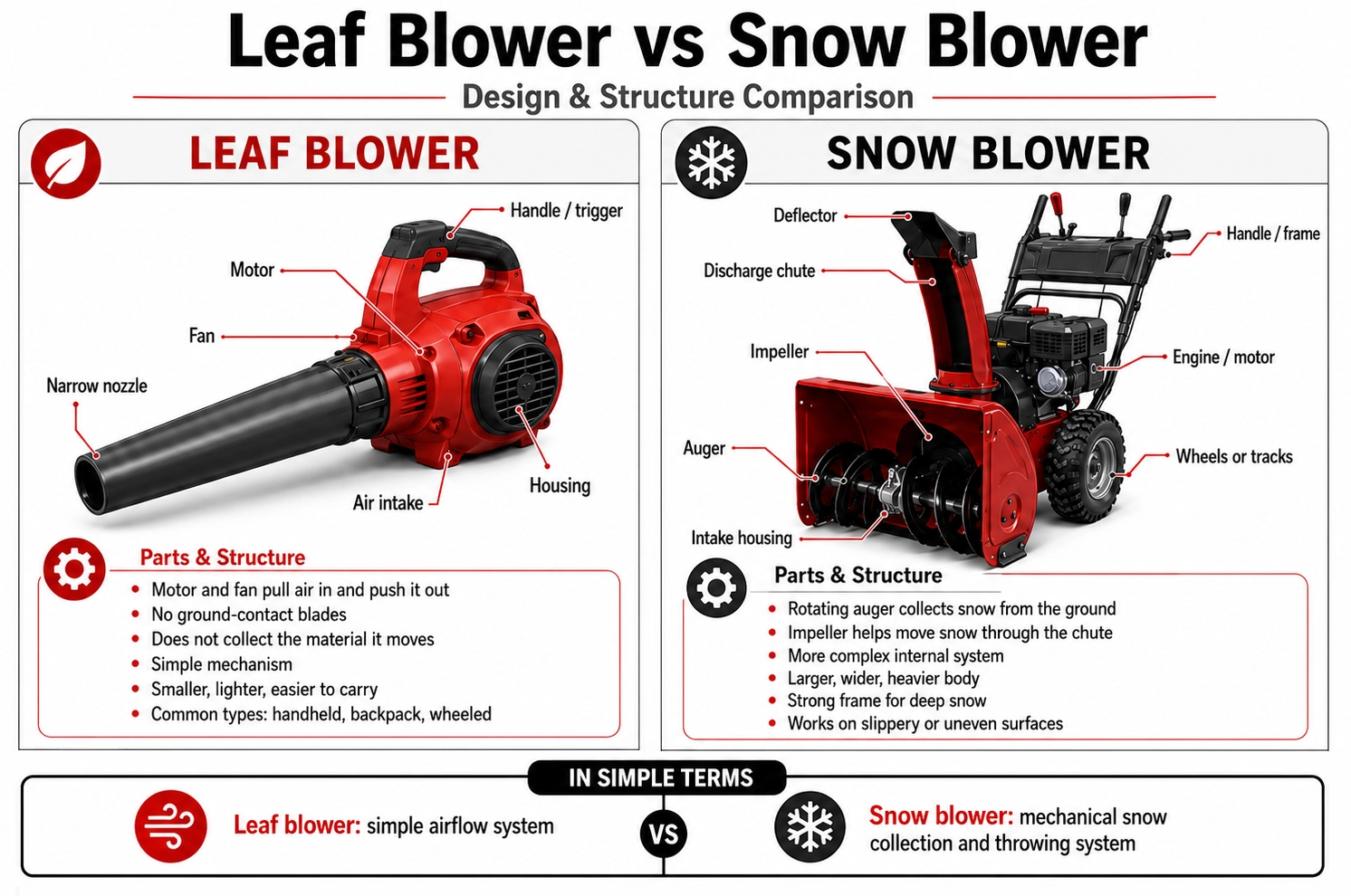
A snow blower has a much more complex internal system. It uses rotating blades, called an auger, to collect snow from the ground. In two-stage and three-stage models, an impeller then helps move the snow through the chute and throw it away from the cleared area.
The body of a snow blower is also larger, wider, and heavier. It needs a strong frame, large wheels or tracks, a wide intake area, and a discharge chute. These parts help the machine handle deep snow and work on slippery or uneven surfaces.
In simple terms, a leaf blower is built around a fan and nozzle, while a snow blower is built around blades, an intake system, and a snow-throwing mechanism.
That is why a leaf blower feels more like a portable air tool, while a snow blower feels more like a small outdoor machine.
Seasonal Usage
The season is probably the easiest way to decide whether you need a leaf blower or a snow blower. Each tool is designed for a different type of weather and outdoor problem.
The leaf blower vs snow blower choice becomes much easier when you think about which seasons you will use the tool most often.
A leaf blower is most useful during fall and spring. In fall, it helps you deal with fallen leaves that quickly cover your lawn, driveway, patio, and sidewalks. Instead of spending hours using a rake, you can blow the leaves into one pile and collect them more easily.
In spring, a leaf blower can help clean up everything winter left behind. You can use it to remove dry leaves, small branches, dust, grass clippings, and other light debris from your outdoor areas. It can also be useful during summer for cleaning up after mowing the lawn.
A snow blower on the other hand is designed mainly for winter. When snow starts building up on your driveway, sidewalk, or walkway, a snow blower can clear it much faster and with less physical effort than a shovel.
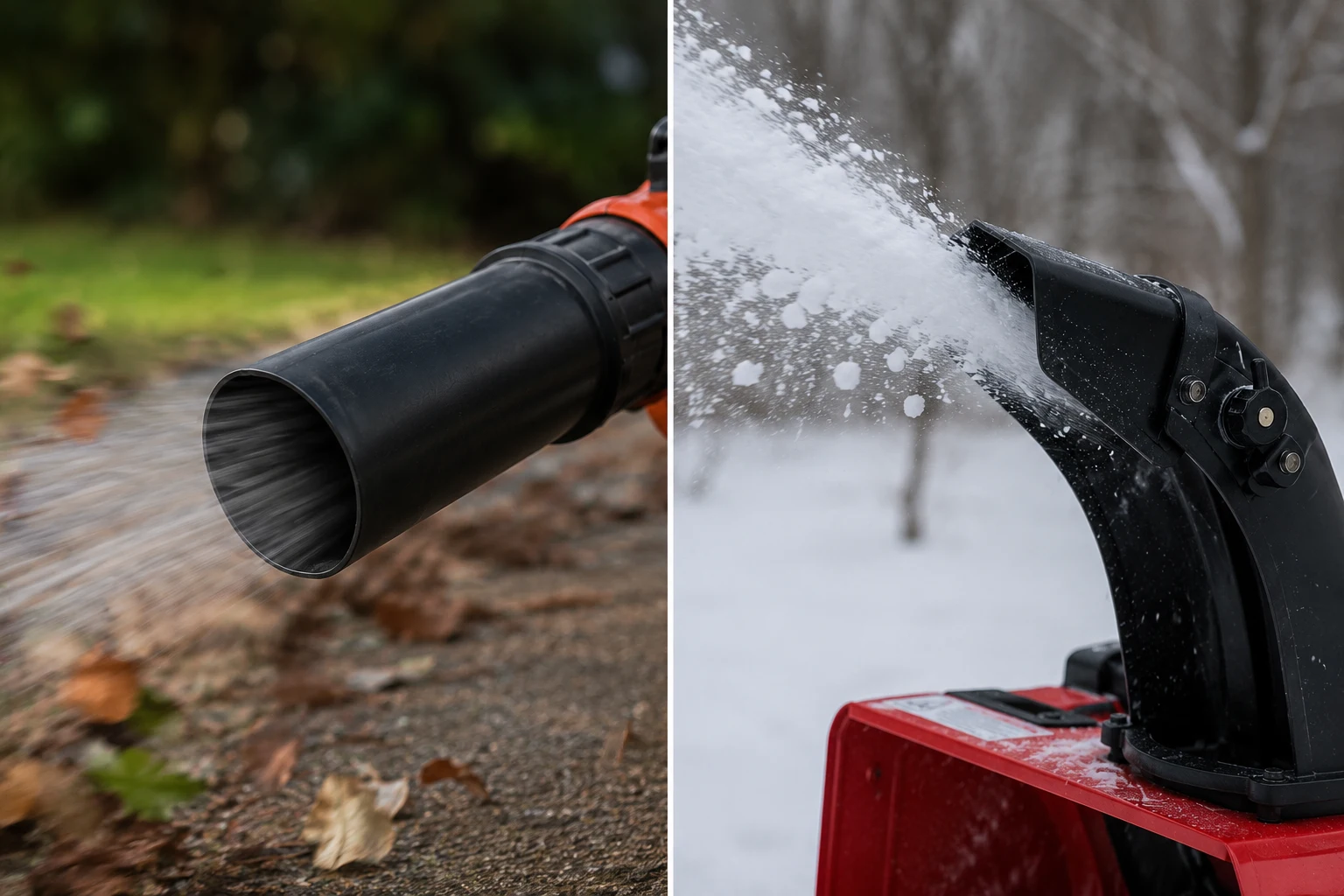
You may be able to use a powerful leaf blower on a very thin layer of dry, powdery snow. However, once the snow becomes deep, wet, or heavy, the leaf blower will not be very useful. That is when you need a machine that is actually designed to scoop up and throw snow.
So, the choice is simple: use a leaf blower for leaves and light debris during fall, spring, and summer, and use a snow blower when winter brings serious snow.
Safety and Efficiency
A leaf blower and a snow blower can both save you time and physical effort, but only when you use them for the right job. Using either tool incorrectly can reduce its efficiency and may also create safety risks.
For example, trying to use a leaf blower on deep, wet, or packed snow is not a good idea. The machine may struggle to move the snow, and moisture can affect parts that were not designed for heavy winter conditions. You may also end up wasting more time than you would with a shovel or snow blower.
Using a snow blower for leaves or small debris is also unsafe and unnecessary. Stones, sticks, and other objects can enter the auger and be thrown through the chute at high speed. This can damage the machine, break nearby objects, or injure someone standing in the wrong place.
Each tool also has its own limits.
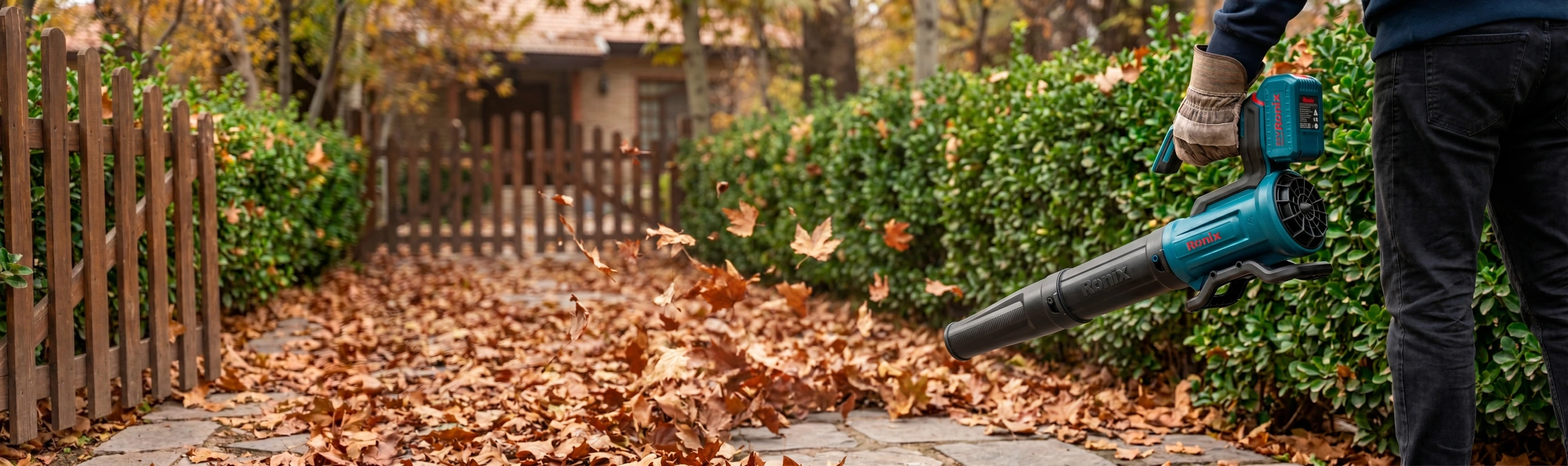
A leaf blower works best with dry leaves, grass clippings, dust, and other lightweight materials. It becomes much less effective when the debris is wet, heavy, or stuck to the ground.
A snow blower is designed for snow, but even then, the right model matters. A small single-stage machine may struggle with deep or heavy snow, while a larger two-stage or three-stage model may be too bulky for a small patio or narrow walkway.
As I said before, these tools can make your work much easier, but only when you use the right one for the right job.
Cost and Maintenance
A leaf blower is usually cheaper and easier to maintain. Electric and battery-powered models need very little care, while gas-powered models need some basic engine maintenance.
A snow blower usually costs more because it is bigger and has more moving parts. It also needs more regular checks, especially for the auger, belts, oil, fuel system, and chute.
So, the choice is simple. If you want a cheaper tool with less maintenance, choose a leaf blower. If you deal with heavy snow every winter, the extra cost of a snow blower can be worth it.
Can a Leaf Blower Remove Snow?
The simple answer is yes, but hold on for a second because it does not mean a leaf blower can handle every type of snow.
When it comes to leaf blower vs snow, the depth, weight, and moisture level of the snow make a big difference
A leaf blower can move a thin layer of fresh, light, and dry snow. This type of snow is soft, powdery, and easy to blow away because it does not contain much moisture.
You may be able to use it to clear light snow from:
• Steps and porches
• Small patios
• Walkways and sidewalks
• Outdoor furniture
• Cars and bicycles
• Small parts of a driveway
However, you need to be realistic about its limits. A leaf blower is made to move air, leaves, dust, and other light materials. It is not designed to scoop up or throw heavy snow.
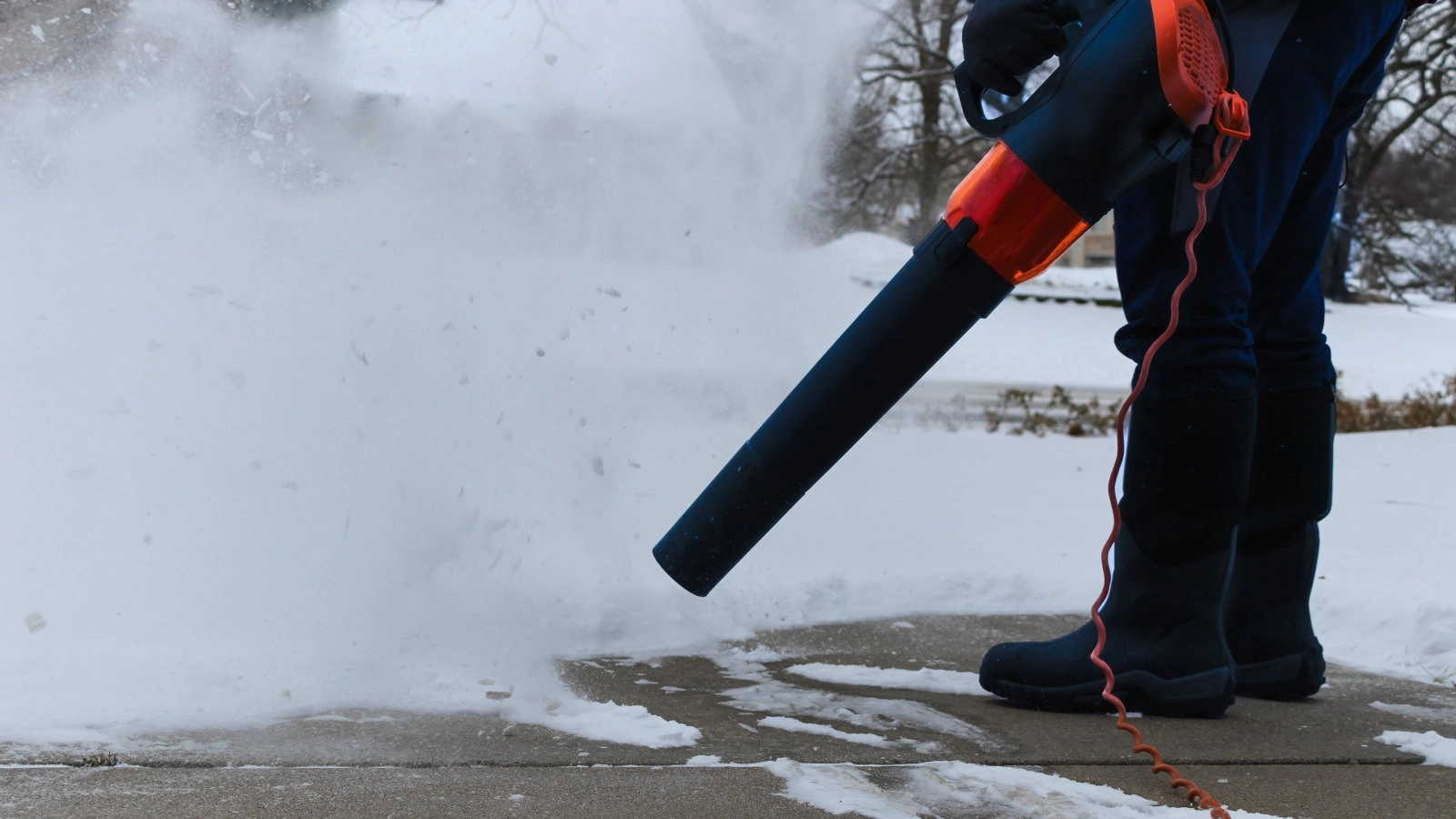
It will probably not work well on:
• Deep snow
• Wet or heavy snow
• Packed or frozen snow
• Ice
• Snow that has been walked or driven over
Once the snow becomes wet or compacted, it gets heavier and sticks to the ground. At that point, your leaf blower may make a lot of noise without making much progress.
In a leaf blower vs snow situation, fresh powder may move easily, but wet or packed snow will probably stay exactly where it is.
You should also be careful when using an electric leaf blower around snow and moisture. A corded model may not be the safest choice in wet conditions, so always check the manufacturer’s instructions before using it.
So, can a leaf blower remove snow? Yes, but only light, dry, and powdery snow. For anything deeper or heavier, believe me, a shovel or a proper snow blower will save you a lot of time and effort.
Which One Should You Buy?
Now comes the main question: which one should you actually buy?
Your final snow blower vs leaf blower decision depends on where you live, what kind of weather you usually have, and what type of outdoor space you need to clean.
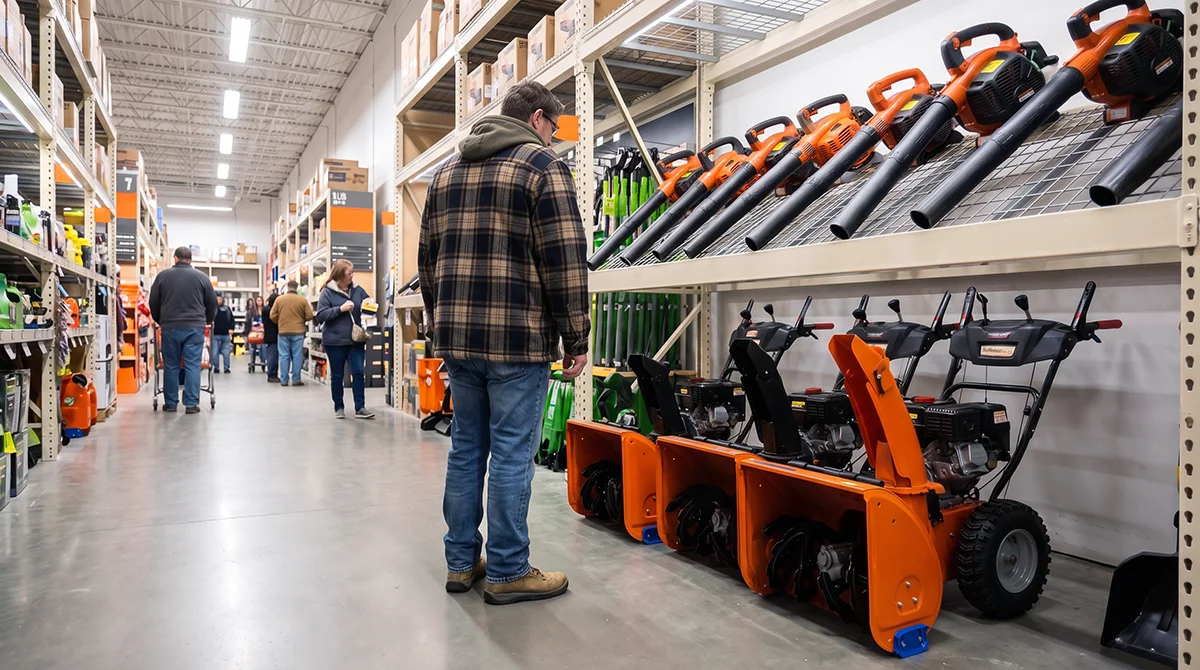
If you live in a cold area where heavy snow is common during winter, then a snow blower is probably the better choice. Believe me, when your driveway is covered with deep snow, you will be very happy to have one in your garage.
If you only get light snow from time to time, a small single-stage snow blower may be enough. But if you regularly deal with deep, wet, or heavy snow, you will probably need a two-stage or three-stage model.
On the other hand, if you have a garden, lawn, or yard, a leaf blower will be more useful during most of the year. You can use it in fall for leaves, in spring for dirt and debris, and in summer for grass clippings after mowing. A leaf blower is also usually smaller, lighter, and easier to store, so it can be a practical choice for regular outdoor cleaning.
But what if you have a large yard and also live in a cold area?
In that case, having both tools may be the best solution. A leaf blower can help you during spring, summer, and fall, while a snow blower can take care of the hard work during winter.
Of course, buying both means spending more money and using more storage space. But for homeowners with large properties, professional landscapers, or anyone who deals with both leaves and heavy snow, having both tools can make outdoor cleaning much easier.
Final Verdict
So, after comparing the snow blower vs leaf blower from different angles, the final decision comes down to one simple question: what kind of job do you actually need the machine to do?
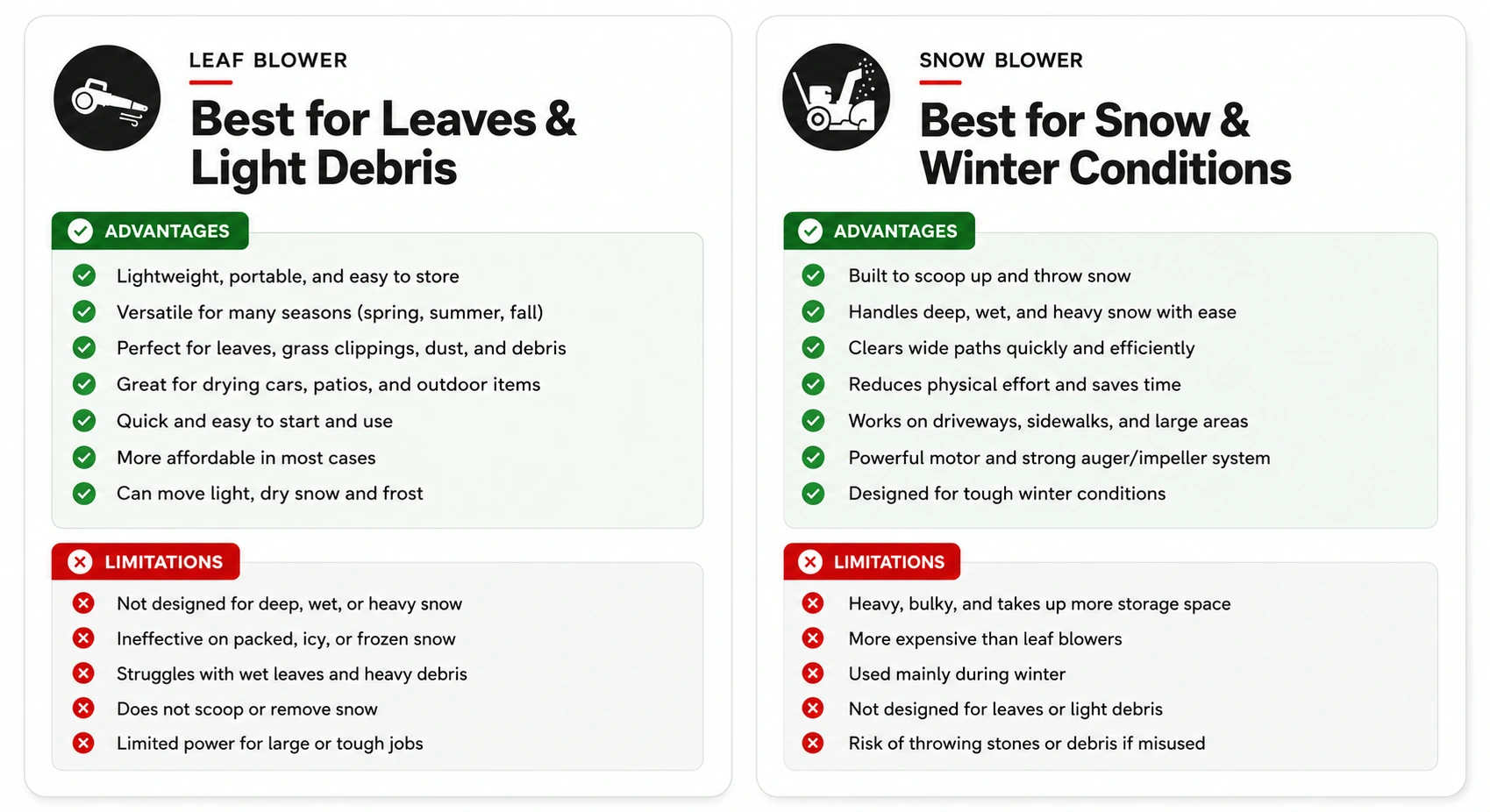
In the end, the leaf blower vs snow blower decision is not about which tool is better overall. It is about which one is better for your specific needs.
If your main problem is fallen leaves, grass clippings, dust, and light outdoor debris, then a leaf blower is the better choice. It is lighter, easier to use, more affordable in most cases, and useful during several seasons of the year.
If you live in an area with heavy snowfall and regularly need to clear your driveway, sidewalk, or walkway, then a snow blower is what you need. It is more powerful, larger, and designed specifically to collect and throw snow.
A leaf blower may help with a very thin layer of dry, powdery snow, but do not expect it to handle wet, deep, or heavy snow. Believe me, when winter becomes serious, you will be glad to have a proper snow blower.
So, the decision is simple:
• Choose a leaf blower if you need a lightweight and versatile tool for leaves and light debris
• Choose a snow blower if you need a strong machine for regular or heavy snow removal
• Choose both if you live in an area with leafy seasons and snowy winters

Giselle
12 July 2026