- 4min
- 2714
- 0
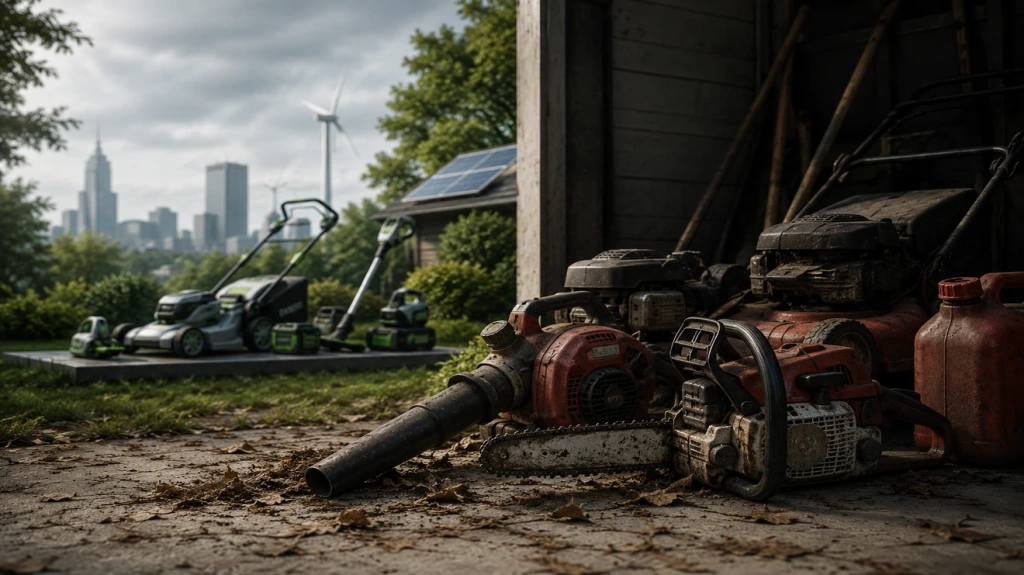
A few years ago, most landscaping contractors and lawn-care crews relied almost entirely on gas-powered equipment. The sound of gas trimmers, blowers, and mowers was a normal part of almost every outdoor jobsite. But in 2026, that picture is changing fast. More professionals and homeowners are now building their work around battery-powered platforms, and the shift is becoming one of the clearest trends in the outdoor power equipment market.
Sales of gas-powered outdoor tools continue to lose ground as buyers increasingly choose cordless alternatives for lawn and garden work. What started as a gradual change has now become a broader market movement, driven by better battery performance, easier operation, lower maintenance needs, and growing pressure from emissions regulations.
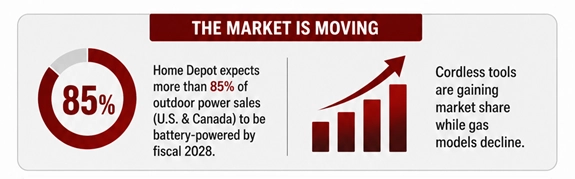
The change is visible not only in customer behavior but also in retailer strategy. Home Depot has said it expects more than 85% of its outdoor power equipment sales in the United States and Canada to be battery-powered by the end of fiscal 2028. Industry reports and market commentary also show cordless tools steadily gaining share while gas models continue to decline in common categories such as string trimmers, blowers, and residential lawn-care equipment.
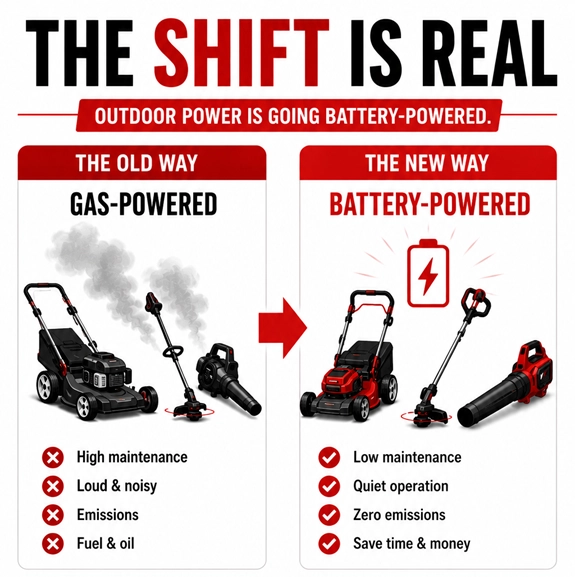
One of the biggest reasons is practicality. Many users no longer want the extra maintenance that comes with small gas engines. Fuel mixing, oil checks, spark plugs, pull starts, engine servicing, and off-season storage all add complexity and cost over time. Battery-powered tools remove much of that friction. For homeowners and even many light commercial users, fast startup, lower noise, and easier upkeep have become major buying factors.
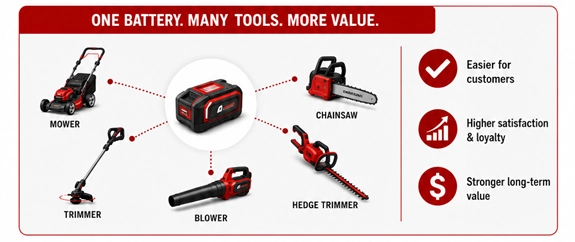
Another important shift is the rise of the battery ecosystem. Today, customers are no longer buying just one tool; they are investing in a full cordless platform. Once users already own a compatible battery and charger, they are far more likely to stay within the same brand ecosystem for their next purchase. A customer who already uses a cordless mower from one brand may later add a matching trimmer, blower, hedge trimmer, or chainsaw simply because the batteries already fit.
This platform-based buying behavior is becoming one of the strongest competitive advantages in the market. In many cases, the battery itself is now part of the long-term customer relationship, not just an accessory. As a result, brands are competing not only on tool performance, but also on battery compatibility, charging speed, runtime, and the overall convenience of their cordless systems.
Regulations are also influencing demand. California’s AB 1346 began pushing the phaseout of new small off-road gasoline engines in several categories starting in 2024. Even outside California, these kinds of policy changes affect how manufacturers develop products, how retailers manage inventory, and how customers think about future purchases.
Gas-powered tools still remain important in some heavy-duty or long-runtime applications, especially in areas where charging access is limited. However, those segments are no longer large enough to maintain gas dominance across the wider market. Battery technology has improved enough to handle more real-world jobs, and that is steadily changing purchasing habits across both residential and professional sectors.
For retailers and distributors, the transition also changes the sales conversation. Customers still ask about power and runtime, but they increasingly care about charging time, battery compatibility, noise levels, maintenance requirements, and long-term operating costs. The discussion is no longer centered on a single mower or trimmer; it is about the value and flexibility of the entire cordless system.
Looking ahead, many industry observers believe the brands that invest most heavily in cordless platforms, battery compatibility, and scalable ecosystems will play the biggest role in shaping the future of outdoor power equipment. As battery technology continues to improve, the market shift away from gas-powered tools may no longer be viewed as a temporary trend, but as a long-term transformation of the industry itself.

Giselle
23 May 2026