- 9min
- 781
- 0

Contents
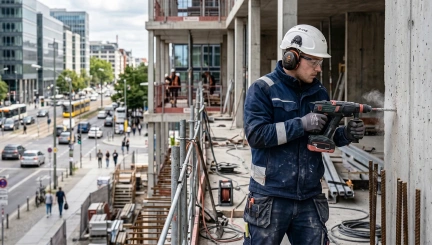
As World Environment Day 2026 approaches, industries worldwide are facing increasing pressure to reduce environmental impact, improve energy efficiency, and adopt cleaner operational practices. Construction and industrial sectors are no exception.
From air pollution and carbon emissions to fuel dependency and excessive noise, modern jobsites contribute to environmental challenges that can no longer be ignored. Governments, municipalities, contractors, and industrial buyers are all searching for practical ways to create cleaner and more sustainable work environments without compromising productivity.
According to the United Nations Environment Programme (UNEP), the construction sector accounts for approximately 37% of global energy-related carbon emissions, making it one of the world’s largest contributors to environmental impact. Meanwhile, the International Energy Agency (IEA) highlights energy efficiency and reduced fossil-fuel dependence as key pathways toward lower industrial emissions.
In this transition, cordless power tools are emerging as more than a convenience upgrade. They are becoming part of a broader movement toward cleaner, smarter, and more efficient jobsites.
The Hidden Environmental Cost of Fuel-Powered Equipment
When environmental discussions begin, most attention focuses on factories, vehicles, and heavy industrial machinery. However, smaller construction and maintenance equipment also contributes significantly to urban pollution.
Every day, fuel-powered generators, compressors, and gasoline-driven tools operate inside residential neighborhoods, commercial buildings, underground parking structures, workshops, tunnels, and renovation sites. While each machine may appear relatively small on its own, their combined environmental impact is substantial.
Gasoline-powered equipment releases carbon dioxide, carbon monoxide, nitrogen oxides, and particulate matter directly into the surrounding environment. In enclosed or poorly ventilated spaces, these emissions can create serious health and safety concerns for operators and nearby crews.
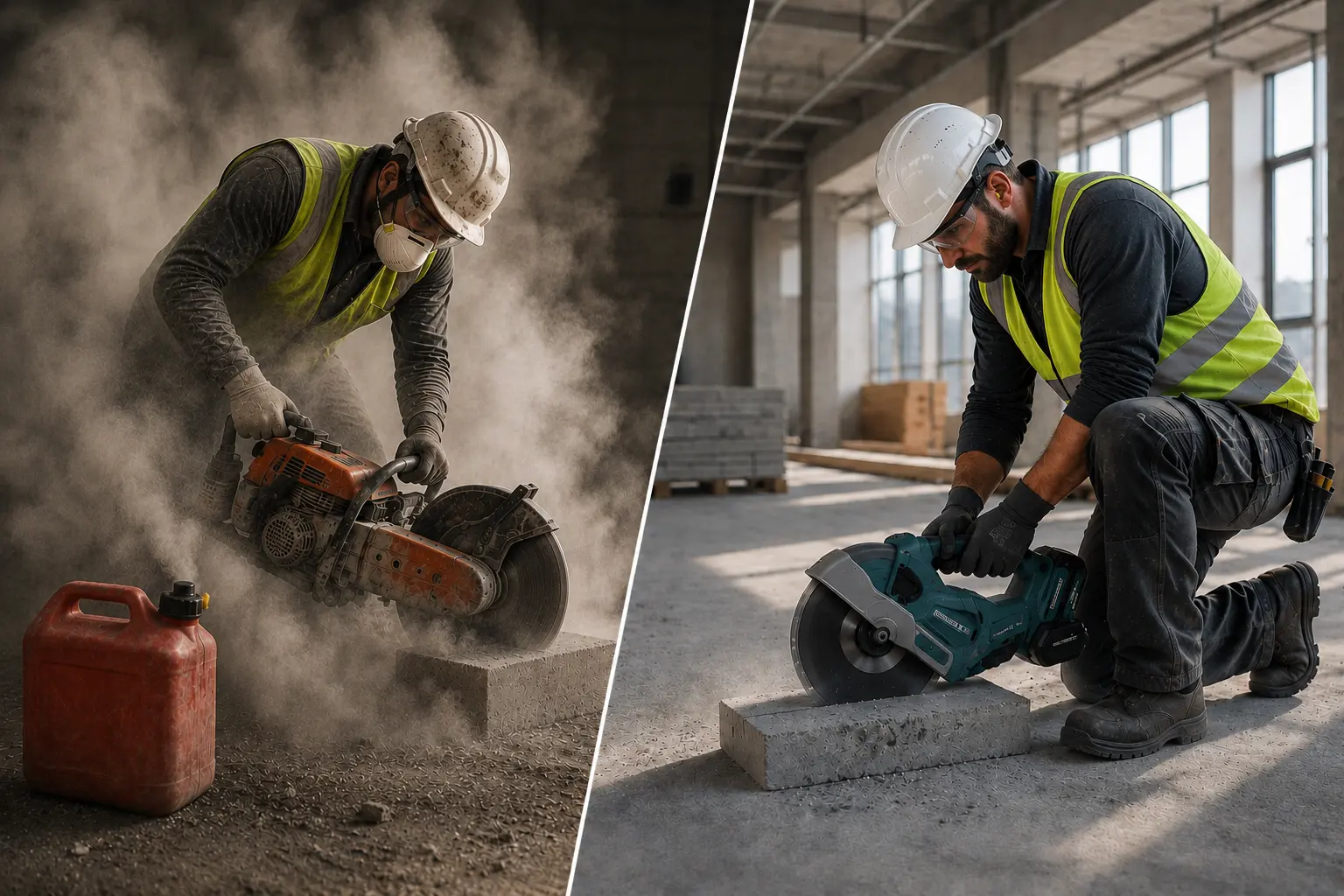
For indoor renovation projects, warehouse installations, tunnel maintenance, and commercial construction, air quality has become an increasingly important operational consideration.
The World Health Organization (WHO) estimates that air pollution contributes to millions of premature deaths worldwide each year, reinforcing the importance of reducing localized emissions wherever practical alternatives are available. For contractors working in enclosed environments, minimizing exhaust emissions can directly support healthier working conditions.
Cordless power tools help eliminate one of the most immediate sources of on-site pollution: fuel combustion at the point of use.
Without gasoline engines, cordless systems operate without exhaust smoke, fuel vapors, or combustion emissions surrounding workers during daily tasks.
How Cordless Power Tools Help Create Cleaner Worksites
One of the biggest cordless tools environmental benefits is their ability to support cleaner jobsites with fewer localized emissions.
Unlike fuel-powered systems, battery-powered tools do not require gasoline storage, fuel refilling, or engine combustion during operation. This directly reduces air pollution in environments where professionals spend long working hours every day.
For indoor construction, urban renovation, hospitals, schools, office buildings, and workshop applications, this difference becomes especially important. Cleaner air inside working environments contributes to healthier conditions for technicians, contractors, and nearby teams.
As environmental regulations continue tightening across global markets, many businesses are also seeking practical ways to reduce carbon emissions while modernizing their operations.
Cordless power tools provide a realistic step in that direction by combining operational efficiency with lower on-site environmental impact.
Why Rechargeable Battery Platforms Support Sustainable Construction
The construction industry has traditionally depended on fossil fuels to power portable equipment and jobsite tools. However, rising fuel costs and increasing sustainability expectations are accelerating the search for cleaner alternatives.
Cordless systems support this transition by replacing fuel-based workflows with rechargeable lithium-ion battery platforms.
Instead of relying on gasoline-powered equipment for daily operations, professionals can now use battery-powered tools that offer portability, flexibility, and reduced emissions during use.
Modern lithium-ion battery tools also help simplify workflow management. Many professional cordless platforms now allow multiple tools to operate using shared battery systems. This reduces unnecessary equipment duplication, minimizes accessory waste, and improves operational efficiency across projects.
As renewable energy adoption continues expanding globally, rechargeable battery systems may become even more environmentally beneficial over time.
For municipalities, urban contractors, and environmentally conscious businesses, cleaner construction practices are increasingly becoming both a regulatory expectation and a competitive advantage.
Can Cordless Tools Match Professional Performance?
For years, many contractors questioned whether cordless tools could deliver the power, runtime, and durability required for demanding professional applications.
This remains one of the industry’s most important transition challenges.
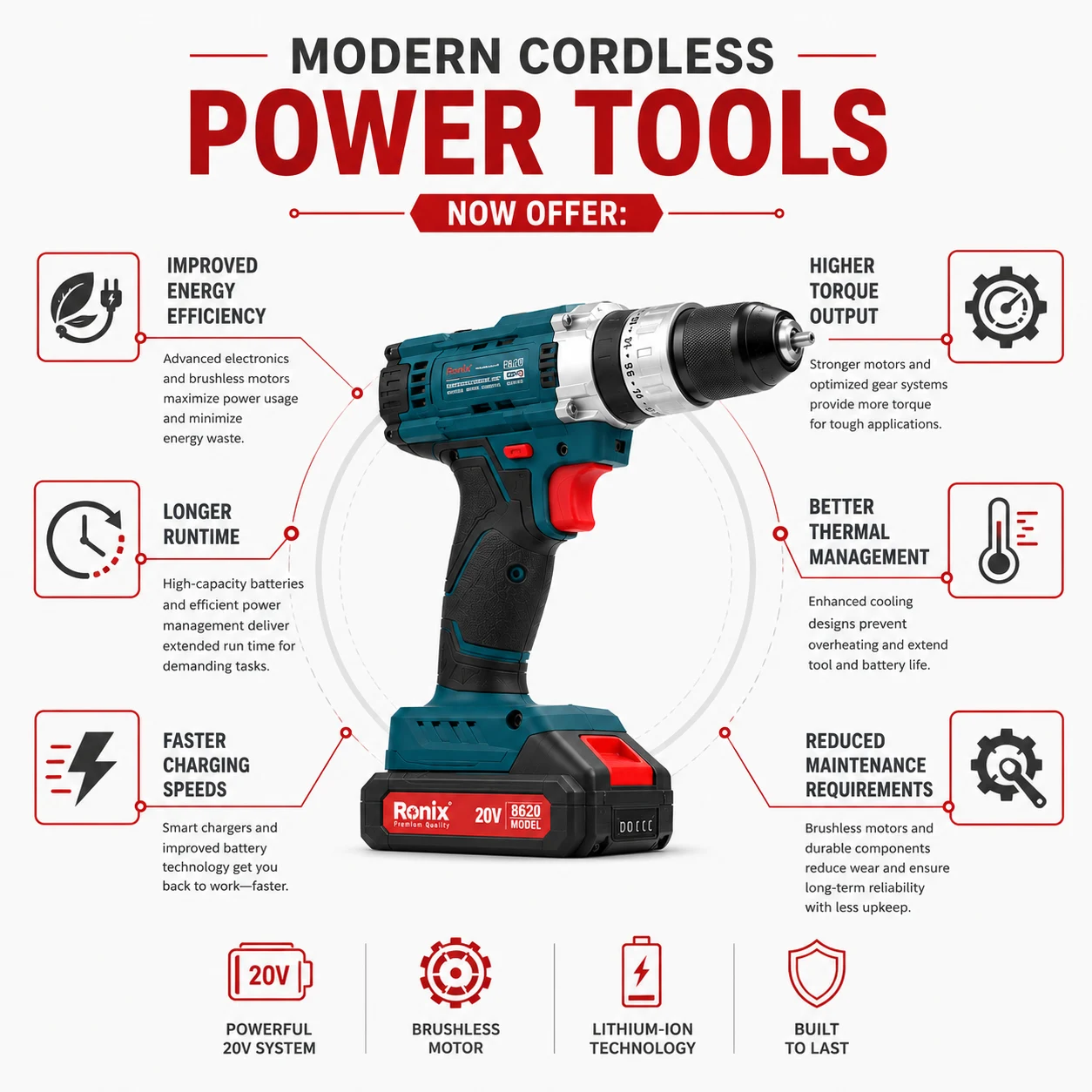
Early cordless systems often struggled with battery limitations, lower torque output, and inconsistent runtime performance. However, rapid advancements in brushless motor technology and lithium-ion battery systems are changing that perception significantly.
Modern cordless power tools now offer:
- Improved energy efficiency
- Longer runtime
- Faster charging speeds
- Higher torque output
- Better thermal management
- Reduced maintenance requirements
Brushless motors are particularly important in this evolution. Compared to traditional brushed motors, brushless systems generate less friction and energy loss, helping tools operate more efficiently while extending battery runtime.
As a result, cordless systems are increasingly becoming viable solutions not only for DIY users, but also for professional contractors, maintenance teams, industrial technicians, and commercial construction projects.
The conversation is no longer simply about convenience. It is now about combining professional performance with sustainability.
Noise Pollution Is Also an Environmental Challenge
Environmental discussions often focus primarily on emissions, but noise pollution has also become a major issue in crowded urban environments.
Construction activities inside residential neighborhoods, office buildings, schools, hotels, and commercial districts frequently create disturbances that affect surrounding communities.
Compared to combustion-engine equipment, cordless tools generally operate with lower noise levels and smoother performance. This helps create more comfortable work environments while reducing disruption in noise-sensitive locations.

For urban maintenance crews, facility managers, and indoor renovation teams, quieter operation is becoming an increasingly valuable advantage.
Lower noise levels can also improve communication and concentration on busy worksites, contributing to safer and more efficient operations.
Fuel Storage Creates Additional Operational and Environmental Risks
The environmental impact of fuel-powered tools extends beyond emissions alone.
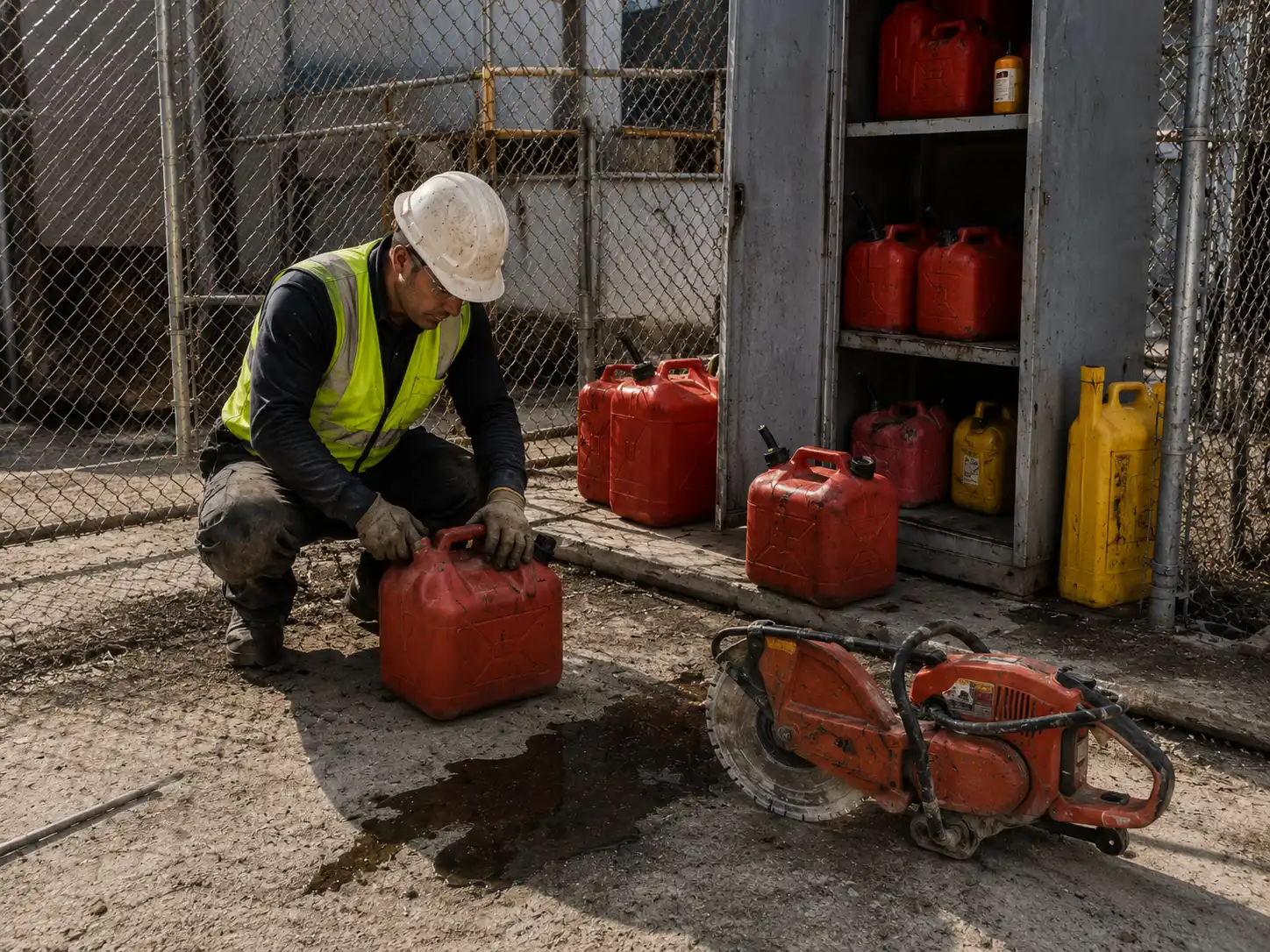
Managing gasoline on-site introduces logistical complexity and additional workplace hazards. Contractors must transport, store, monitor, and handle flammable fuels throughout daily operations.
Fuel spills, storage limitations, and fire risks all add operational pressure to already demanding jobsites.
Cordless battery-powered tools simplify these workflows by reducing dependence on fuel transportation and on-site combustion equipment.
Rechargeable battery systems help businesses streamline operations while creating cleaner and safer work environments.
Sustainability Also Requires Responsible Battery Management
Although cordless technology offers major environmental advantages, the industry still faces important sustainability challenges that cannot be ignored.
Battery manufacturing, raw material sourcing, and end-of-life battery disposal remain global concerns for manufacturers and industrial sectors alike.
A truly sustainable future for cordless power tools depends not only on reducing fuel consumption, but also on improving battery recycling systems, responsible sourcing practices, and long-term lifecycle management.
Environmentally conscious buyers increasingly expect manufacturers to support responsible battery handling and recycling initiatives as part of broader sustainability commitments.
This balanced perspective is becoming increasingly important in international B2B markets where sustainability standards continue evolving.

Practical Steps Toward Greener Worksites
While adopting cordless power tools can contribute to cleaner operations, sustainability requires a broader approach that combines equipment choices with responsible workplace practices.
Contractors, workshop owners, and facility managers can support greener worksites by:
• Using energy-efficient tools and equipment to reduce electricity and fuel consumption.
• Separating and recycling workshop waste such as metals, plastics, batteries, and packaging materials whenever possible.
• Performing regular maintenance on tools and machinery to extend equipment lifespan and reduce unnecessary waste.
• Choosing environmentally responsible materials and supplies that minimize environmental impact throughout a project’s lifecycle.
• Training employees on energy-saving practices, waste reduction, and environmental awareness to encourage sustainable daily operations.
Small improvements implemented consistently across projects can collectively make a meaningful contribution to reducing environmental impact while maintaining productivity and operational efficiency.
Why the Global Shift Toward Cordless Tools Is Accelerating
The growing demand for eco-friendly power tools is no longer driven solely by environmental awareness. It is also shaped by efficiency, portability, safety, and changing customer expectations.
Today’s professionals increasingly prefer integrated cordless platforms that allow multiple tools to operate using shared battery systems. This improves mobility, reduces unnecessary equipment waste, and simplifies tool management across projects.
Urban construction growth is also accelerating this transition. In cities where emissions regulations, indoor air quality standards, and noise restrictions continue tightening, cordless systems provide practical operational advantages.
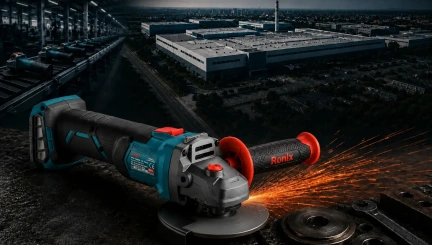
As demand for cleaner and more efficient equipment continues to grow, manufacturers across the industry are investing heavily in cordless technologies, brushless motors, and advanced battery platforms. Brands such as Ronix have expanded their cordless product portfolios to support professionals seeking greater mobility, lower maintenance requirements, and reduced environmental impact.
This shift reflects a broader industry trend in which sustainability is becoming increasingly integrated into everyday operational decisions rather than remaining solely a long-term environmental objective.
Fuel-Powered Equipment vs Cordless Power Tools
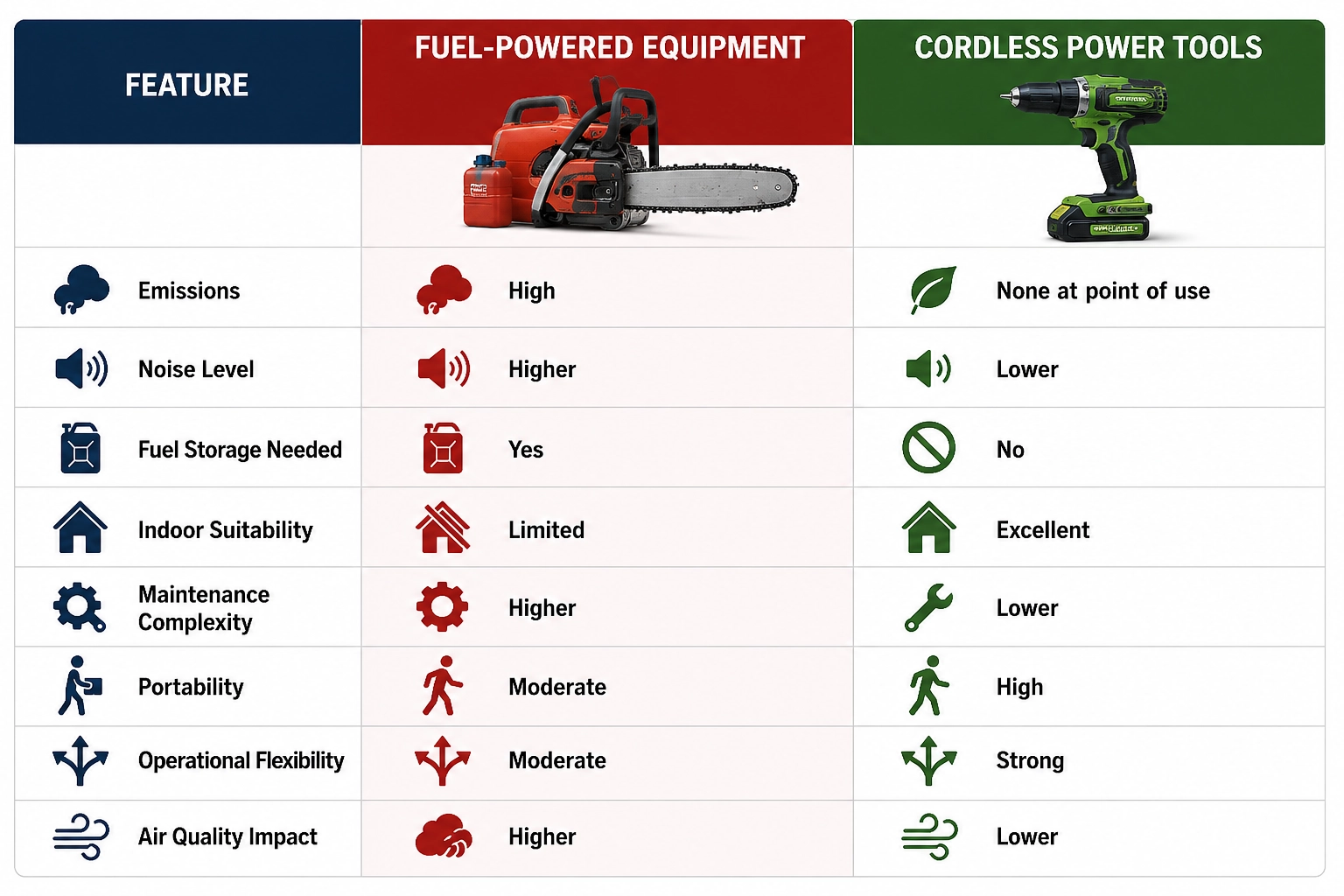
Cleaner Tools, Smarter Future
World Environment Day 2026 serves as a reminder that sustainability is not achieved through one dramatic change alone. It is built through thousands of smarter daily decisions across industries worldwide.
The growing adoption of cordless power tools represents one of those practical shifts.
By helping reduce localized pollution, lower fossil fuel dependency, improve worksite safety, and support cleaner urban environments, cordless systems are becoming an important part of the future of construction and industrial work.
As businesses continue searching for cleaner alternatives and more sustainable operations, cordless power tools are proving that performance and environmental responsibility can move forward together.
FAQ
Are cordless power tools environmentally friendly?
Cordless power tools help reduce localized emissions, lower fuel dependency, and decrease noise pollution compared to fuel-powered equipment. Their environmental impact depends partly on responsible battery production and recycling practices.
Do cordless tools produce emissions?
Cordless tools do not produce combustion emissions at the point of use because they operate using rechargeable battery systems instead of gasoline engines.
Are cordless tools suitable for professional construction work?
Modern cordless systems with lithium-ion batteries and brushless motors now offer enough power and runtime for many professional construction, maintenance, and industrial applications.
Why are brushless motors more efficient?
Brushless motors reduce friction and energy loss inside the tool, helping improve battery efficiency, runtime, and overall performance.
What are the benefits of shared battery platforms?
Shared battery systems allow multiple cordless tools to use the same batteries, reducing equipment redundancy, improving workflow efficiency, and minimizing unnecessary waste.

Giselle
1 June 2026