- 13min
- 4098
- 0

Contents
International hardware exhibitions are more than product showcases. For distributors, retailers, contractors, industrial buyers, and professional users, they show which tool categories are more popular and how buying decisions are changing.
Based on insights from major 2025–2026 trade events, including Canton Fair, World of Concrete, spoga+gafa, Big 5 Global, EISENWARENMESSE, TOOL JAPAN, and Fastener Fair Italy, one direction is clear: the tool industry is moving toward more connected products, safer designs, smarter systems, and complete work solutions.
In 2026, buyers are not only choosing individual tools. They are evaluating cordless platforms, smart features, ergonomics, safety systems, accessories, after-sales support, and supplier reliability. These tool industry trends affect product selection, stock planning, compatibility, user training, and long-term purchasing decisions.
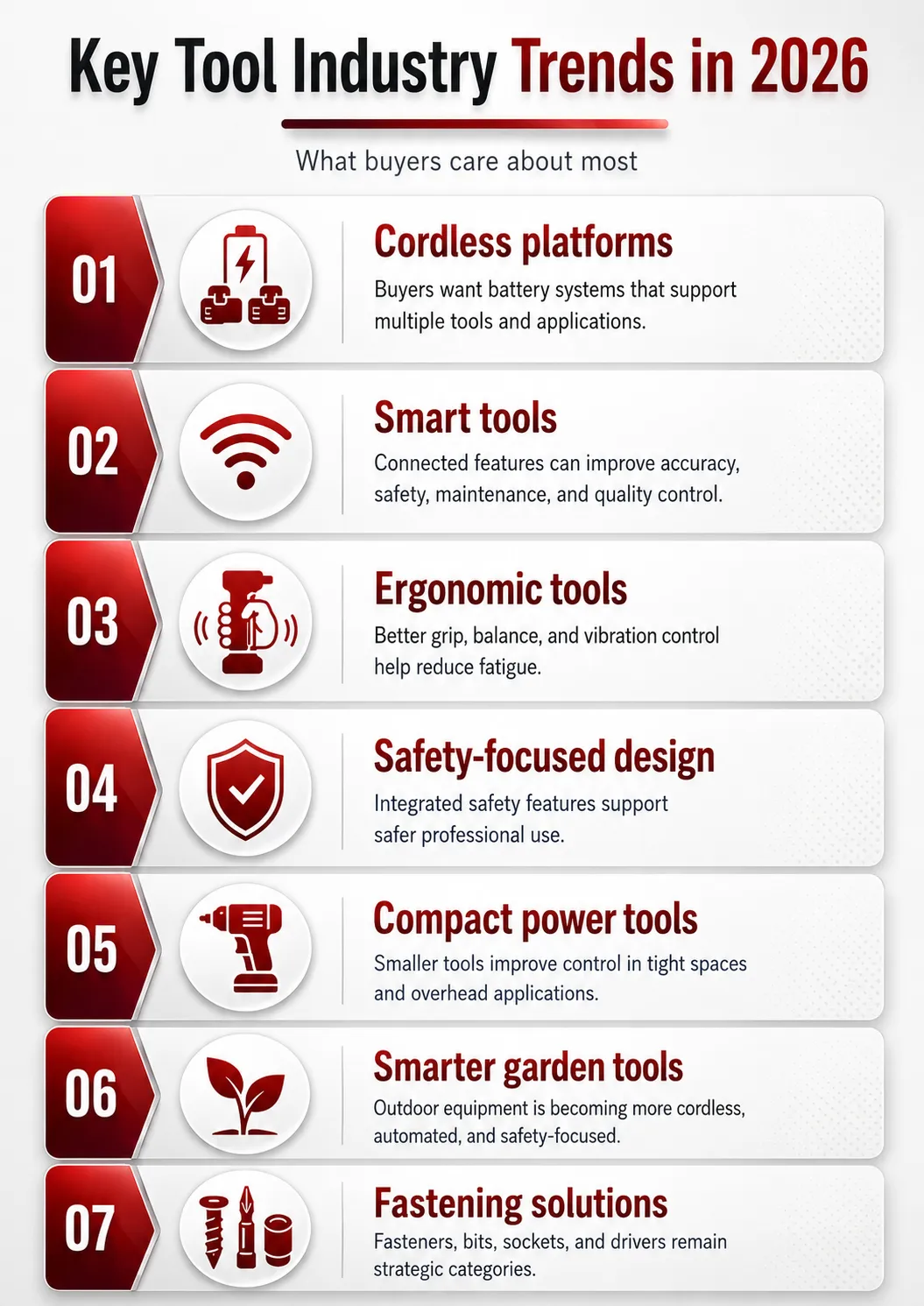
Key Tool Industry Trends in 2026
The following infographic summarizes the main shifts shaping tool purchasing decisions in 2026. From cordless platforms and smart features to ergonomic design, safety systems, and complete product solutions, these trends show what buyers are likely to prioritize when comparing suppliers, planning stock, and choosing tools for professional use.
1. Cordless Platforms Are Becoming Complete Work Systems
One of the clearest power tool industry trends in 2026 is the growth of cordless platforms as complete work systems.
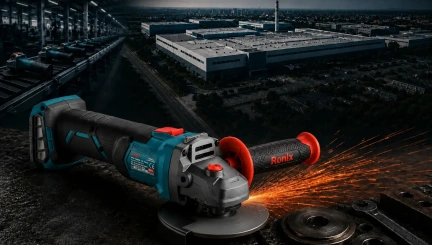
Cordless tools are no longer just replacements for corded drills, grinders, or saws. Manufacturers are increasingly presenting battery-powered tools as part of wider systems that can support drilling, cutting, grinding, cleaning, lighting, charging, storage, and outdoor maintenance.
This matters because buyers are not only comparing voltage, torque, or motor type. They are also evaluating whether a cordless platform can support different applications with shared batteries, chargers, accessories, and spare parts.
A shared battery ecosystem can also reduce purchasing and inventory costs. For example, a contractor may prefer one cordless platform instead of buying separate batteries and chargers for five different tools. This makes daily tool management easier, reduces duplicate accessories, and helps distributors plan stock more efficiently around batteries, chargers, and compatible tools.
Before choosing a cordless tool platform, buyers should ask:
- How many tools can use the same battery?
- Are batteries and chargers easy to source?
- How quickly can batteries recharge during the workday?
- Can the platform support power tools, garden tools, lighting, and cleaning equipment?
- Are compatible accessories, storage systems, and spare parts available?
At Canton Fair 2025, Ronix highlighted its 86 All-In-One Series and the more powerful 40V 89 Series, showing how series-based product presentations can help distributors and professional buyers evaluate compatibility, application range, and assortment planning.
A strong cordless platform gives professional users more flexibility. It also helps distributors and retailers build practical product ranges around batteries, chargers, accessories, storage, PPE, and related tools.
2. Smart Tools Are Moving into Practical Workflows
Smart tools are one of the most visible tool industry trends in 2026, but the strongest trend is not smart technology for its own sake. The real value is practical improvement.
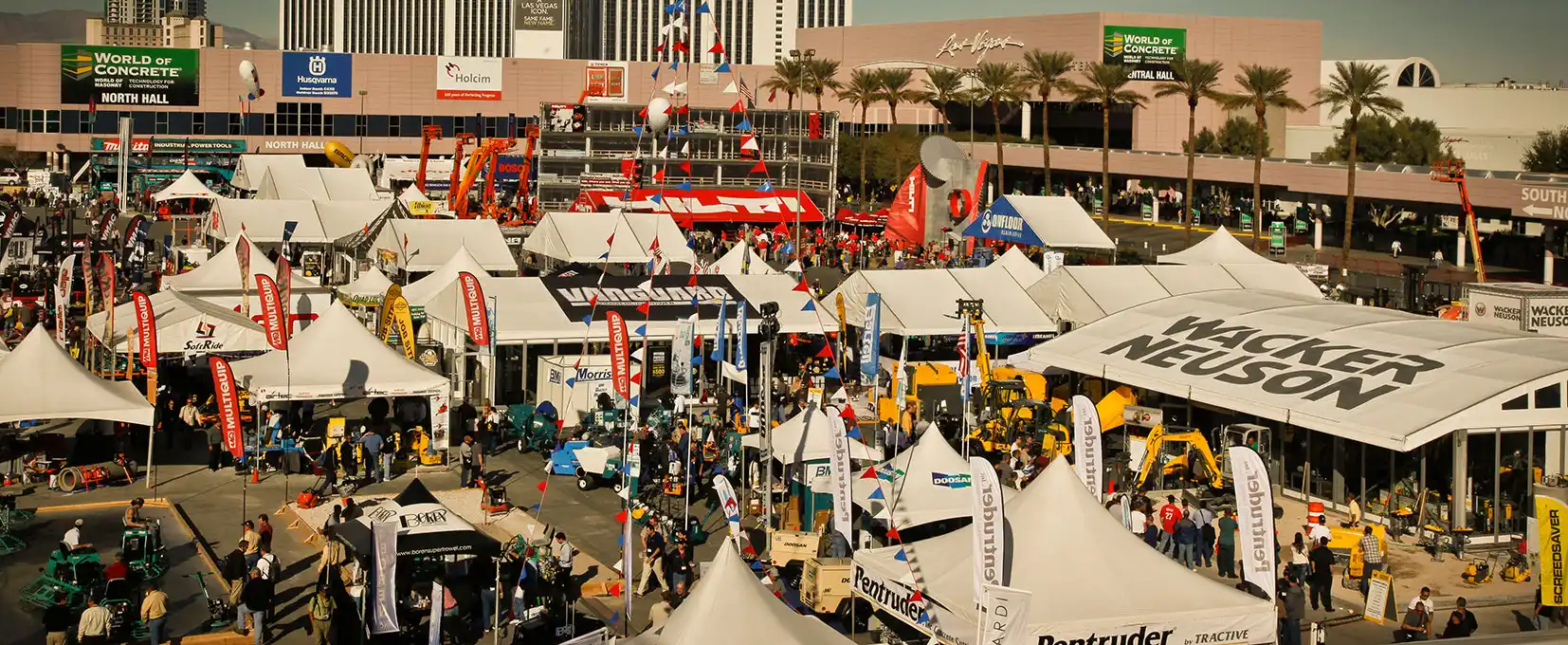
A clear example was seen at World of Concrete 2025 in Las Vegas, where automation, AI, and electrification were among the most discussed trends on the show floor. Industry coverage highlighted innovations such as an autonomous rebar-tying robot using GPS and machine learning to improve accuracy and efficiency, as well as remote-controlled equipment from brands such as Hilti and Husqvarna for work in tighter or more hazardous spaces.
This shows that smart tool development is moving toward practical jobsite benefits, not just digital features.
More practical examples are also appearing in everyday tool categories. A smart torque wrench, for instance, can record torque data and help users check whether fastening work meets the required setting. A cordless power tool connected to an app can notify users about battery status, service needs, overheating, or usage history. These features are valuable because they support maintenance planning, quality control, and safer professional use.
At major hardware exhibitions, smart control systems, connected tools, AI-supported inspection, remote-controlled equipment, and automated outdoor solutions are becoming more visible. For buyers, the key question is not simply, “Is this tool smart?” The better question is, “What does the smart feature actually improve?”
Smart features should help with:
- Accuracy in measuring, drilling, cutting, or fastening
- Repeatability in production and assembly work
- Maintenance alerts and downtime reduction
- Quality control in manufacturing
- Safer operation in difficult or hazardous environments
- Remote control for selected outdoor, industrial, or municipal applications
Smart tools are most valuable when they reduce errors, save time, improve safety, or make work more consistent. Buyers should avoid choosing connected features only for novelty. A smart feature should solve a real workflow problem.
For distributors, this means product education is essential. A smart tool needs a clear explanation: what problem it solves, which users need it, how it works, and what accessories or training may be required.
3. Ergonomics and Safety Are Becoming Product Priorities
Safety and ergonomics are no longer secondary features. They are becoming core buying criteria for professional tools.
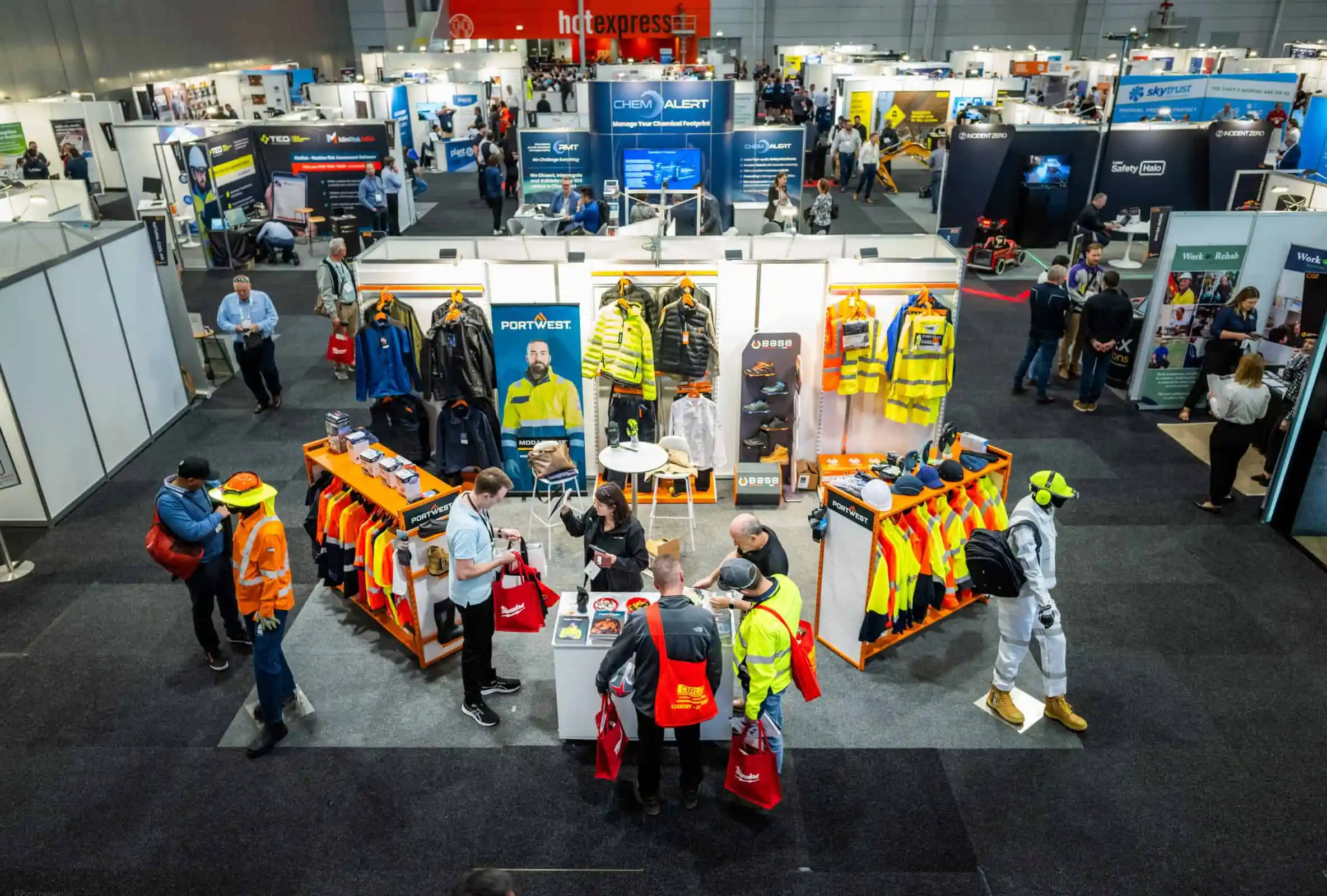
Professional users need tools that are powerful, but also safer and easier to control during long working hours. Modern ergonomic tools are designed to improve handling, reduce fatigue, and support safer operation across power tools, hand tools, ladders, measuring tools, cutting tools, and fastening tools.
When comparing tools, buyers should evaluate:
- Grip comfort
- Weight and balance
- Vibration control
- Safety switches
- Protective guards
- Tool stability
- Visibility during use
- Control in awkward positions
- Compatibility with PPE
- Suitability for long work sessions
This trend can be seen in categories such as anti-vibration power tools, safety ladders, insulated hand tools, dust-control accessories, cut-resistant gloves, protective eyewear, and tools with improved trigger control or restart protection.
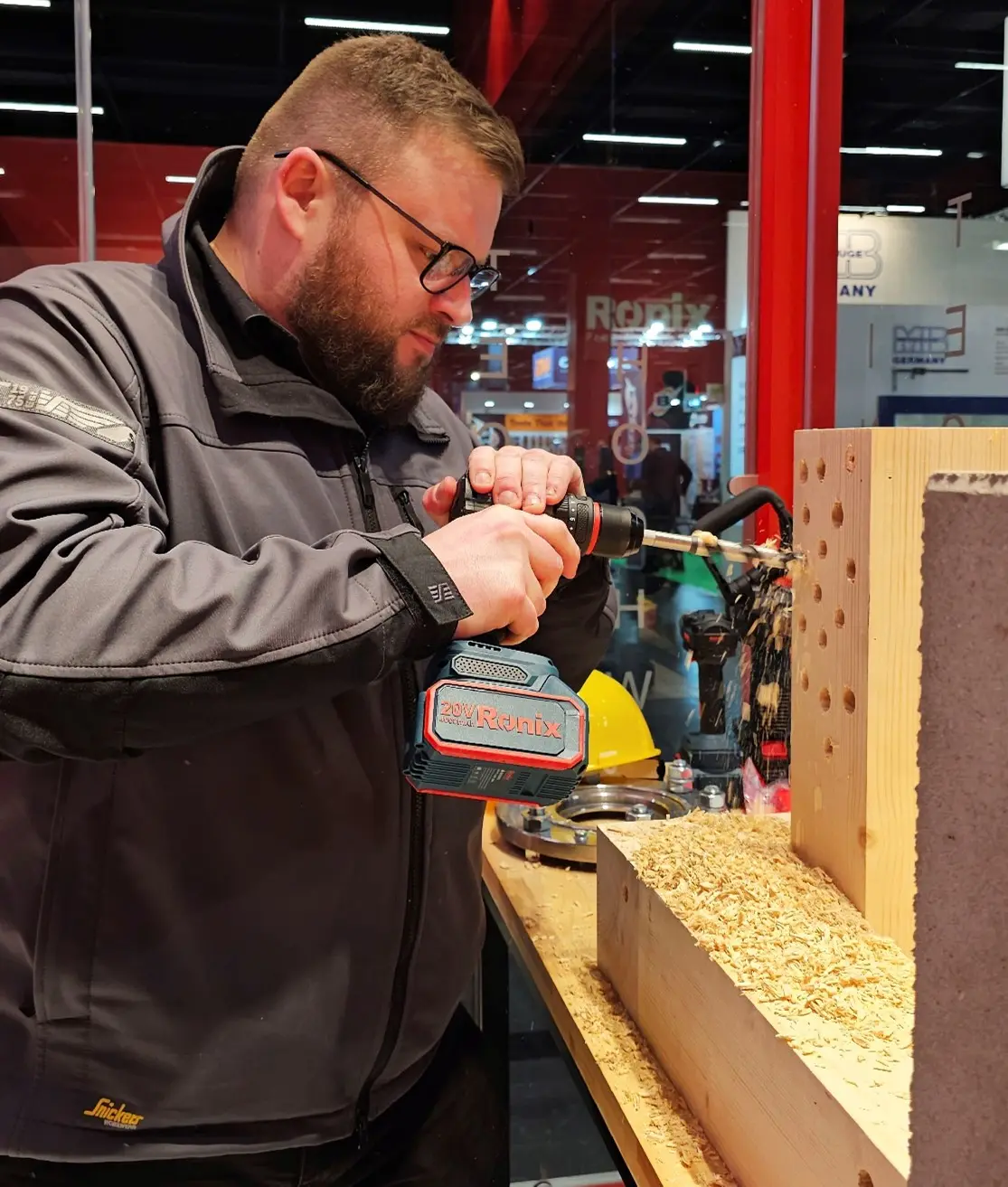
For buyers, these details matter because safety and comfort influence productivity, repeat purchase decisions, and brand trust. Hands-on product testing is especially important here. Demo areas at hardware exhibitions allow visitors to judge balance, grip comfort, trigger control, vibration, visibility, and ease of use in ways that specifications alone cannot show.
4. Compact Power Tools Are Gaining Attention
Compact power tools are becoming more important because professional users often need better access and control, not just maximum power.
This trend is especially relevant for electricians, installers, HVAC technicians, maintenance workers, automotive repair teams, and contractors working in confined spaces. In many applications, the best tool is not the largest model. It is the tool that offers the right balance of access, control, runtime, durability, and power.
For example, a cabinet installer working inside narrow cabinets or a service technician repairing equipment in a crowded mechanical room may value tool size and weight more than maximum power. In these situations, a compact drill, short-body impact driver, or lightweight screwdriver can improve control, reduce fatigue, and make the job easier to complete in tight spaces.
A clear example was seen at EISENWARENMESSE 2026 in Cologne, where the Tools & Accessories segment included everything from classic hand tools to powerful electric and cordless solutions. This type of exhibition setting allows buyers to compare power tools, accessories, fastening products, and workshop equipment together, making it easier to evaluate application fit.
At hardware and construction exhibitions, compact cordless drills, short-body impact drivers, compact angle grinders, mini saws, and lightweight rotary hammers are often presented as solutions for installation, maintenance, repair, and overhead work.
Compact power tools are especially useful for:
- Working inside cabinets, ceilings, vehicles, and machinery
- Reducing fatigue during overhead work
- Improving control during installation and repair tasks
- Carrying tools between service calls
- Completing light-to-medium drilling and fastening jobs
However, compact tools should not be presented as replacements for every heavy-duty application. Large-diameter drilling, demolition, continuous grinding, and high-torque fastening may still require larger tools.
The buying decision should focus on application fit: access, control, runtime, durability, and the level of power required for the task.
5. Garden Tools Are Becoming Smarter and More Connected
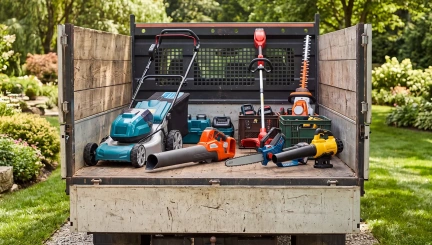
Garden tools are becoming more connected to the wider tool industry. Outdoor equipment is no longer limited to basic lawn and garden maintenance. It is becoming more cordless, automated, and focused on safety, labor efficiency, and ease of use.
A clear example was seen at Spoga+Gafa 2025 in Cologne, one of the leading international trade fairs for the garden and outdoor living industry. Smart robotic mower solutions were presented with features such as AI vision, multi-sensor fusion, intelligent navigation, and boundary-free lawn care. These examples show how garden tools are moving beyond basic cutting or trimming tasks and becoming smarter systems for homeowners and professional users.

At international exhibitions, garden and outdoor maintenance tools are increasingly connected with battery platforms, smart controls, and professional maintenance applications. This trend is important for homeowners, landscapers, agricultural users, municipal teams, and distributors serving seasonal outdoor markets.
Important buying factors include:
- Battery compatibility
- Runtime and charging speed
- Cutting capacity
- Weight and balance
- Noise level
- Maintenance requirements
- Storage needs
- Safety features
- Suitability for homeowners, landscapers, agriculture, or municipal use
This category is also important because garden tools can connect with batteries, chargers, gloves, safety glasses, extension accessories, spare blades, and storage solutions. A garden tool range becomes stronger when buyers consider how outdoor tools fit into a wider cordless and accessory ecosystem.
6. Fastening Solutions Remain Strategic Categories
Fastening solutions remain essential in construction, manufacturing, installation, furniture production, automotive repair, and maintenance.
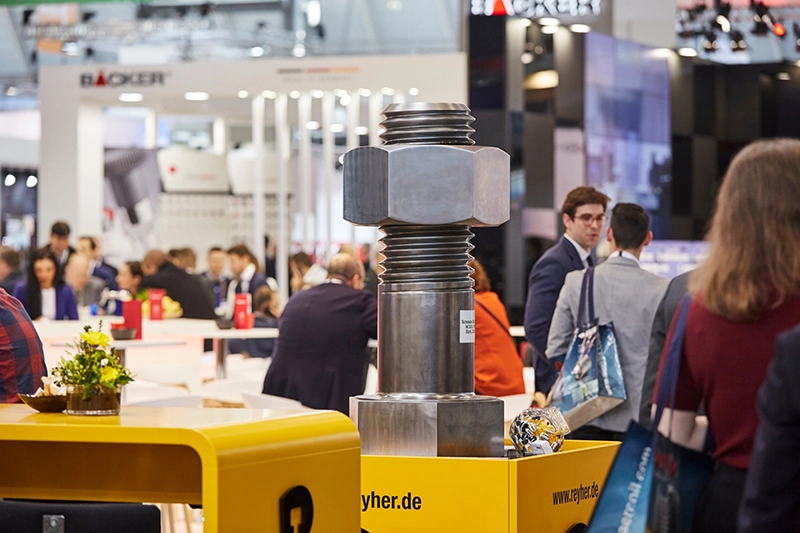
Fastening is not just an accessory category. It directly affects tool choice. Fastening-focused product displays at trade shows often combine screws, anchors, sockets, driver bits, drill bits, impact drivers, torque tools, clamps, and storage systems in one application-based presentation. This helps buyers understand fastening as a complete solution rather than a set of separate products.

Drills, impact drivers, screwdrivers, sockets, drill bits, driver bits, pliers, clamps, measuring tools, and PPE all influence fastening quality.
Buyers should ask:
- Which fastener is suitable for the material?
- Which drill bit or driver bit matches the application?
- When is an impact driver better than a drill driver?
- What torque level is required?
- How can users avoid stripped screws, cracked materials, or weak joints?
- Which accessories should be stocked with fastening tools?
For distributors and retailers, fastening solutions create strong bundling opportunities. A drill, impact driver, or screwdriver becomes more useful when sold with suitable bits, sockets, fasteners, storage, measuring tools, and safety equipment. Fastening also supports repeat sales. Bits, sockets, fasteners, and related accessories are consumable or frequently replaced items, making them valuable for distributors planning practical product assortments.
7. Hardware Trade Shows Are Becoming More Buyer-Focused
Global hardware trade shows are increasingly shaped around business decisions, hands-on testing, and buyer conversations.
For B2B buyers, exhibitions are a place to compare categories, test products, evaluate supplier support, and understand how tools industry trends fit real market needs. Buyers are not only looking for new products. They are also looking for practical answers about compatibility, applications, after-sales service, training, spare parts, and category planning.
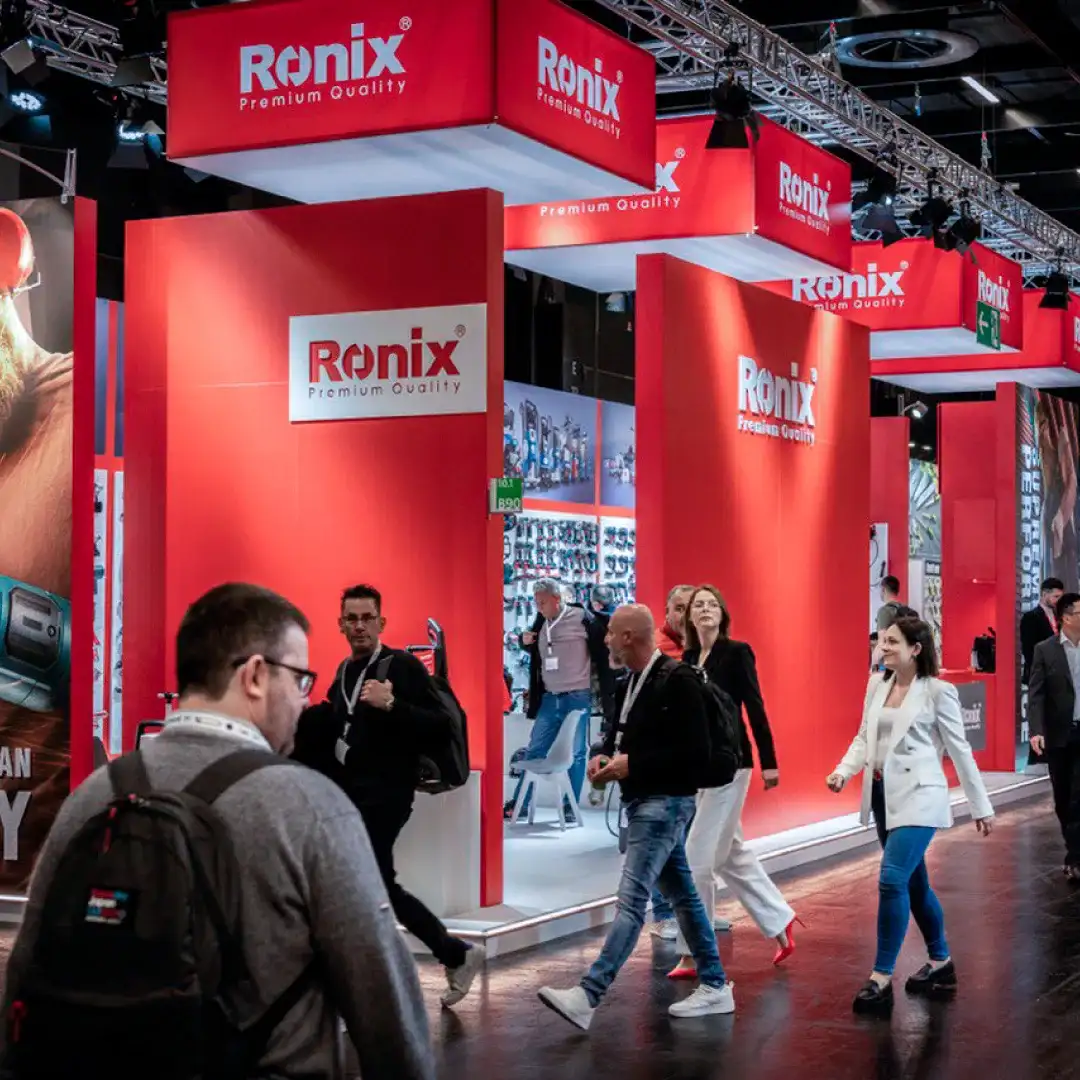
Recent Ronix exhibition activity reflects this direction. At Canton Fair 2025, visitors explored product lines such as the 86 All-In-One Series, the 40V 89 Series, and German-made tools. At Big 5 Global 2025, Ronix presented a wide tool range and connected with international visitors through a multilingual team.
These examples show why exhibitions remain valuable for tool brands and distributors. They create opportunities to explain product applications, understand buyer needs, compare categories, and build long-term B2B relationships.
Different buyers have different priorities:
| Buyer Type | Main Priority |
| Contractors | Tools that solve jobsite problems and reduce downtime |
| Distributors | Categories with repeat demand and bundling potential |
| Retailers | Products that are easy to explain and display |
| Industrial buyers | Durability, safety, spare parts, accessories, and operating cost |
| Professional users | Speed, control, comfort, accuracy, and reliability |
This is why product education is becoming more important. Buyers need clear explanations of applications, compatibility, safety, maintenance, and category selection.
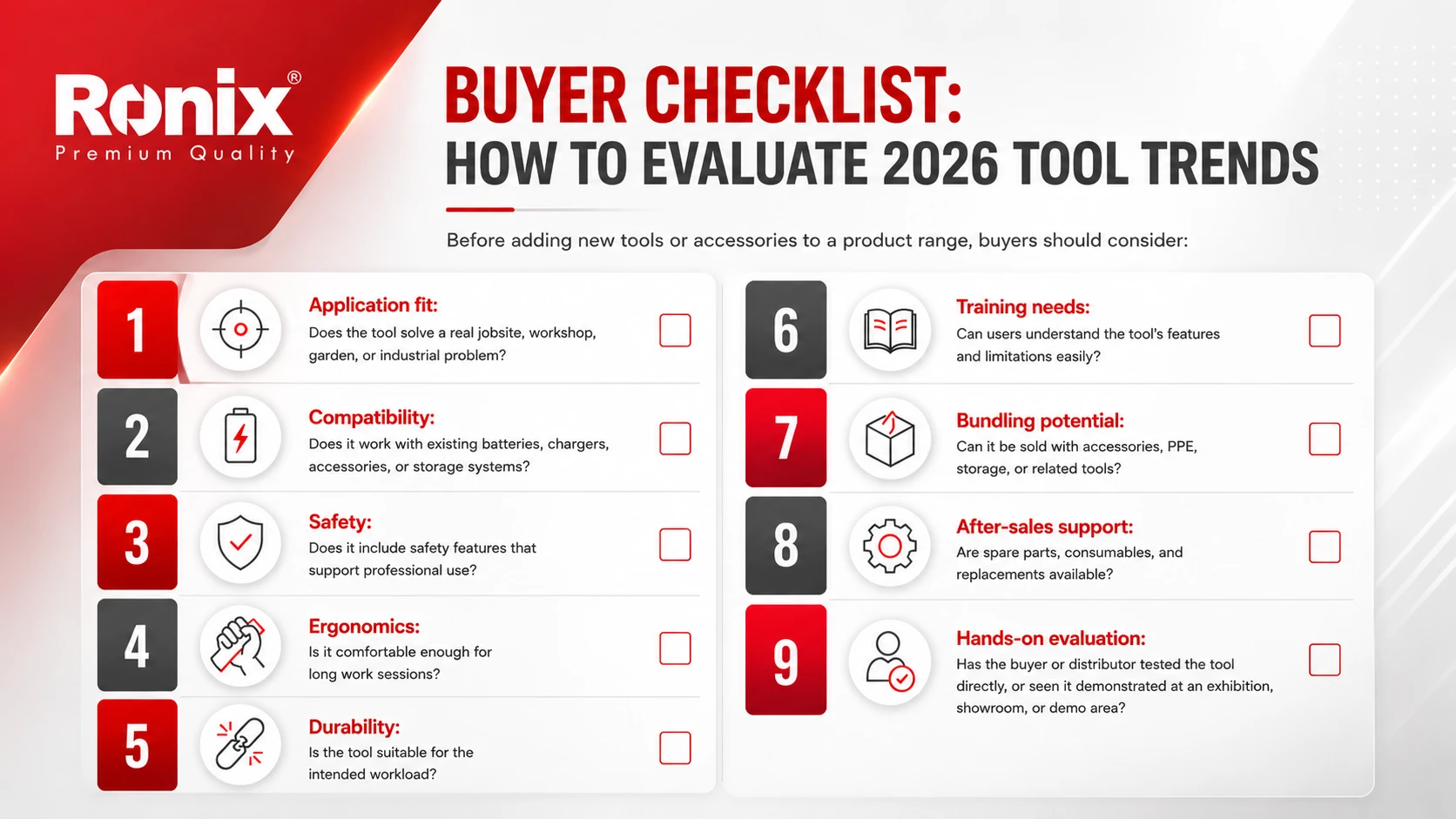
Buyer Checklist: How to Evaluate 2026 Tool Trends
Before adding new tools or accessories to a product range, buyers should consider:
- Application fit: Does the tool solve a real jobsite, workshop, garden, or industrial problem?
- Compatibility: Does it work with existing batteries, chargers, accessories, or storage systems?
- Safety: Does it include safety features that support professional use?
- Ergonomics: Is it comfortable enough for long work sessions?
- Durability: Is the tool suitable for the intended workload?
- Training needs: Can users understand the tool’s features and limitations easily?
- Bundling potential: Can it be sold with accessories, PPE, storage, or related tools?
- After-sales support: Are spare parts, consumables, and replacements available?
- Hands-on evaluation: Has the buyer or distributor tested the tool directly, or seen it demonstrated at an exhibition, showroom, or demo area?
A product may look strong on paper, but direct testing can show how it feels during real use. Grip comfort, balance, trigger response, visibility, weight, and vibration are easier to judge when buyers can handle the tool directly.
Conclusion
The top tool industry trends in 2026 show a clear direction for the global tools market: cordless platforms, smart tools, ergonomic tools, advanced safety features, compact power tools, smarter garden tools, practical accessories, and stronger fastening solutions.
For buyers, distributors, and retailers, these trends are more than exhibition highlights. They show how tool demand is changing in real working environments. Professional users need tools that save time, improve safety, reduce fatigue, support mobility, and work as part of complete systems.
Ronix’s exhibition activity also reflects this wider industry direction. Across international trade events, buyers increasingly expect direct experience, clear product education, reliable category planning, and complete tool solutions.
In this market, brands that offer complete solutions can create stronger value than brands that only sell individual tools. A complete solution may include power tools, shared batteries, chargers, accessories, PPE, storage, spare parts, technical support, and after-sales service. For distributors and professional buyers, this makes supplier selection more strategic because the right partner can support both product performance and long-term business planning.
The companies that succeed in this changing market will not simply offer more tools. They will help users choose better, work safer, organize smarter, and build complete solutions for real jobsites.
FAQ
What are the biggest tool industry trends in 2026?
The biggest tool industry trends in 2026 include cordless platforms, smart tools, ergonomic design, safety-focused features, compact power tools, smarter garden tools, and stronger fastening solutions.
Why are cordless platforms important for tool buyers?
Cordless platforms help users work across multiple applications with shared batteries and chargers. For distributors, they also create stronger opportunities to sell accessories, storage, PPE, and replacement batteries.
Are smart tools worth buying?
Smart tools are worth considering when their features improve accuracy, safety, maintenance, quality control, or productivity. Buyers should avoid choosing smart features only for novelty.
Why are compact power tools becoming more popular?
Compact power tools are becoming more popular because many users need better access, control, and mobility, especially in tight spaces, overhead work, installation, repair, and maintenance tasks.
Why do tool exhibitions matter for brands like Ronix?
Tool exhibitions help brands like Ronix meet distributors, importers, wholesalers, retailers, and professional users directly. They also give buyers a chance to compare products, ask technical questions, evaluate product ranges, and understand how tools perform in real applications.

Giselle
14 June 2026