- 6min
- 228
- 0
Contents
Garden work is not always quiet. A leaf blower near a hotel, a hedge trimmer outside a school, or a mower beside an apartment building can disturb a lot of people.
For landscapers, noise is now part of choosing the right tool. Power still matters, but so do working hours, operator comfort, maintenance, and the people nearby. Low-noise garden tools can help professionals work with less disturbance in these sensitive areas.
What Does “Low Noise” Mean?
Garden-tool specifications may show two different noise values:
- LWA is the sound power produced by the machine.
- LpA is the sound pressure measured at the operator’s position.
Both are normally shown in dB(A), but they do not mean the same thing. When comparing quiet garden tools, check that the figures use the same measurement method.
Explore Ronix’s diverse collection of gardening tools
Real working noise may also be different from the value in the manual. It changes with motor speed, cutting load, tool condition, accessories, distance, and nearby walls.
Battery vs Petrol Garden Tools: Which Are Quieter?
Battery garden tools are often quieter because they do not have a petrol engine, exhaust, or continuous idle noise. This is especially useful during stop-and-start jobs such as hedge trimming and pruning.
However, cordless does not mean silent. A blower still produces noise from fast-moving air. A mower produces noise from its blade and deck. A trimmer line can also become loud at high speed.
| Battery tools | Petrol tools |
| No engine or exhaust noise | Engine, exhaust, and cutting noise |
| No noise while the trigger is released | Engine may continue idling |
| Lower maintenance requirements | Engine and fuel-system maintenance |
| Runtime depends on the battery | Runtime depends on fuel supply |
| Often suitable for sensitive areas | Useful for long, heavy-duty work |
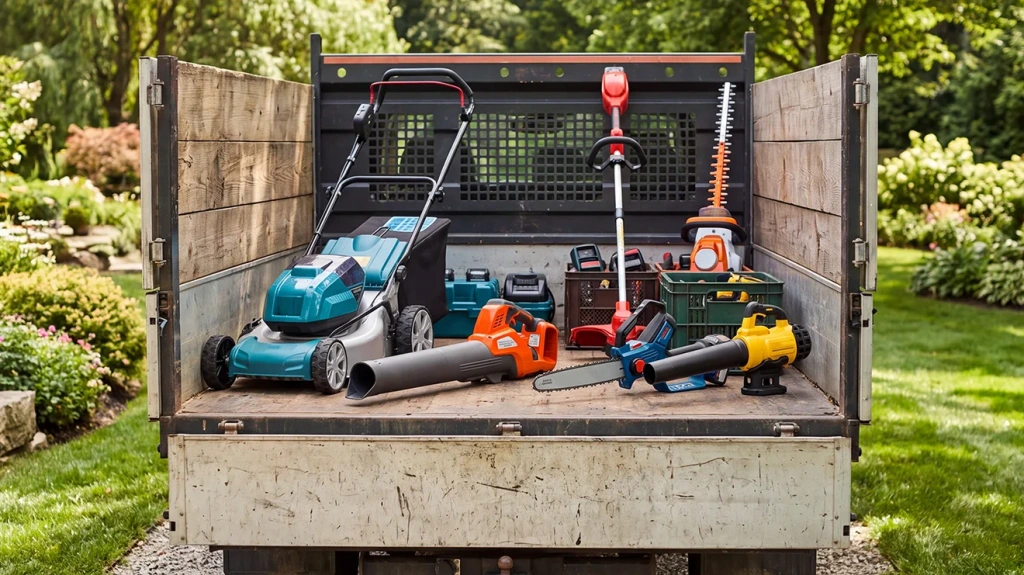
For urban landscaping teams, a cordless platform can also make fleet planning easier. The Ronix 86 Series and 89 Series are built around shared battery systems, allowing different cordless tools within the same series to use compatible batteries and chargers. This can be useful for maintenance around residential buildings, hotels, schools, parks, and other occupied spaces, where crews may switch between trimming, blowing, and cutting tasks during the same shift.
For lighter or intermittent urban work, this makes Ronix cordless tools a practical alternative to petrol equipment. Petrol tools may still be the better choice for heavy cutting, very large sites, or long shifts where charging access is limited.
The choice between battery and petrol tools depends on the job. For lighter or intermittent urban work, battery tools often make sense. Petrol equipment may still be needed for heavy cutting, large sites, or long shifts without charging access.
Which Garden Tools Need the Most Attention?
Low-Noise Leaf Blowers
A low-noise leaf blower can still produce strong airflow noise, even when it uses a battery. Look for variable-speed control and use full power only when needed. Nozzle design, air speed, and air volume all affect sound and performance.
For example, the Ronix 8644 20V Cordless Blower offers two speed settings, a maximum airflow of 8.1 m³/min, and a published noise level of 85 dB. The adjustable airflow is particularly useful in urban work because full power is not necessary for every cleanup task.
Grass Trimmers
Most trimmer noise comes from the motor and fast-moving cutting line. Incorrect line length or diameter can increase motor load and noise. Always use the size recommended by the manufacturer.
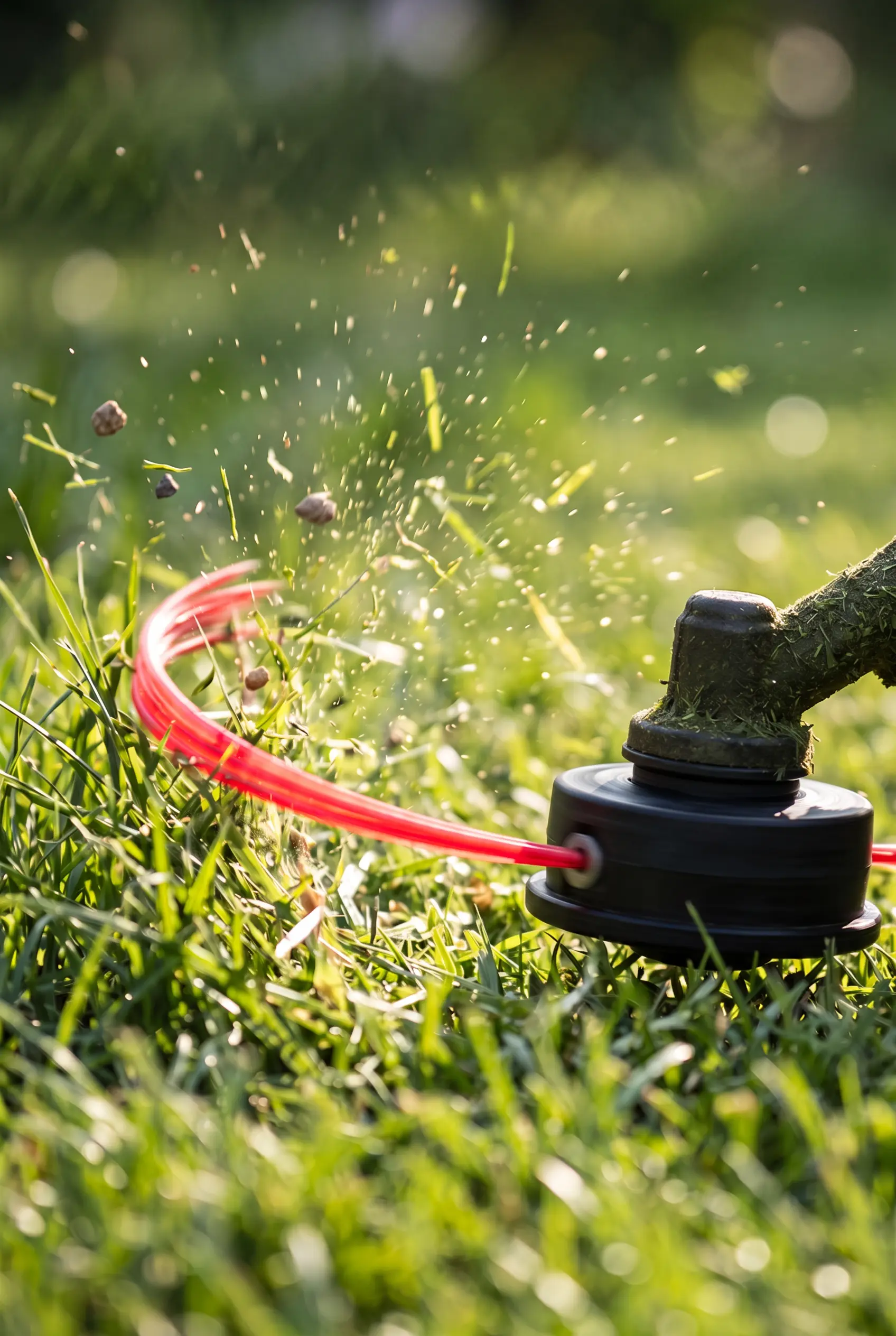
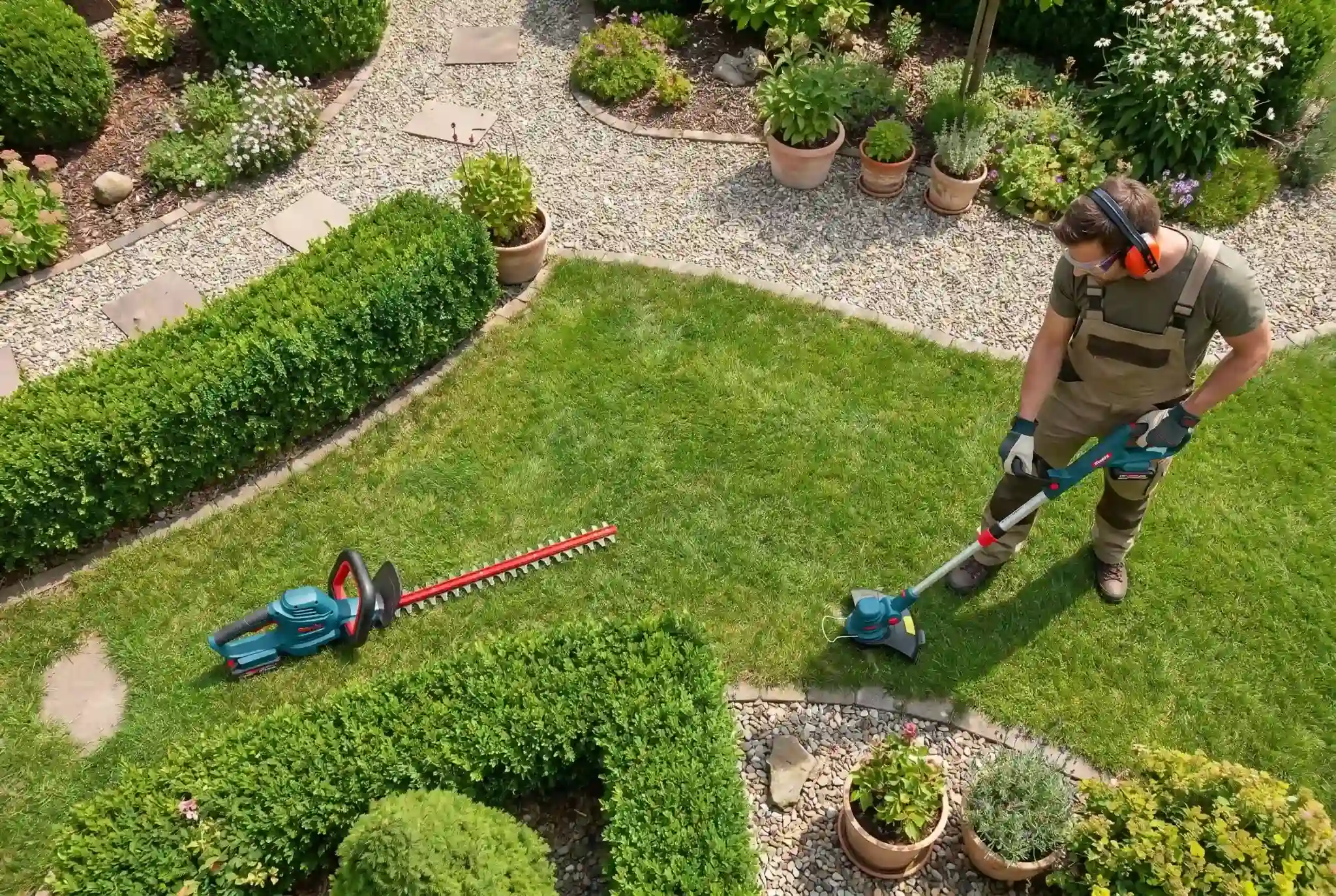
For edging and lighter grass maintenance, the Ronix 8921 20V Cordless Grass Trimmer combines a 300 mm cutting width with a pivoting head and telescopic shaft. Its cordless design makes it easier to work around paths, courtyards, residential gardens, and other areas where mobility and short stop-and-start operation are important.
Hedge Trimmers
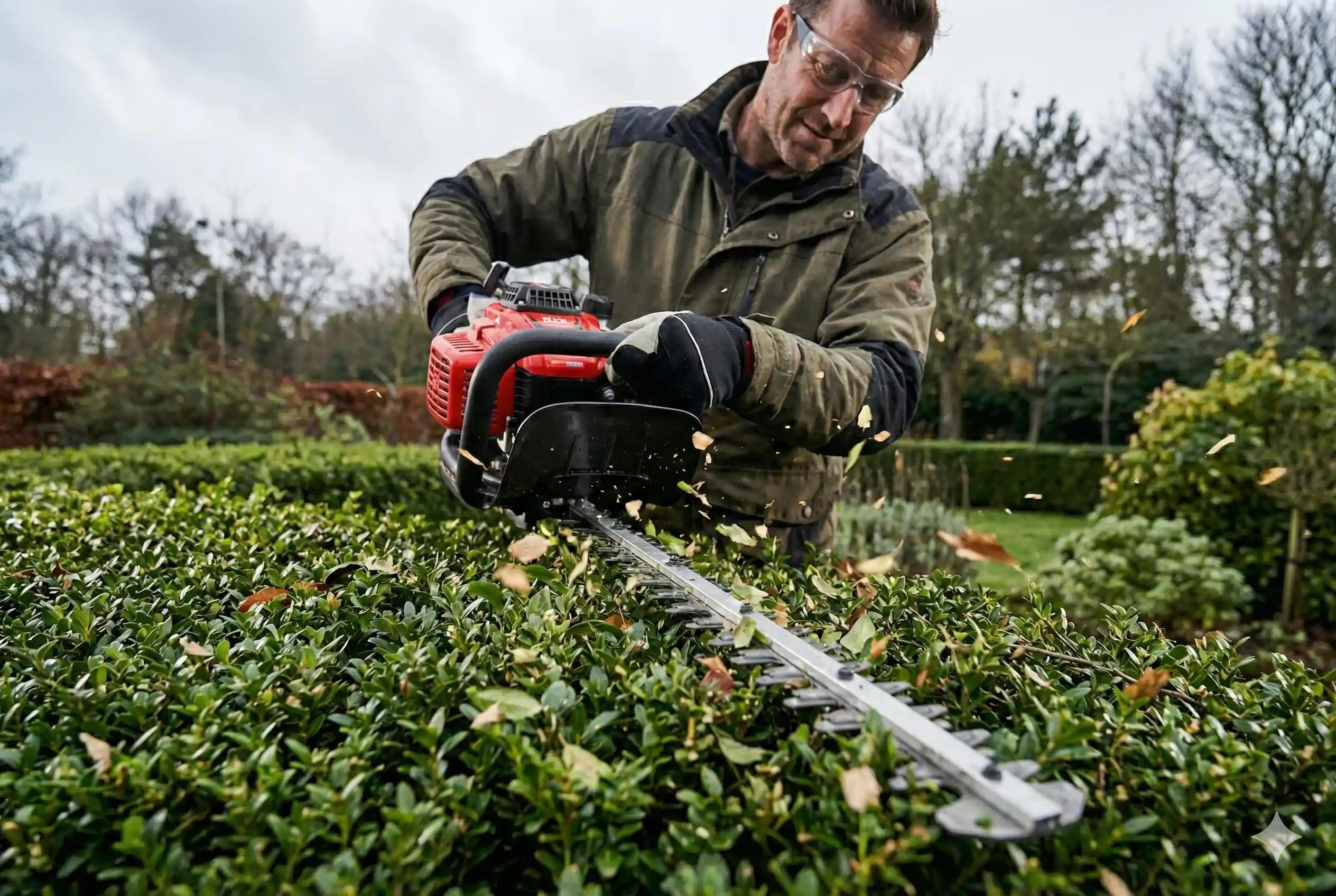
The motor, gearbox, and moving blades all create sound. A blunt or dry blade makes the tool work harder. Keeping the blade sharp, clean, and lubricated can reduce vibration and unnecessary noise.
A cordless option such as the Ronix 8920 20V Cordless Hedge Trimmer is well suited to this type of stop-and-start work. It has a 17 mm cutting capacity and a dual-action blade designed to reduce vibration. It also has a no-load runtime of about 55 minutes with a 2.0 Ah battery and 73 minutes with a 4.0 Ah battery, giving landscapers the option to match battery capacity to the job.
Quiet Lawn Mowers
A quiet lawn mower still produces sound from its motor or engine, blade speed, airflow, and deck vibration. Wet or heavy grass increases the cutting load, so the mower may become louder and use more energy.
How to Choose Low-Noise Garden Tools
Do not judge a tool by its power source alone. Check:
- Sound power and operator sound-pressure ratings
- Testing method and measurement uncertainty
- Performance under load
- Variable-speed control
- Battery runtime and charging time
- Weight with the battery installed
- Balance and vibration
- Availability of blades, line, chains, and other spare parts

For professional work, the runtime of low-noise gardening tools should be considered under real working conditions. A blower running at maximum speed uses its battery much faster than a hedge trimmer used in short intervals.
Use the Tool Properly
Even quiet landscaping equipment can become a problem when it is poorly maintained or used at full speed all day.
Keep blades and chains sharp. Replace damaged cutting parts. Check loose guards, worn bearings, blocked air passages, and incorrect accessories. These problems can increase noise, vibration, and battery use.
Work planning also helps. Keep noisy tasks away from classrooms, patient rooms, hotel rooms, and homes whenever possible. Use lower speed settings for light work and schedule louder jobs during permitted hours.
Noise Rules and Operator Safety
Community noise and operator exposure are two separate issues. A tool may meet local working-hour rules but still expose its operator to harmful noise during a long shift.
Noise limits differ between countries and cities. Contractors should check local requirements instead of relying on one general decibel limit. Hearing protection may still be required, even with battery-powered equipment.
For technical comparison, manufacturers may use standards covering sound power and sound pressure, including ISO 3744 and ISO 11201. OSHA also identifies noise as a hazard in landscaping work. OSHA landscaping guidance

Final Word
Good low-noise garden tools must do more than produce smaller numbers on a specification sheet. They should deliver enough cutting or airflow performance without unnecessary speed, vibration, or operating time.
For urban landscaping, the best setup is usually a well-matched cordless tool, the correct accessory, enough battery capacity, and regular maintenance. That combination keeps the work moving while causing less disturbance around homes, schools, parks, hospitals, and hotels.

Giselle
22 August 2026