- 9min
- 305
- 0
Contents
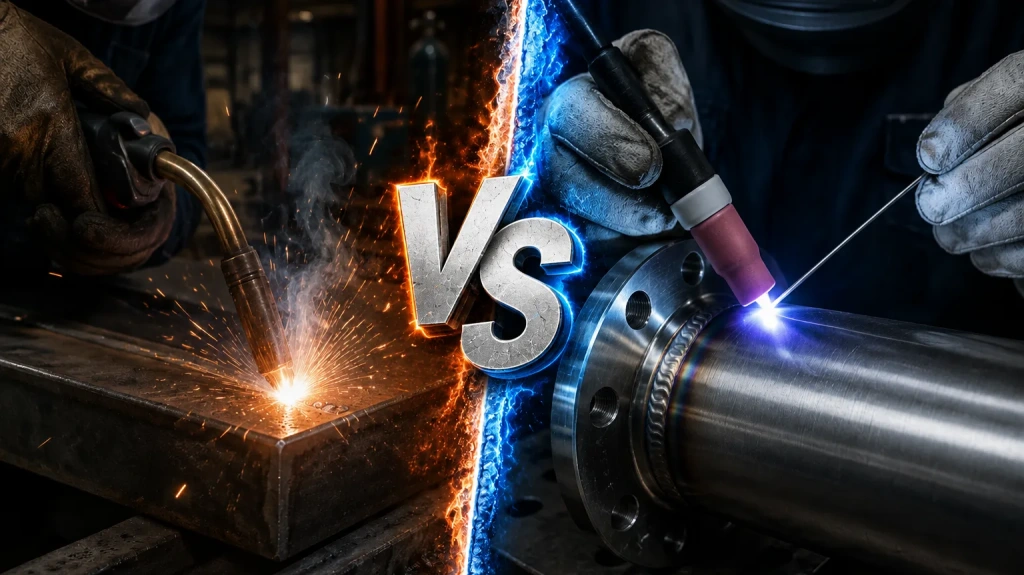
Choosing between MIG vs TIG welding can feel confusing, especially if you are new to welding. While both ways use an electric arc and can produce strong, clean joints, the way they create a weld is quite different and each process works best in different situations. The right welding method depends on the material, thickness, finish, and level of control your project requires.
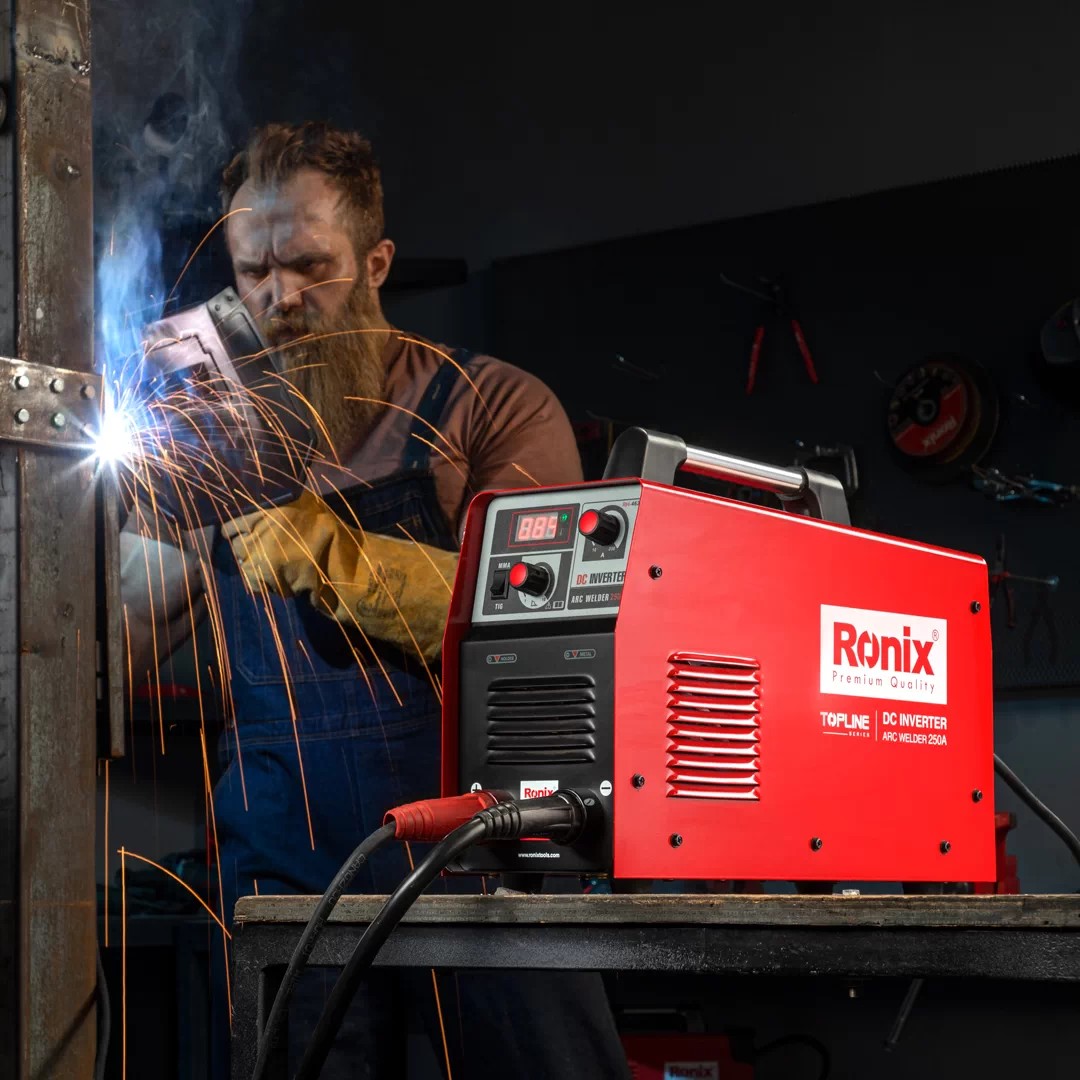
MIG welding vs TIG Welding looks similar at first, but their equipment, technique, speed, and applications are not the same. Use the wrong welding process, and you may end up wasting time, materials, and effort. Whether you are repairing metal at home or working in a professional workshop, it helps to understand how MIG and TIG welding differ in various aspects.
Ready to find out which welding method suits your work? This TIG welding vs MIG comparison will help you understand the differences and choose the right process for your project.
Find the right wholesale welding machine solutions to meet your industrial and business requirements
What is MIG Welding?
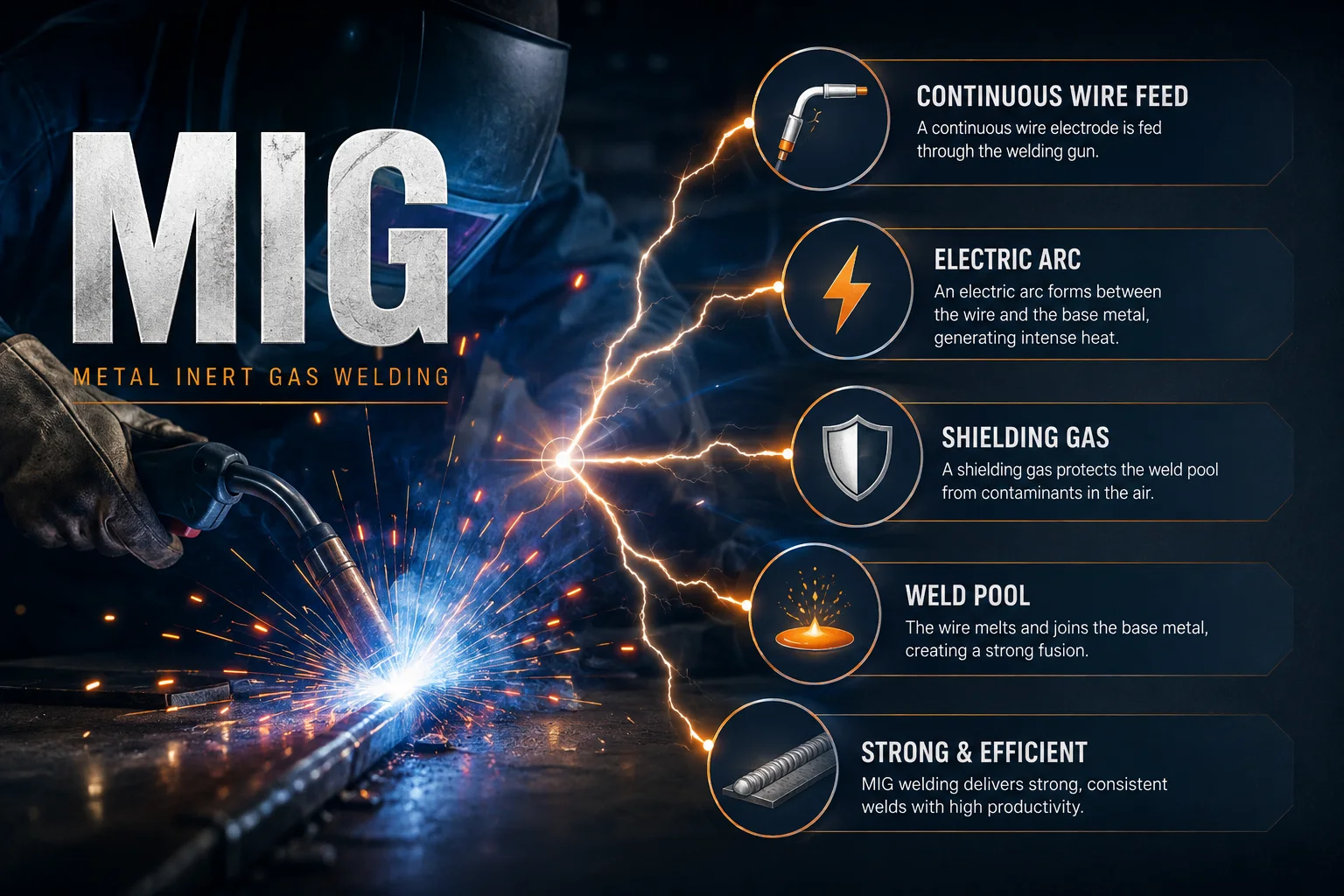
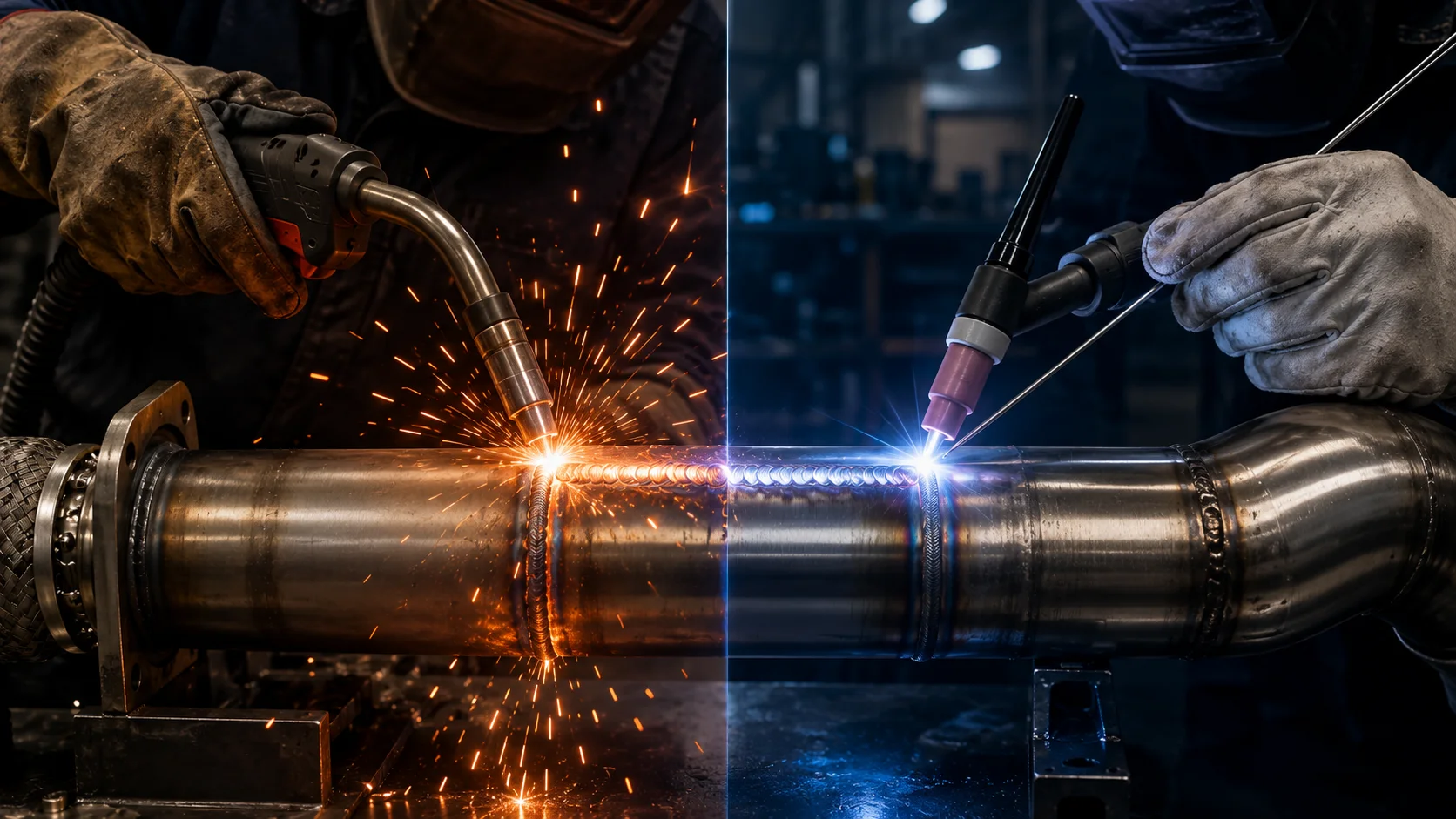
So, what exactly is MIG welding? Think of it as a welding method that feeds wire through a gun while an electric arc melts it into the joint. The wire acts as both the electrode and the filler material, which keeps the process fairly straightforward. At the same time, shielding gas flows around the weld area to protect the molten metal from contamination. This process is also known as Gas Metal Arc Welding, or GMAW.
What is TIG Welding?
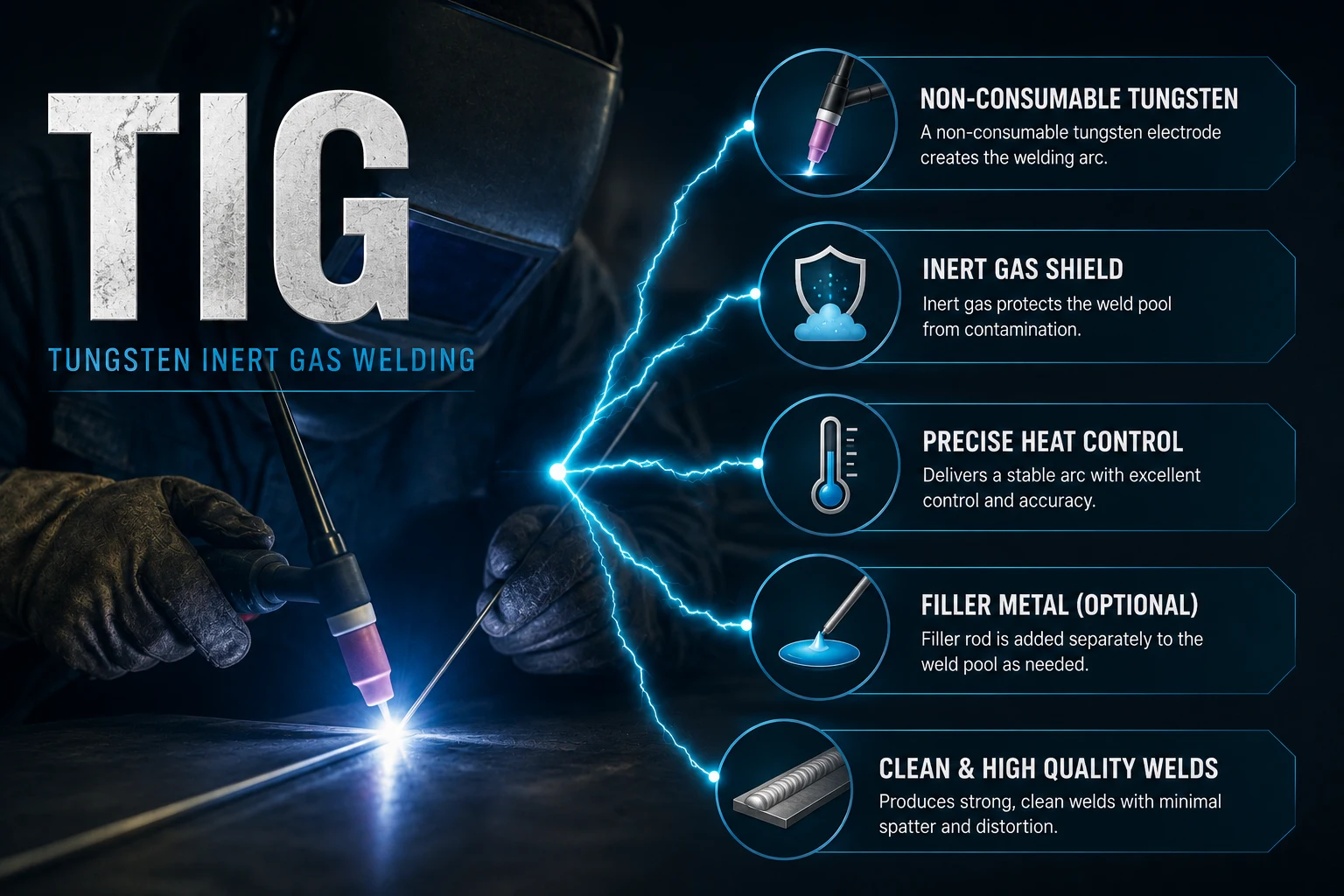
The process is a little different here. TIG welding uses a non-consumable tungsten electrode to create the arc and the welder adds filler separately by hand. A shielding gas, usually argon, also flows around the weld area to protect it from contamination. Also known as Gas Tungsten Arc Welding, or GTAW, this process gives the welder more direct control while requiring more coordination.
MIG vs TIG Welding: Quick Comparison
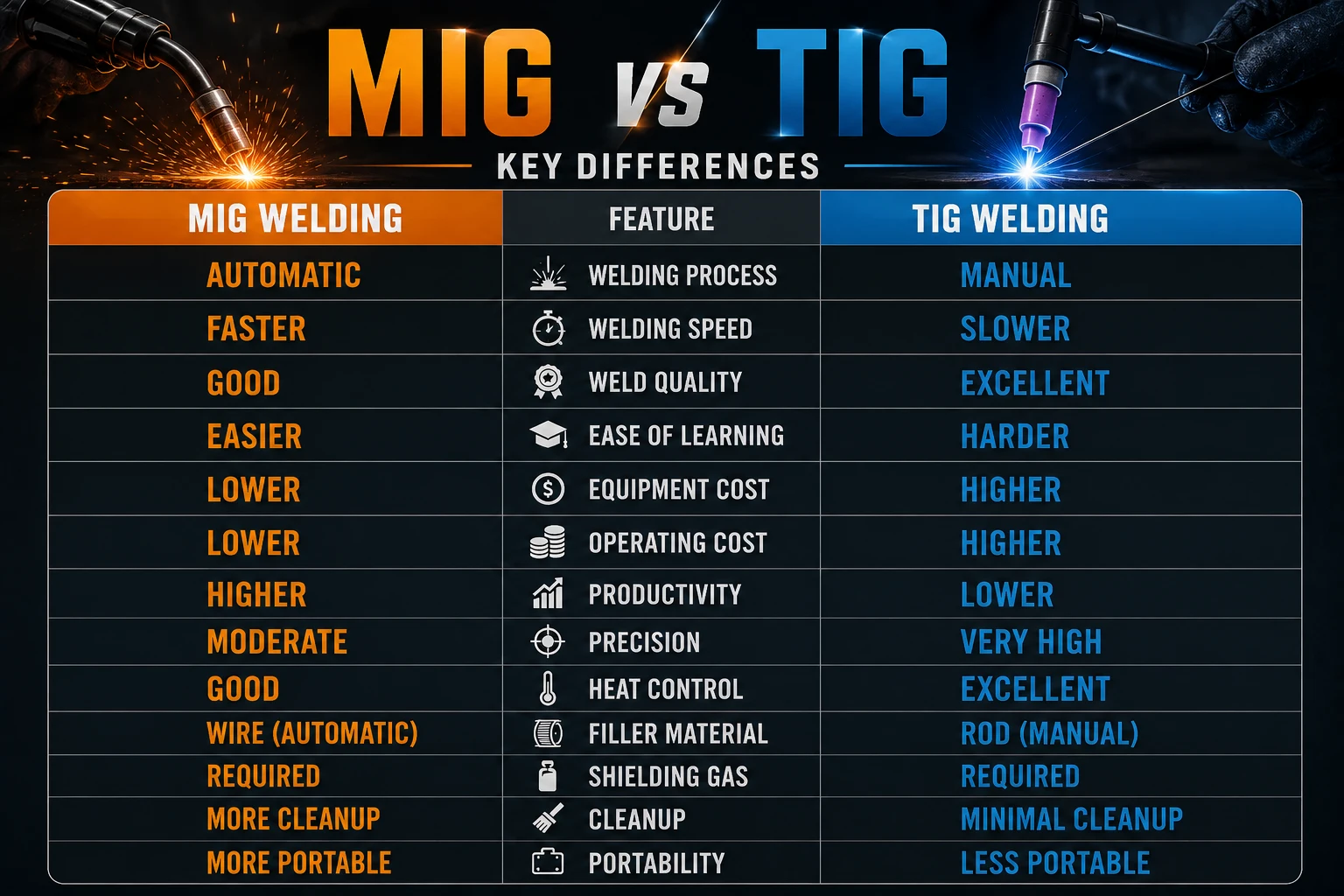
| Feature | MIG Welding | TIG Welding |
| Ease of Use | Easier to operate | Requires more control |
| Welding Speed | Faster | Slower |
| Weld Appearance | Good, may need cleanup | Clean and precise |
| Precision | Moderate | High |
| Cost | Lower overall cost | Higher overall cost |
| Equipment Price | Usually more affordable | Usually more expensive |
| Productivity | High | Lower |
| Learning Curve | Shorter | Steeper |
| Thin Metals | Suitable with care | Better control |
| Thick Metals | Well suited | Slower on thick sections |
| Aluminum | Good for thicker sections | Better for thin sections |
| Stainless Steel | Fast and practical | Clean and controlled |
| Maintenance | Generally simpler | More setup and care |
| Automation | Easy to automate | Less commonly automated |
| Best Users | Beginners and production welders | Skilled and precision welders |
This TIG welding vs MIG welding comparison highlights the main differences in speed, precision, cost, materials, and applications.
Key Differences Between MIG and TIG Welding
Although looking similar at first, there are a number of factors to consider when comparing TIG vs MIG welding. Let’s take a quick look at some of the key differences here in terms of speed, strength, appearance, cost, productivity, etc.
1- Electrode and Filler Metal
MIG: Uses a continuously fed wire that acts as both the electrode and the filler metal
TIG: Uses a non-consumable tungsten electrode, while filler metal is added separately when needed
2- Welding Speed
MIG: Generally faster, allows the operator to create longer welds with fewer interruptions
TIG: It is slower because the welder must carefully control the torch, heat, and filler metal
3- Welding Technique
MIG: The operator pulls the trigger and guides the welding gun along the joint while the machine feeds the wire automatically
TIG: Usually requires the operator to control the torch with one hand and add filler rod with the other
4- Weld Appearance
MIG: May require more cleanup depending on the settings and the welder’s technique
TIG: Produces smoother beads with little spatter and less finishing work
5- Precision and Heat Control
MIG: Provides consistent heat, but it does not offer the same level of fine adjustment
TIG: Offers greater control over the arc and heat input, making it easier to manage delicate welds and avoid overheating the workpiece
6- Shielding Gas
MIG: Commonly uses argon-based mixtures, often combined with CO₂
TIG: Usually uses an inert gas such as argon
7- Ease of Learning
MIG: Generally easier for beginners, allows the operator to focus mainly on gun position and travel speed
TIG: Requires more hand coordination and careful heat control, so it usually takes longer to master
8- Weld Strength
MIG: Can produce strong, reliable joints at a faster rate
TIG: Often provides better control over penetration and weld quality
9- Productivity
MIG: Usually has the advantage for jobs where output matters
TIG: Focuses more on control and finish than production speed
10- Cost
MIG: Often more economical for long welds and repeated production work
TIG: Usually costs more in terms of labor because the process is slower and requires a more experienced operator
Pros and Cons of MIG Welding
Examining the benefits and drawbacks of both MIG and TIG welding for your tasks is a necessary step before deciding on which process to use. In this section, the main advantages and limitations of each process are provided.
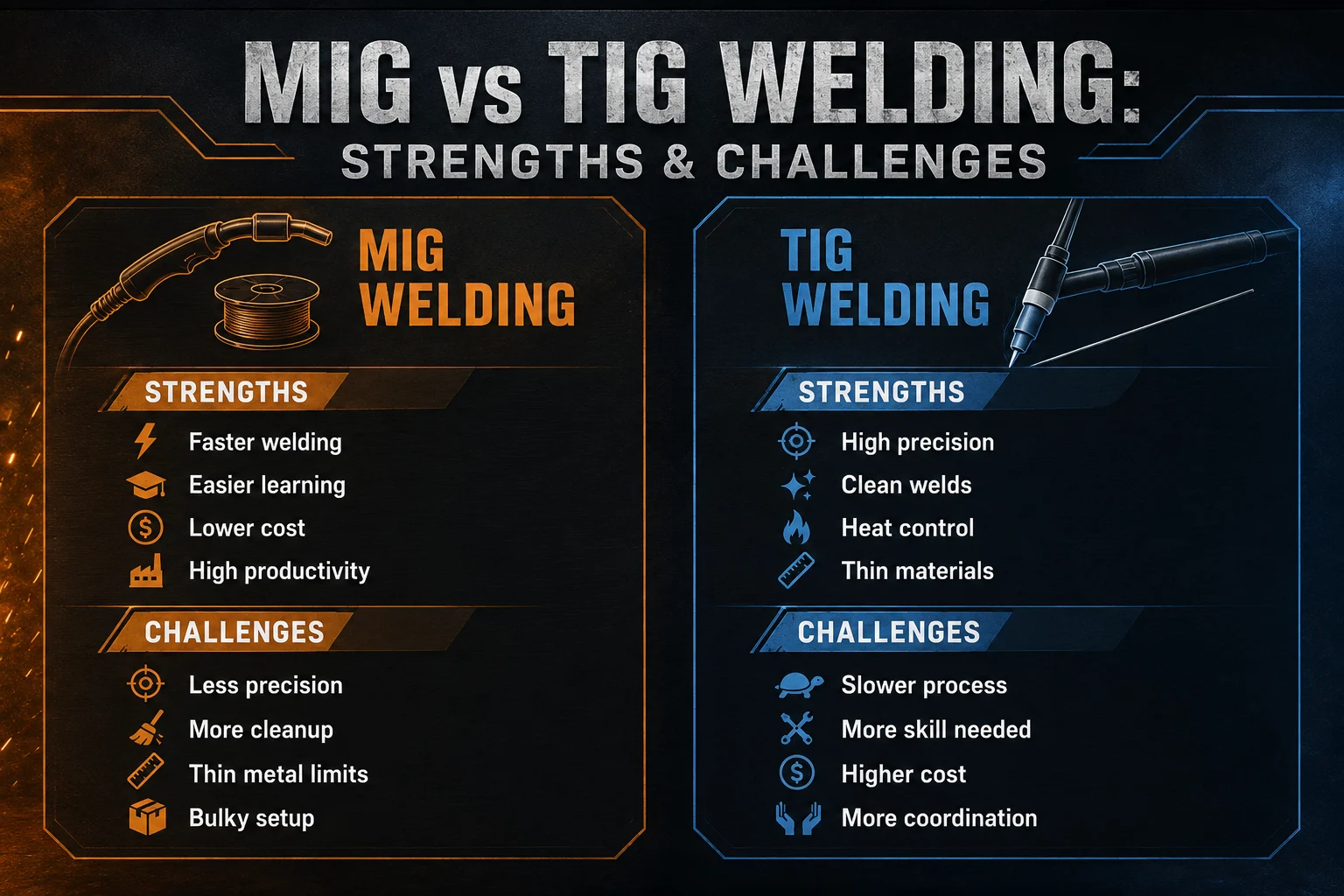
Pros of MIG Welding:
- Works well for common metals such as steel, stainless steel, and aluminum
- More affordable equipment
- Good option for general fabrication work and thicker material
- Easier to learn for beginners
- Suitable for semi-automatic and automatic welding systems
Cons of MIG Welding:
- Not the best option when a highly detailed weld is needed
- Less suitable for very thin materials
- Welds may require more cleanup due to spatter
- Equipment setup can be bulky due to gas cylinders and wire feed systems
Pros and Cons of TIG Welding
Pros of TIG Welding:
- Produces clean, precise welds with minimal spatter
- Works well for thin materials and detailed welding jobs
- Allows welding with or without filler material, depending on the application
- Suitable for a wide range of metals, including stainless steel, aluminum, and specialty alloys
- Provides excellent control over heat and weld placement
Cons of TIG Welding:
- Requires more skill and practice to master
- Usually has a higher equipment and operating cost
- Less practical for large production jobs where speed matters
- Requires more operator coordination during welding
MIG vs TIG for Different Applications
There is no single welding method that works perfectly for every job. From small DIY projects to large industrial jobs, both MIG and TIG welding processes are applicable depending on the project. But which process is better for each application? Let’s find out!
Automotive
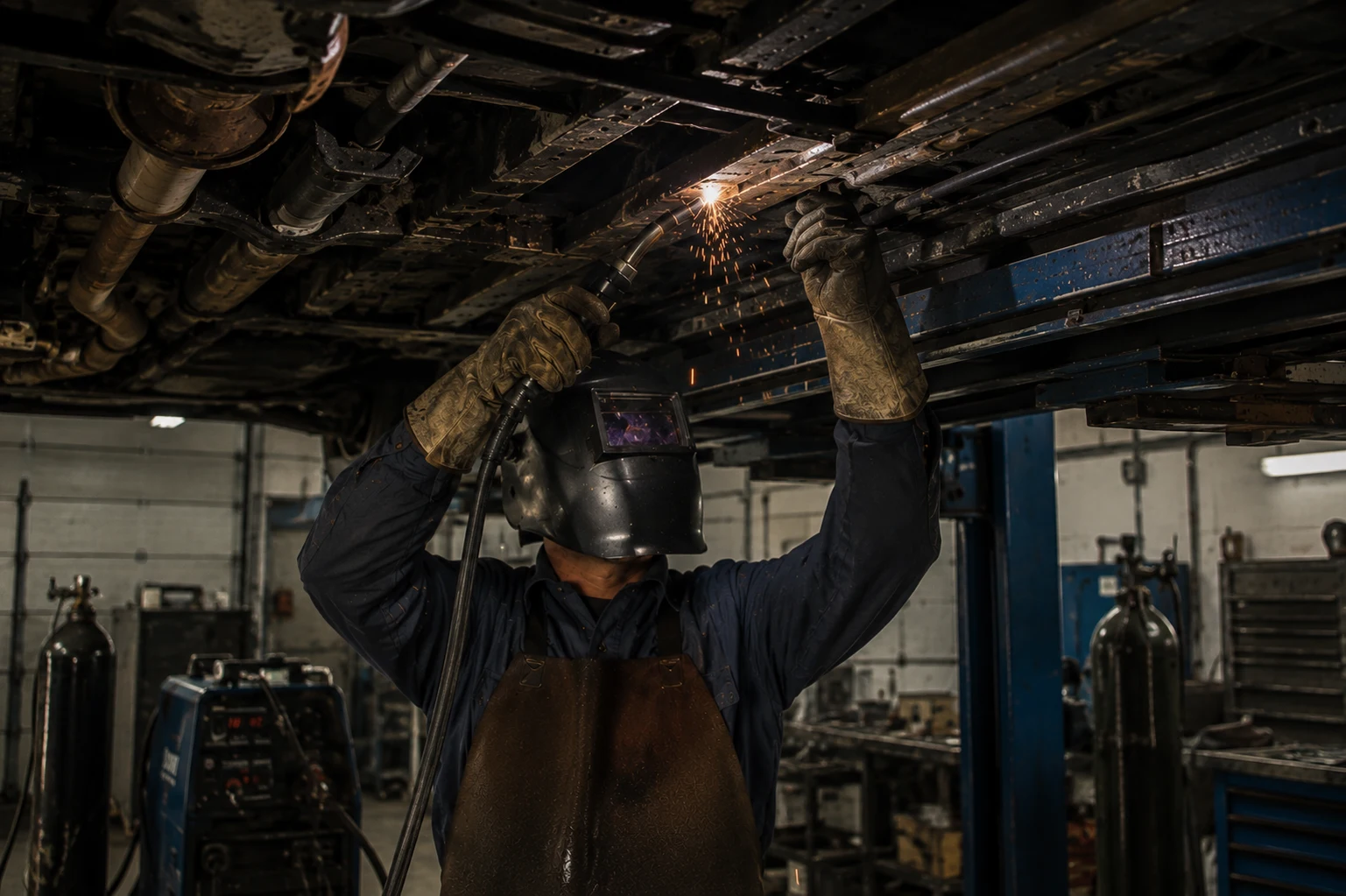
TIG is usually preferred for exhaust parts, thin panels, and visible welds that need a cleaner finish while MIG is the better option for frames, body repairs, and general fabrication as it is faster and easier to operate.
Construction
For construction work that involves long welds and thicker steel, MIG is often the more practical option. TIG is mostly used for detailed work and is not normally the preferred option.
Manufacturing
Both processes are practical in manufacturing. For better speed and productivity MIG is a common choice while TIG is more practical when heat control and appearance matters most.
Aerospace
In this sector, TIG finds its place in crafting delicate aircraft components such as fuel tanks. On the other hand, MIG is employed for structural elements like brackets and frames where speed and durability are prominent.
DIY Projects
For beginners and DIYers, MIG is more straightforward to work with and common for workshop projects. TIG mostly suits experienced users working on detailed parts.
Home Repairs
MIG is the common technique if you need to repair brackets, furniture, gates, and general metal repairs. When the repair involves thin metal and a neat finish, use TIG.
Pipe Welding
The required weld quality, pipe thickness, and material are all important in choosing between MIG vs TIG welding. TIG is preferred for welding thin-wall pipes or tubes to avoid issues like burn-through or distortion.
Fabrication
Handling long welds and thicker materials efficiently, MIG is widely used for general fabrication. However, TIG is better suited to visible joints and precision fabrication.
MIG vs TIG for Different Materials
The type of metal can change the whole welding process. Understanding your material is a key step for choosing the right welding type between MIG welding vs TIG. Let’s see how they compare on common materials like steel, stainless steel, and aluminum.
Steel
Steel is a common material in welding and for general fabrication and repairs MIG is often the better choice. However, TIG is also commonly for steel, especially for smaller parts and detailed work.
Stainless Steel
Both MIG and TIG welding processes are common for stainless steel jobs. As we normally need more control here, TIG is often preferred in order to have a smooth finish. When productivity is the priority, MIG can be the better choice.
Aluminum
Welding aluminum can be tricky because the material reacts differently than steel. MIG welding helps handle larger aluminum sections with higher speed, while TIG welding gives you better control when precision and appearance are the priority.
Thin Metal
For thin metals, you need more control over heat input to reduce the risk of warping; therefore, TIG welding is the better option here. MIG welding is also applicable but needs careful setting to avoid overheating the material.
Thick Metal
When filling larger joints in thick metals, you need continuous wire feed for faster welding and this is possible in MIG welding. TIG also works here but it is generally slower.
Conclusion
So, which one should you choose between TIG vs MIG welding? The best welding method is not always the most precise or the fastest one. The right choice depends on your project and the one that matches your material, skills, and needs. Whether you choose MIG or TIG, understanding their differences will help you make a smarter choice for your next welding project.
To sum up in short, MIG welding is often the better choice for beginners and when speed and productivity matter. On the other hand, TIG welding is more practical for experienced users and a controlled process and cleaner finish.
FAQ
1- MIG vs TIG welding, which is stronger?
Both MIG and TIG welding can create strong results. MIG is better suited to thicker materials while TIG offers better control over heat and filler material. The final strength depends on the setting, material, joint design, and welding skill.
2- Which welding method is easier?
MIG welding is an easier process for beginners to learn as the machine automatically feeds the wire electrode and users can just focus on moving the welding gun.
3- Can MIG weld aluminum?
Yes, MIG is usually used for thicker aluminum parts and longer welds because of its high productivity and faster wire feed.
4- Is TIG better for stainless steel?
For stainless steel, TIG is a common process when precision, heat control, and appearance are the priorities. For larger stainless steel projects, MIG is still a good option.

Scott
7 August 2026