- 11min
- 1353
- 0
Contents
You have probably come across a dirty driveway, dusty patio, muddy car, or greasy workshop floor and thought, “Using a pressure washer is the easiest way to handle this.” Some types of pressure washers are better for home cleaning, some are built for heavy-duty outdoor work, and others are designed for hot water, steam, or industrial use.
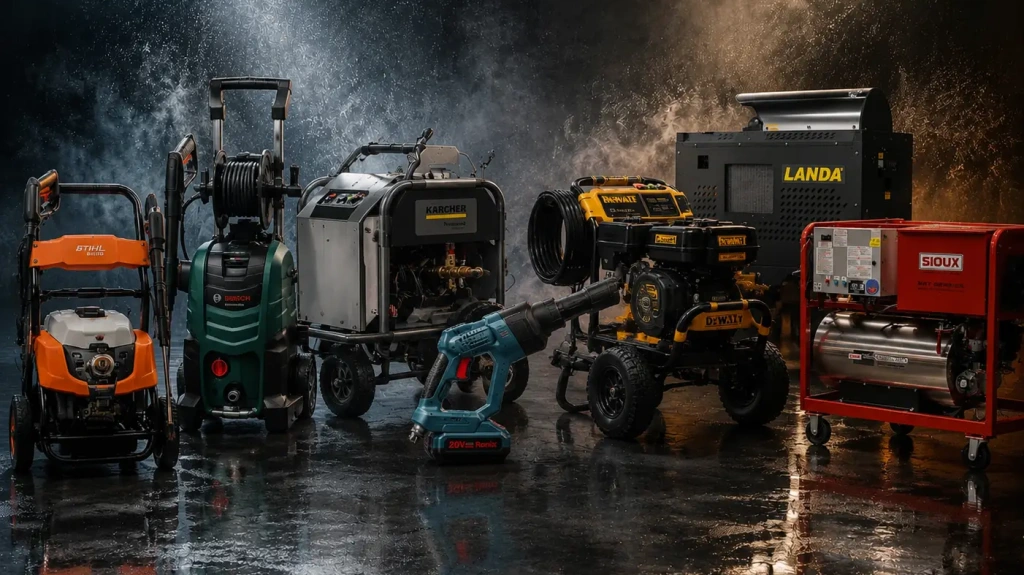
This guide helps you understand the different types of pressure washers, the practical use of pressure washers in different cleaning tasks, and what advantages and limitations each type has. It also includes one product example for each category to help you compare different options more clearly. Whether you are cleaning garden furniture, washing a car, removing dirt from outdoor surfaces, or looking for a more powerful option for tougher jobs, this article will help you compare different types in a simple and practical way.
Invest in premium wholesale pressure washers to win customers over
Types of Pressure Washers
When choosing a pressure washer, you need to know what separates one type from another. The power source, water temperature, mobility, and cleaning strength are the factors that separate these systems.
So, what are the different types of pressure washers? This section explains the most common types of pressure washers, with one product example, their functions, pros, and cons of each type. Note that these categories may overlap, since pressure washers can be classified according to multiple feature-based criteria.
Quick Pressure Washer Types Comparison Table
| Type | Best For | Strength | Limitations |
| Electric Pressure Washer | Cars, patios, garden tools, home cleaning | Easy to use, low maintenance, quiet operation | Limited mobility, needs power outlet |
| Gasoline Pressure Washer | Driveways, large outdoor areas, heavy dirt removal | High power, portable, no electricity needed | Loud, higher maintenance, emissions |
| Cordless Pressure Washer | Light cleaning, travel use, quick tasks | Highly portable, convenient, fast setup | Low pressure, short runtime |
| Diesel Pressure Washer | Industrial sites, agriculture, heavy-duty cleaning | Very powerful, long operation time | Expensive, heavy, high maintenance |
| Cold Water Pressure Washer | General cleaning, dirt, mud, dust | Simple, widely available, cost-effective | Less effective on grease/oil |
| Hot Water Pressure Washer | Grease, oil, workshop cleaning | Strong degreasing performance | Expensive, heavier system |
| Steam Pressure Washer | Deep industrial cleaning, sanitization | Extreme cleaning power, chemical reduction | Very expensive, specialized use |
Electric Pressure Washers
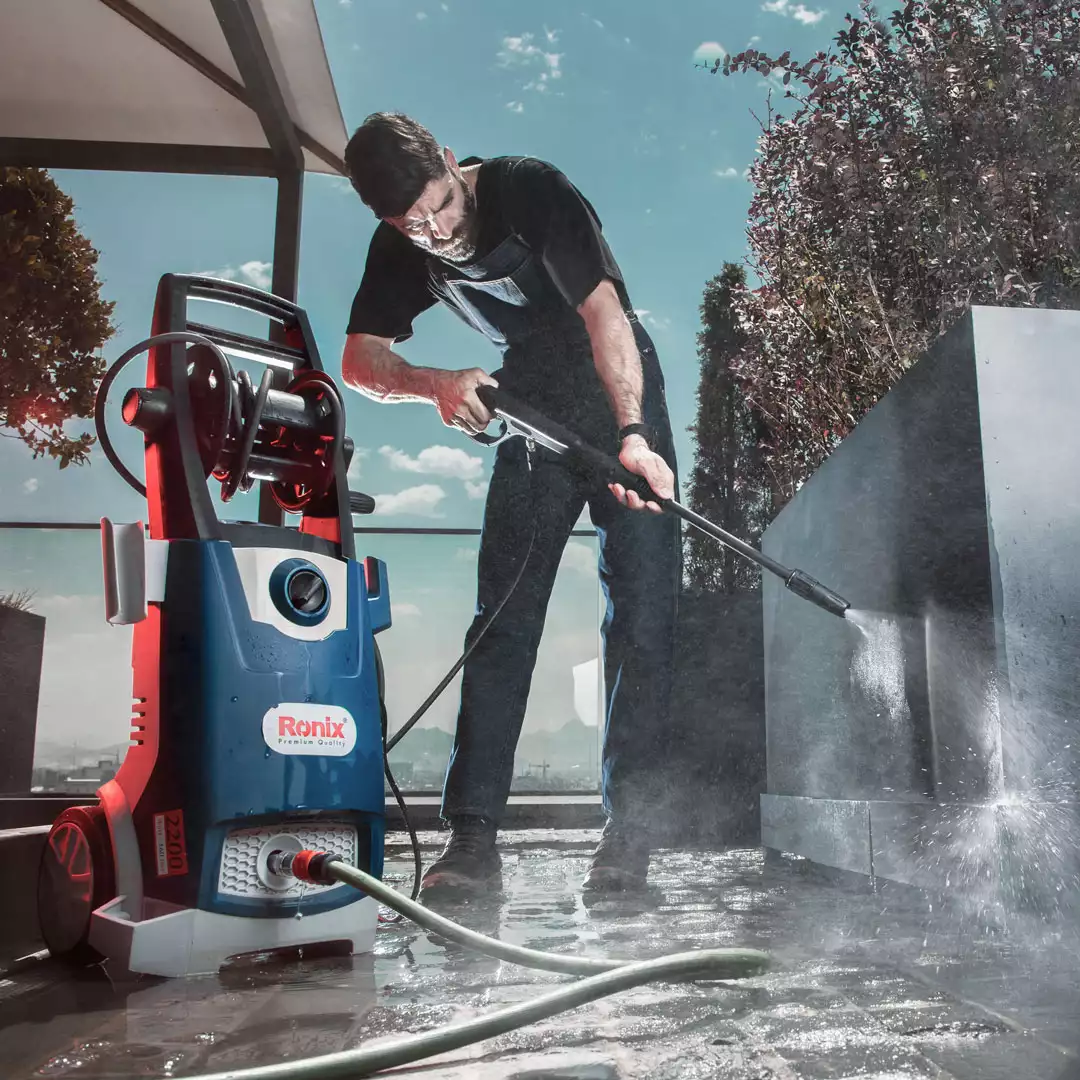
Electric pressure washers are commonly used for home cleaning tasks and general use of pressure washers in residential environments. They run on an electric motor, so they are easier to start, easier to store, and simpler to maintain than engine-powered models. For general household cleaning, electric models are often a convenient starting point.
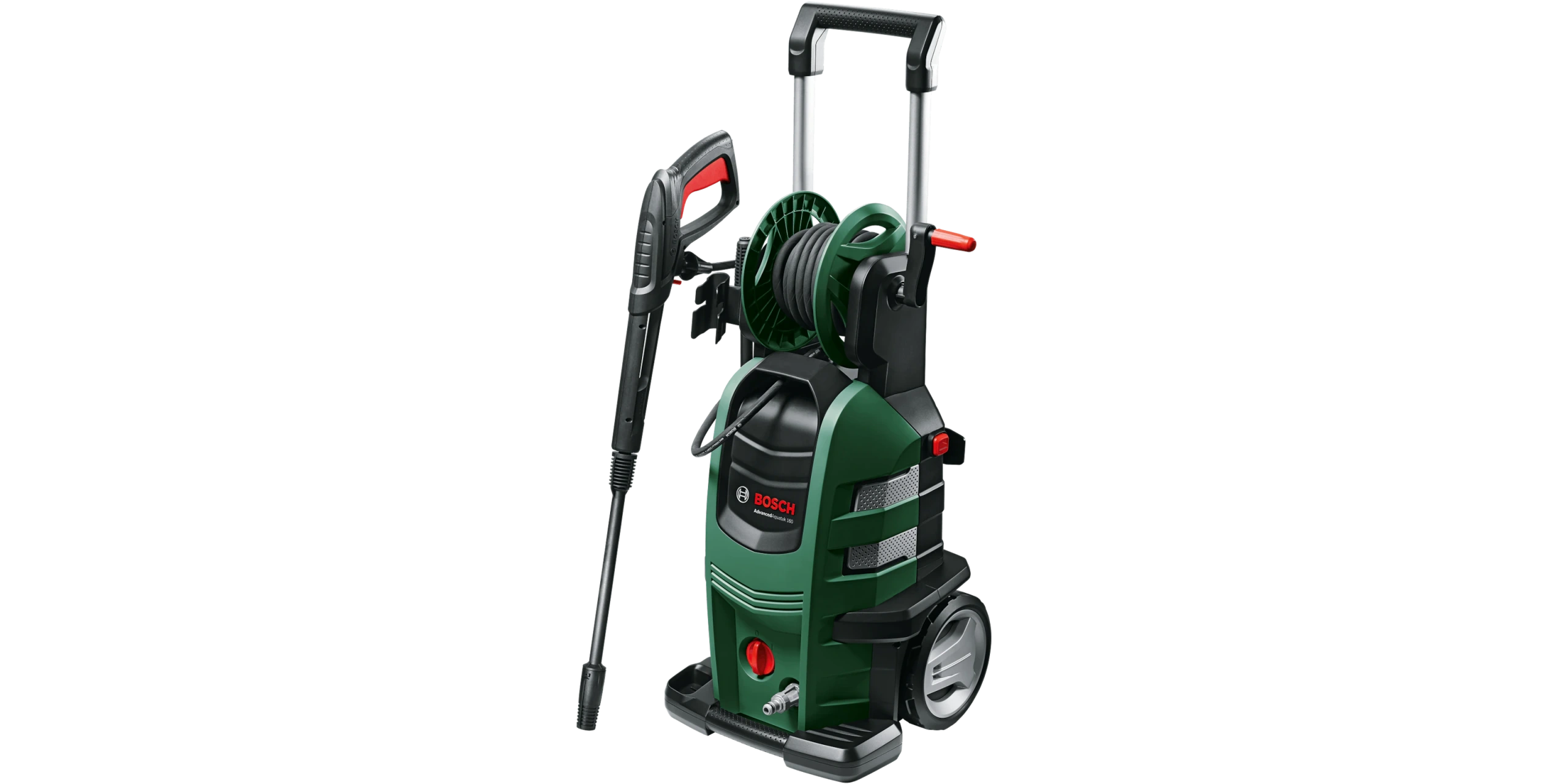
The Bosch Advanced Aquatak 160 is a corded electric pressure washer intended for demanding home and outdoor cleaning tasks. With an induction motor, 160-bar maximum pressure, and all-metal pump, it is a suitable example of a higher-performance electric pressure washer.
| Specification | Value |
| Motor power | 2,600 W |
| Max. pressure | 160 bar |
| Max. flow rate | 10 L/min |
| Max. flow temperature | 40 °C |
| Motor type | Induction |
| Pump type | 4-cylinder |
| Pump material | All-metal |
| Hose length | 8 m |
| Hose type | Steel-armored |
| Weight of machine | 23.9 kg |
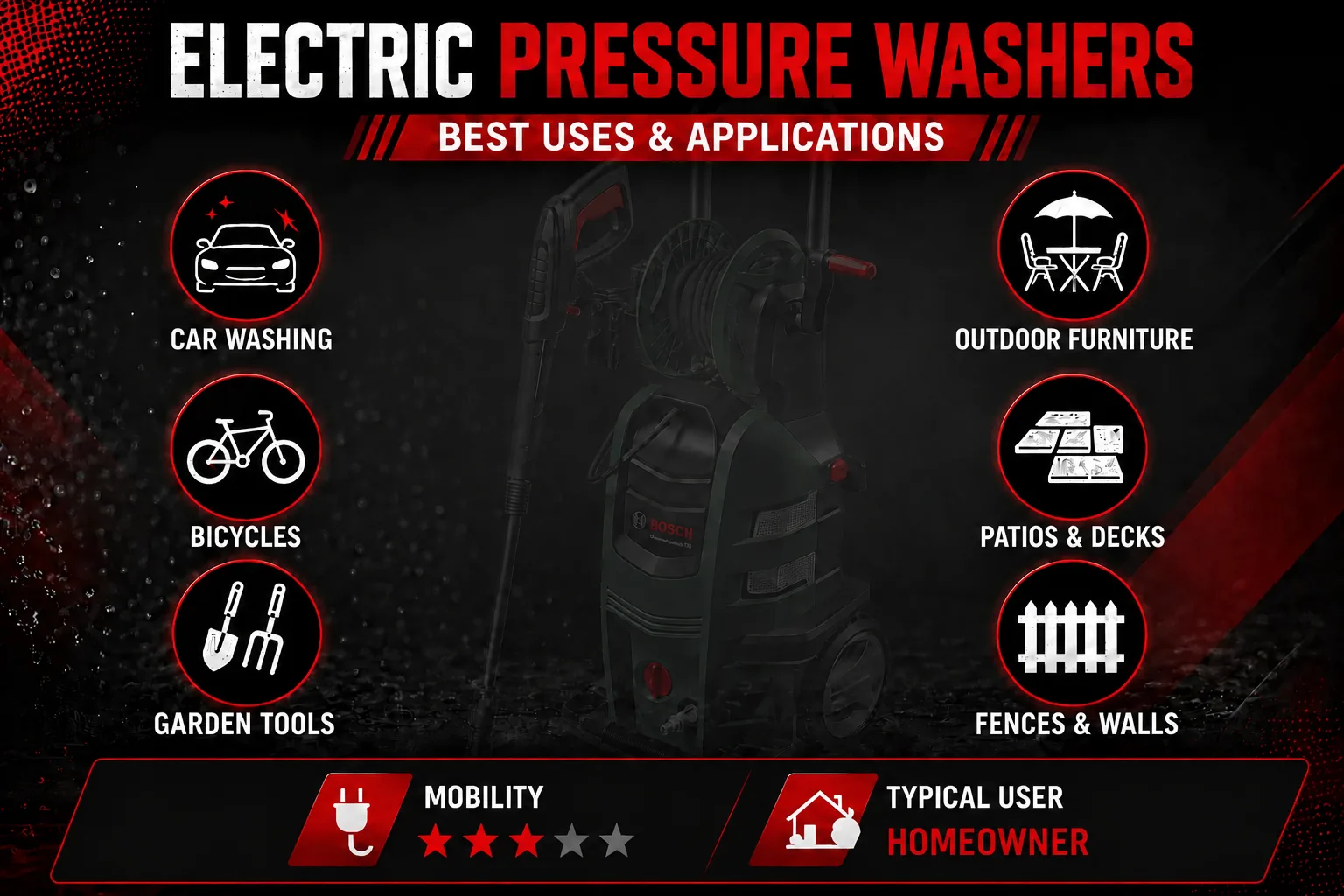
Functions: Cleaning cars, bicycles, motorcycles, and garden tools. Washing patios, balconies, fences, walls, and outdoor furniture. Regular cleaning where a power outlet is available.
Pros
- Easy startup; no fuel mixing or engine starting
- Lower maintenance than gasoline or diesel models
- Well-suited for users who clean occasionally or seasonally
Cons
- Needs a nearby power outlet
- Cable length limits movement
- Not ideal for remote outdoor areas without electricity
Gasoline Pressure Washers
Gasoline pressure washers are made for outdoor jobs that require more mobility and higher cleaning power. They are not tied to a power socket, so they are applicable to large properties, farms, construction areas, and places where electricity is not available. They generally offer stronger pressure and flow than most household electric models.
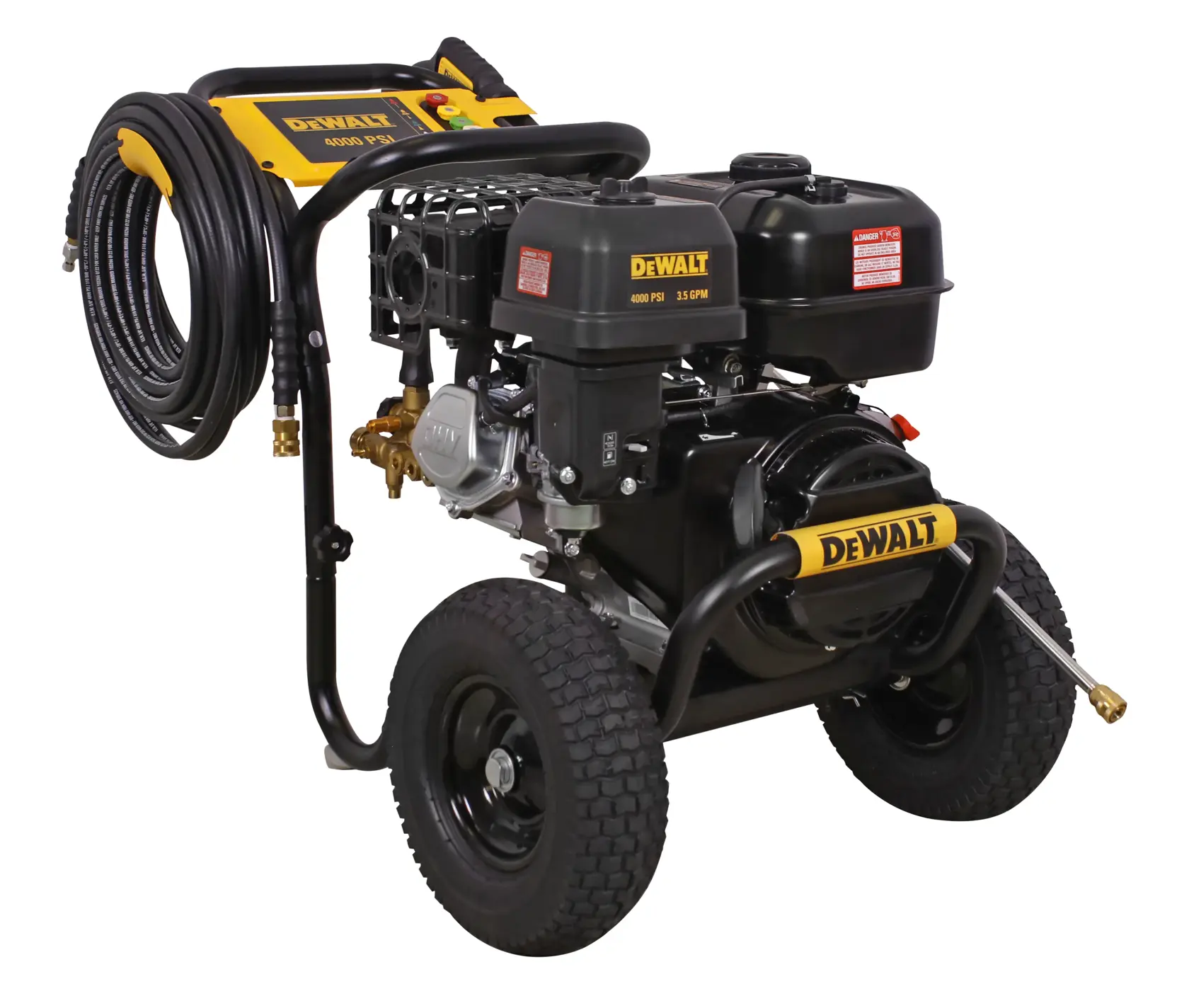
The DeWalt DXPW61373 4000 PSI 3.5 GPM Cold Water Gas Pressure Washer is a gasoline-powered model designed for intensive outdoor cleaning. With its high pressure, strong water flow, DeWalt engine, and triplex pump, it is a suitable example of a professional gasoline pressure washer.
| Specification | Value |
| Pressure washer type | Gasoline / cold-water |
| Max. pressure | 4000 PSI |
| Max. flow rate | 3.5 GPM |
| Engine | DeWalt 338cc engine |
| Engine safety feature | Low-oil shutdown |
| Pump type | AAA triplex pump |
| Water type | Cold water |
| Application level | Heavy-duty / professional cleaning |
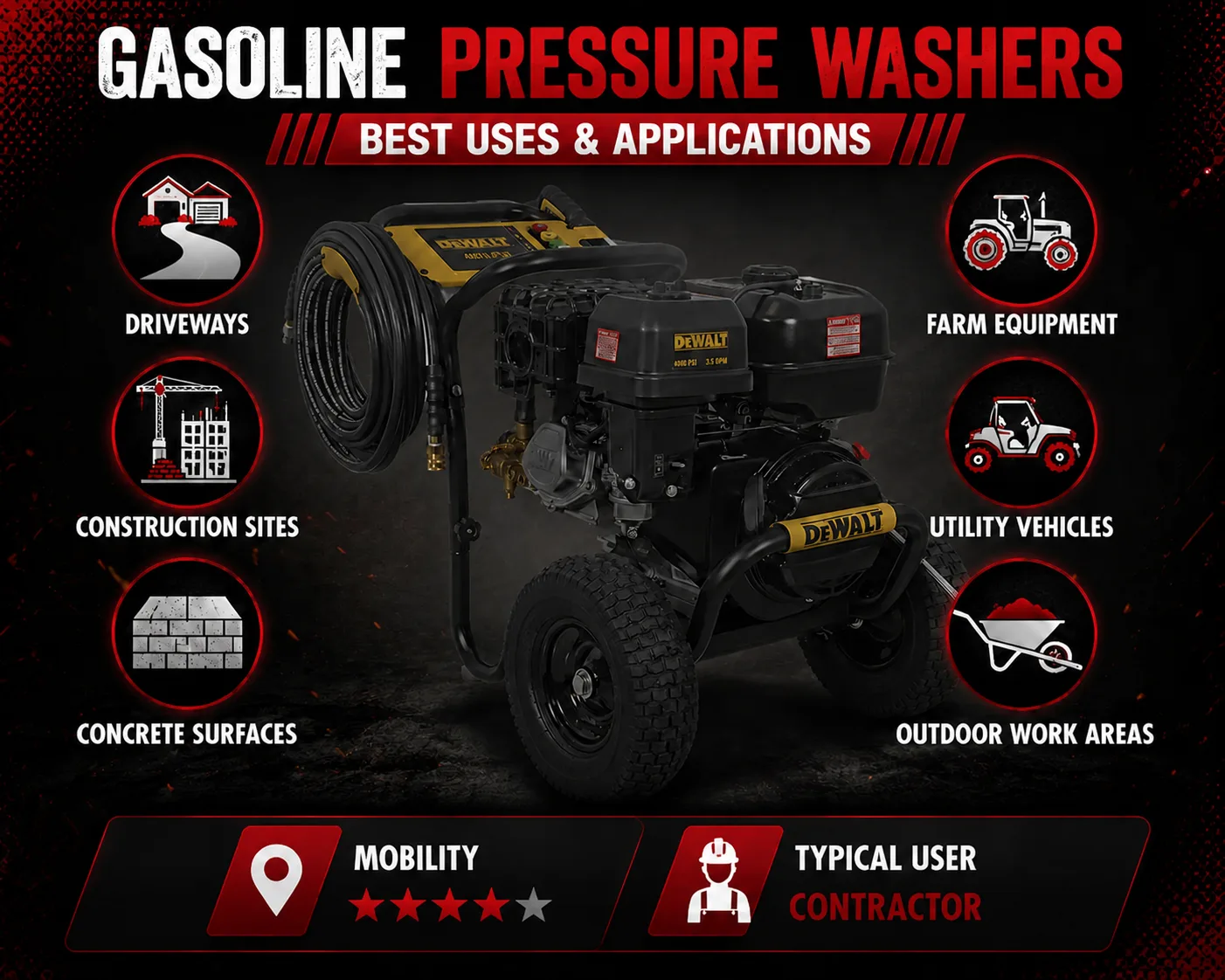
Functions: Cleaning driveways, concrete paths, and brick surfaces. Washing muddy outdoor equipment, tools, and small machinery. Removing heavier dirt where a small electric washer may struggle.
Pros
- More freedom of movement than corded electric models
- Better suited to larger outdoor areas
- Useful where water access exists but power access does not
Cons
- Should not be used indoors because of exhaust fumes
- Louder than electric models
- Needs gasoline, engine oil checks, and regular maintenance
Cordless Pressure Washers
Cordless pressure washers are built for convenience rather than high-pressure cleaning. This type of pressure washer is lightweight, portable, and easy to carry, making them practical for small jobs where dragging out a larger machine is not worth it. They are useful for quick cleaning, but they cannot replace a corded or engine-powered pressure washer for heavier tasks.
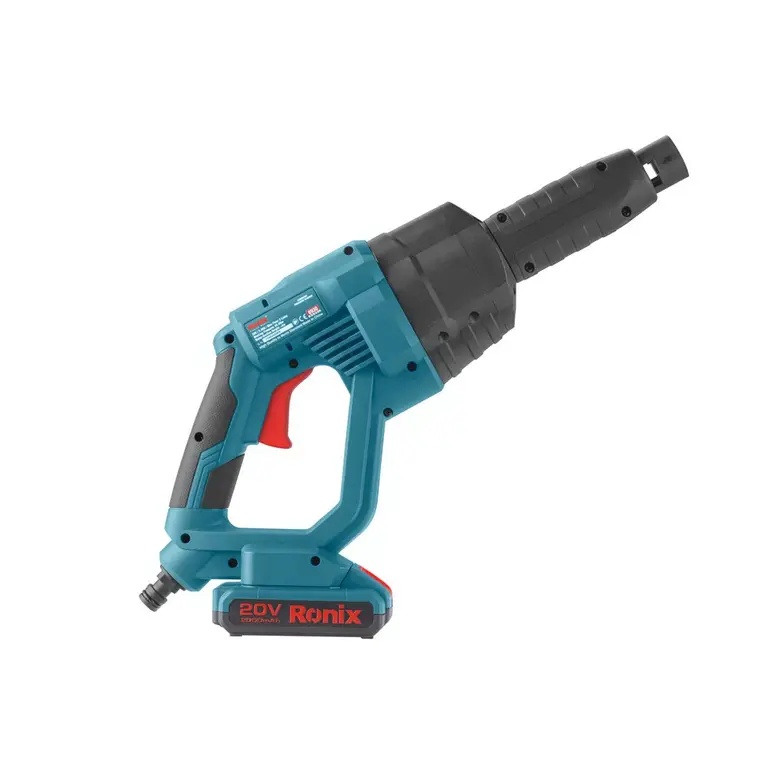
The Ronix 8930 Cordless Pressure Washer is a portable battery-powered washer designed for cleaning tasks where access to mains electricity is limited. Its cordless design makes it suitable for vehicles, garden equipment, outdoor furniture, and light-duty surface cleaning.
| Specification | Value |
| Battery voltage | 20V |
| Battery capacity | 2.0Ah |
| Max flow | 2L/min |
| Working pressure | 24.5Bar |
| Nozzle type | 6(0,15,25,40, Shower, Diagonal) |
| Suction height | >4m |
| Spray response speed | <15 Sec |
| Battery charging time | 60Min |
| Run time | 20Min |
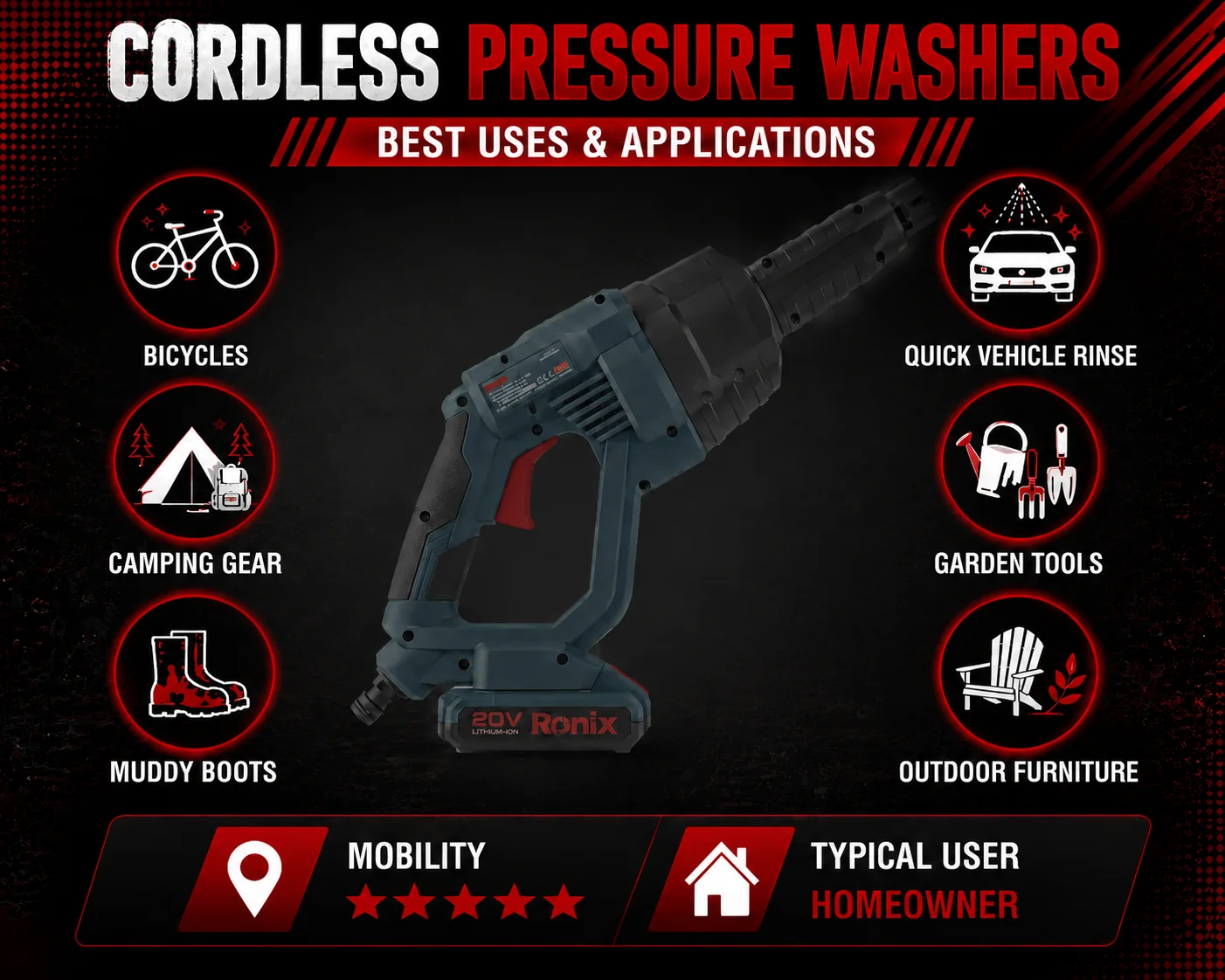
Functions: Washing bicycles, camping gear, boots, garden tools, and small vehicles. Quick cleaning in places without a nearby power outlet. Portable cleaning during travel, outdoor activities, or garden work.
Pros
- Cordless and easy to carry
- Quick setup for small cleaning tasks
- Appropriate for users who value convenience over maximum pressure
Cons
- Limited runtime depending on battery capacity
- Lower cleaning force than most corded or engine-powered models
- Not ideal for thick mud, large driveways, or concrete cleaning
Diesel Pressure Washers
Diesel pressure washers are more common in professional, agricultural, and industrial environments. This category is usually chosen for demanding cleaning where longer operation, strong construction, and high cleaning output matter more than compact size. For normal home use, they are usually more machine than most users need.
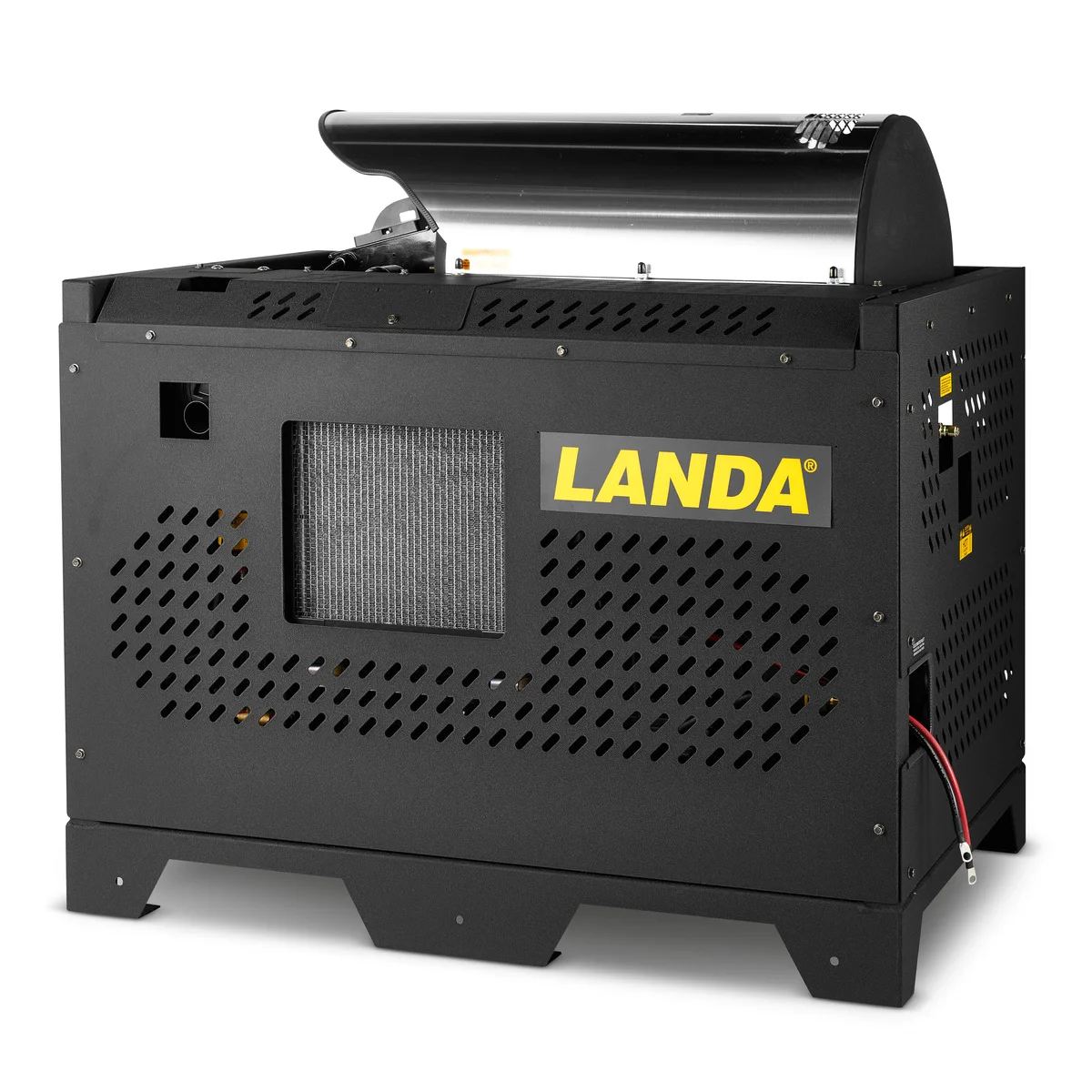
The Landa PDHW5-35624E Hot Water Diesel Pressure Washer is an industrial diesel-powered unit typically used in tough cleaning applications. It is a strong example of a diesel pressure washer because it combines high pressure, hot-water cleaning, and jobsite mobility.
| Specification | Value |
| Pressure washer type | Hot water diesel pressure washer |
| Max. pressure | 3500 PSI |
| Flow rate | 4.7 GPM |
| Engine displacement | 599 cc |
| Power source | Diesel engine |
| Generator | 2,400 W |
| Outlet | 120 V outlet for low-wattage needs |
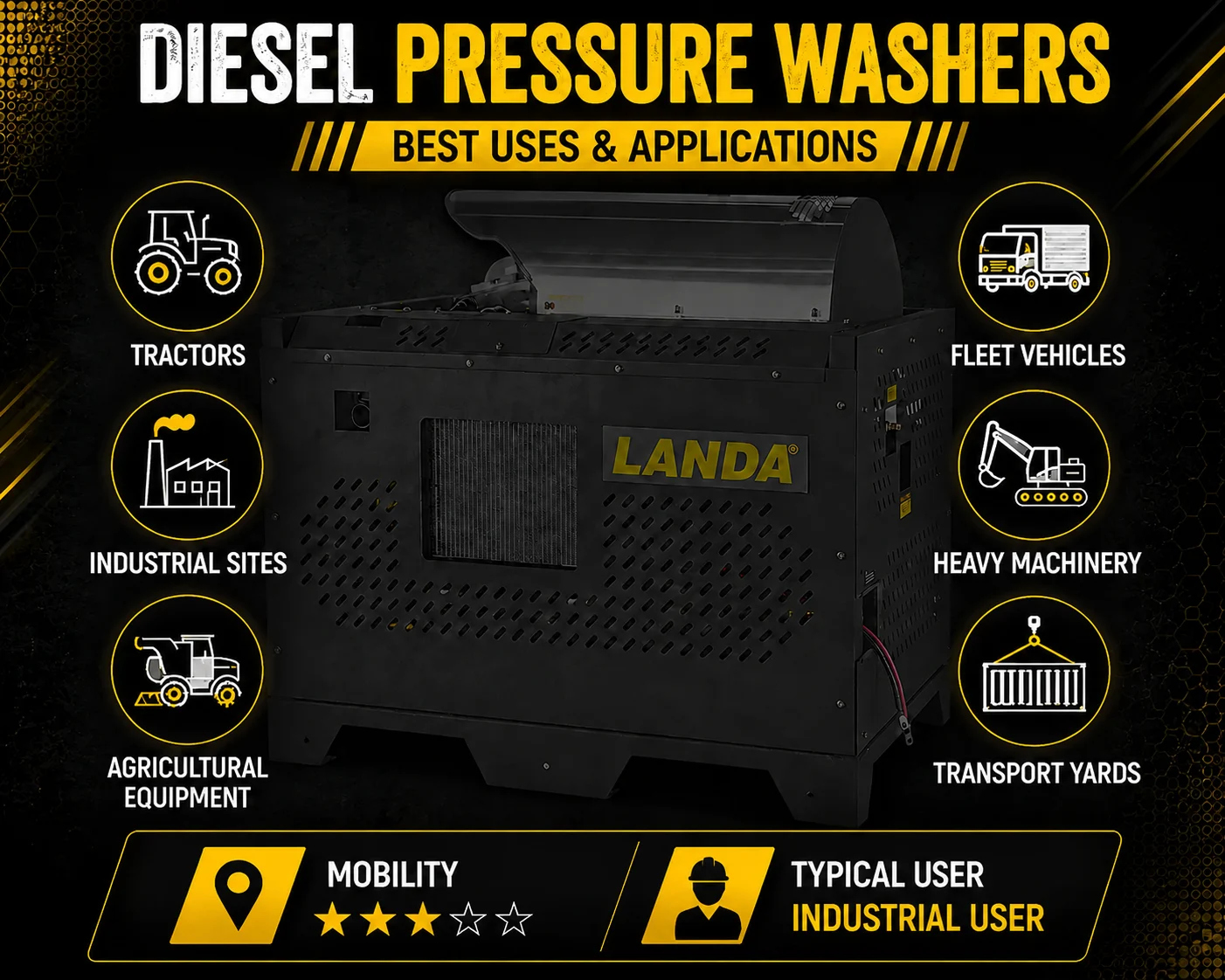
Functions: Cleaning trucks, tractors, loaders, and construction machinery. Washing fleet vehicles, industrial yards, and agricultural equipment. demanding cleaning applications where petrol or electric units may not be practical enough.
Pros
- Suitable for long and repeated professional cleaning
- Good match for farms, transport yards, and industrial sites
- Can be used in heavy-duty cold water or hot water systems
Cons
- Too large and expensive for most home users
- Requires fuel management and engine servicing
- Maintenance cost is higher than basic electric washers
Cold Water Pressure Washers
Cold water pressure washers are the most common choice for everyday cleaning. They use normal-temperature water and rely on pressure, water flow, and the right nozzle to remove dirt from surfaces. For most homeowners, this is usually enough for regular outdoor cleaning. Cold water models can be electric, cordless, gasoline, or diesel. A small electric pressure washer for washing a car and a large gasoline model for cleaning a driveway can both be cold water pressure washers.
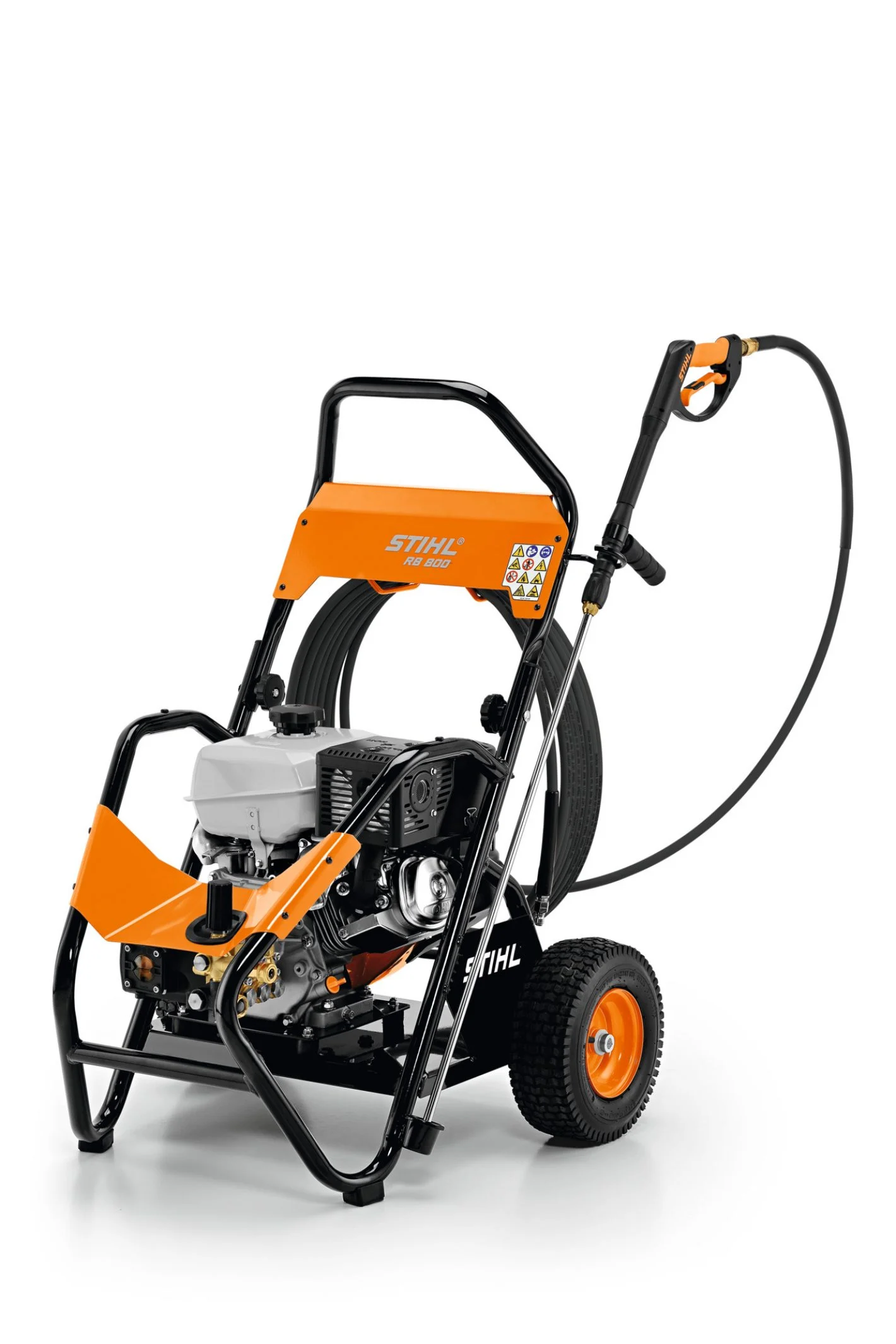
The STIHL RB 800 Gasoline High Pressure Washer is a heavy-duty cold-water pressure washer made for demanding commercial cleaning tasks. Its high PSI, strong flow rate, and gasoline engine make it well suited for cleaning equipment, vehicles, hard surfaces, and outdoor work areas.
| Specification | Value |
| Pressure washer type | Gasoline / cold-water |
| Application level | Heavy-duty commercial use |
| Max. pressure | 4,200 PSI |
| Water flow | 4.0 GPM |
| Engine displacement | 429 cc |
| Cleaning units | 16,800 |
| Hose length | 50 ft |
| Nozzles | 0°, 15°, 25°, 40°, and 65° detergent nozzle |
| Weight | 168 lb |
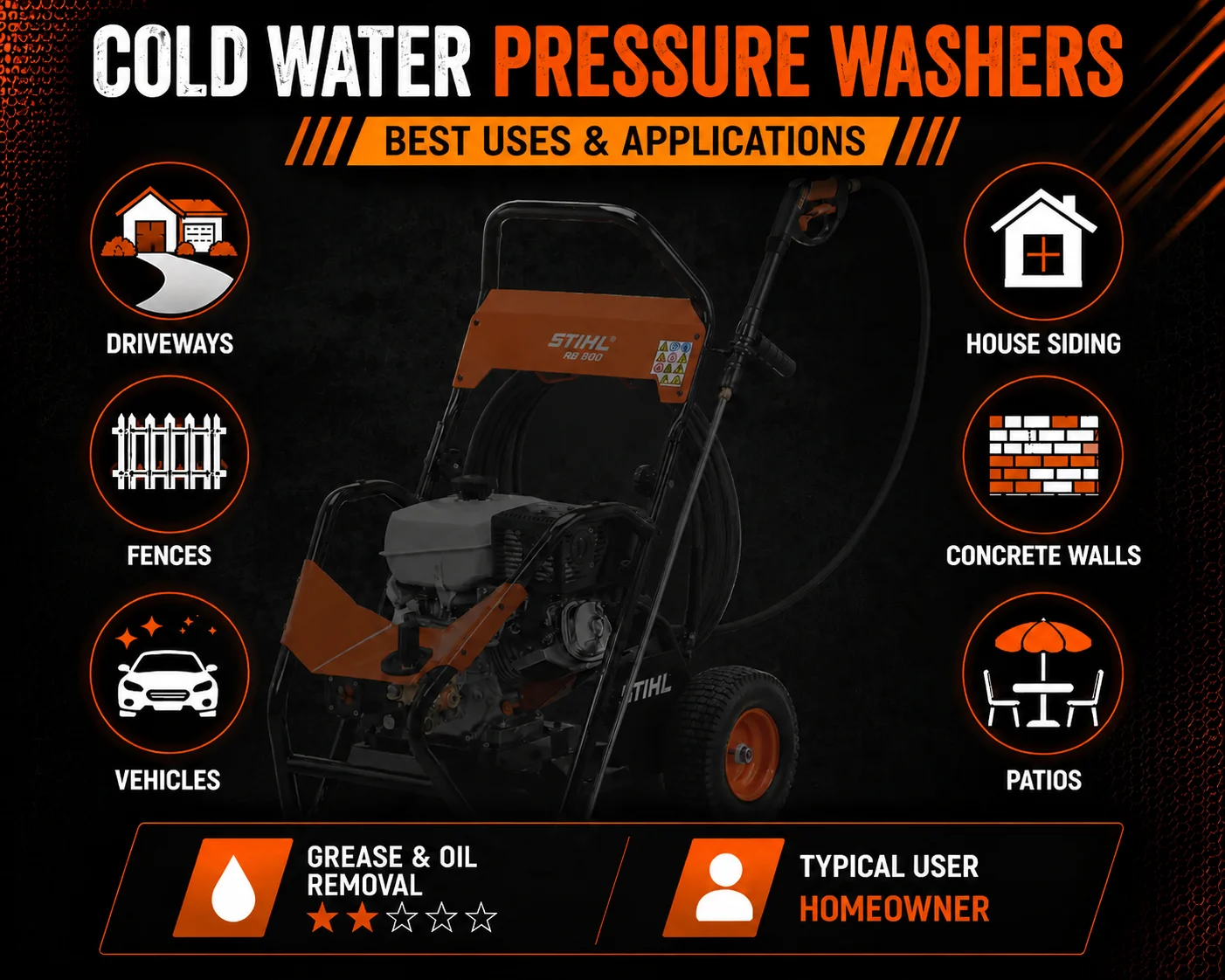
Functions: Washing cars, bicycles, motorcycles, and garden tools. Cleaning patios, balconies, fences, outdoor tiles, and garden furniture. General home and garden cleaning where grease or oil is not the main problem.
Pros
- Practical for most common home cleaning tasks
- Simpler than hot water or steam pressure washers
- Usually easier to maintain because there is no heating system
Cons
- Less effective on grease, oil, and sticky grime
- Can take more time on stubborn dirt compared with hot water cleaning
- Not the best choice for workshops, commercial kitchens, or greasy industrial equipment
Hot Water Pressure Washers
Hot water pressure washers heat the water before spraying it. This makes them much more effective for grease, oil, and sticky grime. Not a necessary option for every home user, this type is valuable in garages, workshops, factories, commercial cleaning, and maintenance jobs where cold water does not clean fast enough.
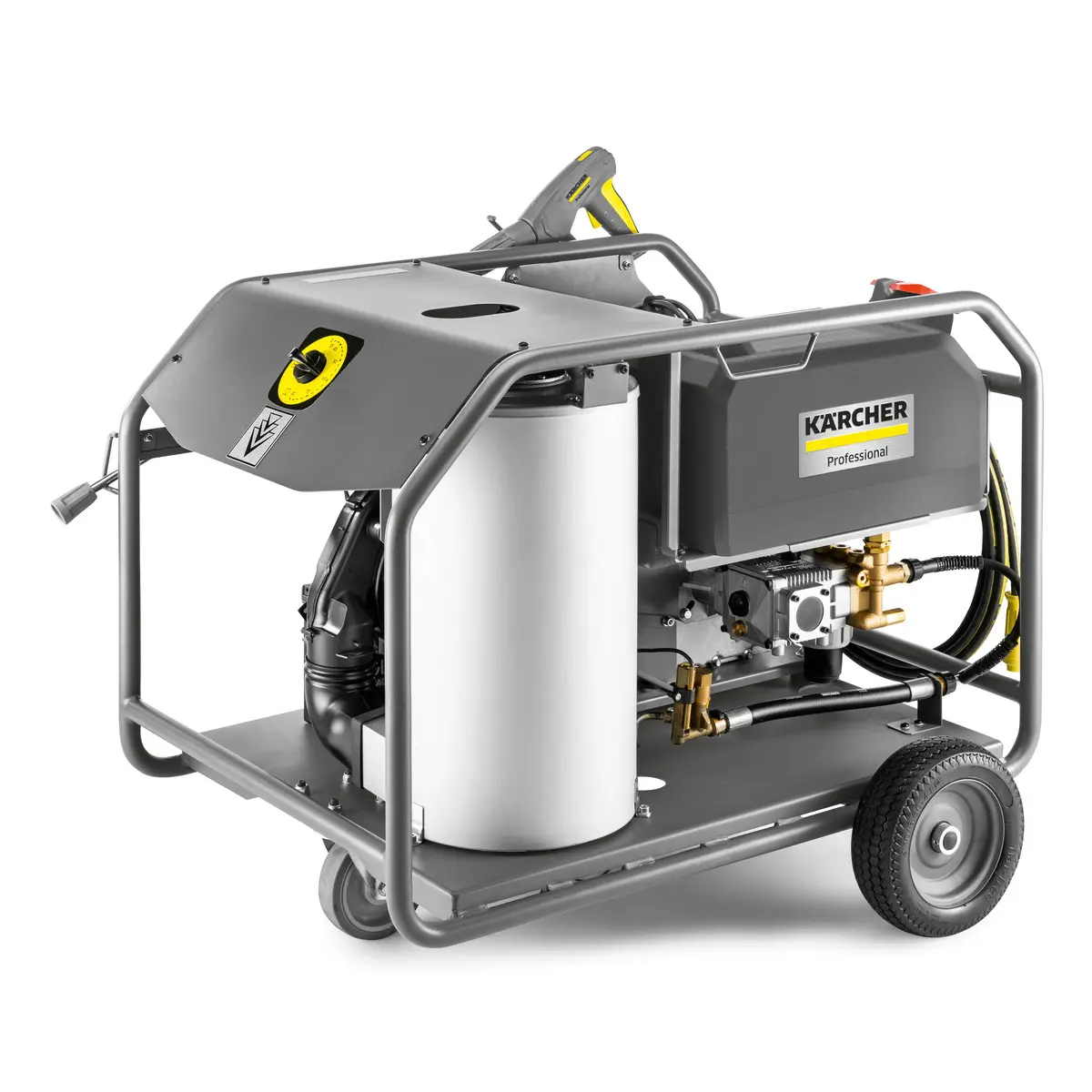
The Kärcher HDS 8/20 G Hot Water High-Pressure Cleaner is a mobile hot-water pressure washer recommended for removing stubborn dirt, oil, and grease. Its petrol drive and diesel/light-oil burner allow it to deliver heated water cleaning without relying on a fixed electrical power supply.
| Specification | Value |
| Flow rate | 800 L/h |
| Working pressure | 200 bar / 20 MPa |
| Max. water temperature | 80 °C, with 12 °C supply water |
| Inlet temperature | 30 °C |
| Fuel consumption at full load | 5.9 kg/h |
| Fuel tank capacity | 30 L |
| Burner Fuel | Diesel / light oil |
| Drive type | Petrol engine |
| Portability | Mobile |
| Weight with accessories | 175 kg |
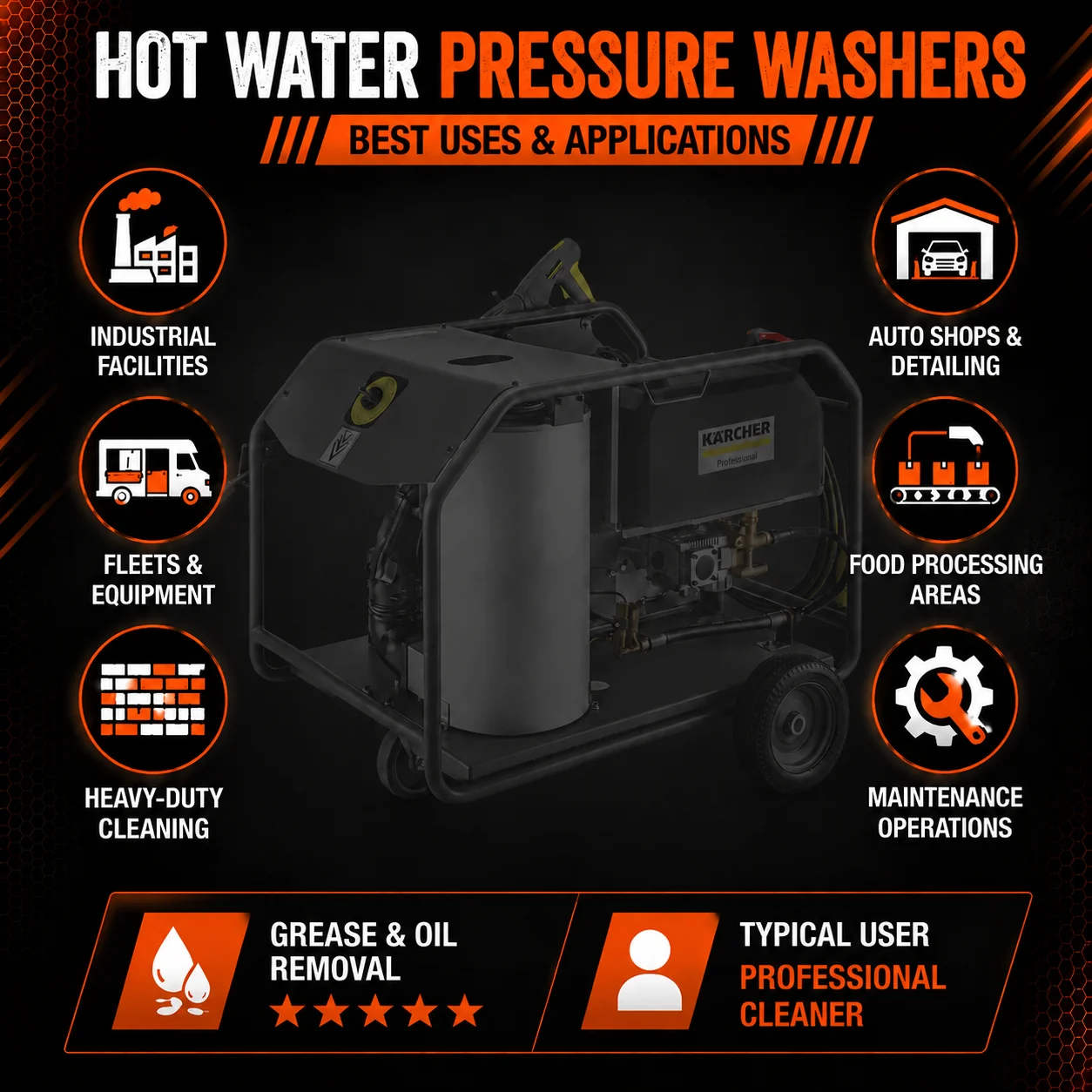
Functions: Removing grease and oil from machinery and vehicle parts. Washing surfaces with sticky dirt or oily residue. Cleaning areas where heat helps loosen grime before rinsing.
Pros
- Better than cold water for grease and oil
- May reduce the need for stronger detergents in some jobs
- Better for professional cleaning where speed matters
Cons
- More expensive than cold water pressure washers
- Larger and heavier because of the heating system
- Requires careful operation because heated water increases burn risk
Steam Pressure Washers
Steam pressure washers use very hot water or steam for deeper cleaning. They are specialized machines and are usually used in professional or industrial settings. Their main advantage is heat rather than pressure alone, making them particularly effective for removing grease, oil, and heavy grime.
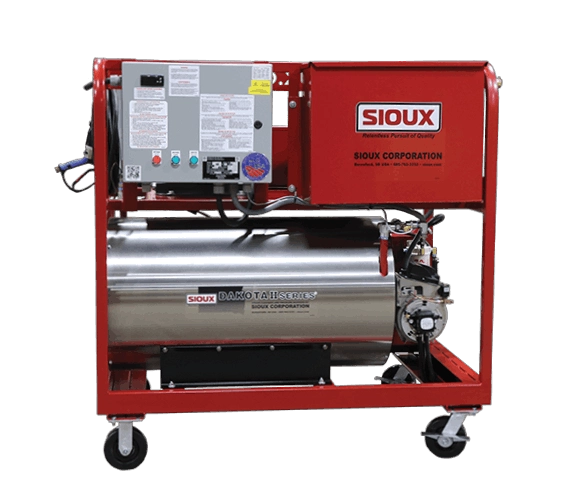
The Sioux Fuel-Fired Dakota II Series is an industrial cleaning unit that combines steam cleaning, hot pressure washing, and cold rinsing. It is a representative example of a steam pressure washer, capable of delivering high-temperature saturated steam for grease, oil, and heavy residue removal.
| Specification | Value |
| Machine type | Steam cleaner / hot pressure washer / cold rinse unit |
| Steam temperature | Up to 320°F / 160°C |
| Steam pressure | 250 PSI / 17.2 bar |
| Hot-water function | Yes |
| Cold-rinse function | Yes |
| Fuel options | LP gas, natural gas, or fuel oil/diesel |
| Available steam flow range | 2–6 GPM / 7.6–22.7 LPM |
| Available hot-water pressure range | 750–3000 PSI / 51.7–206.8 bar |
| Available hot-water flow range | 3–10 GPM / 11.4–37.9 LPM |
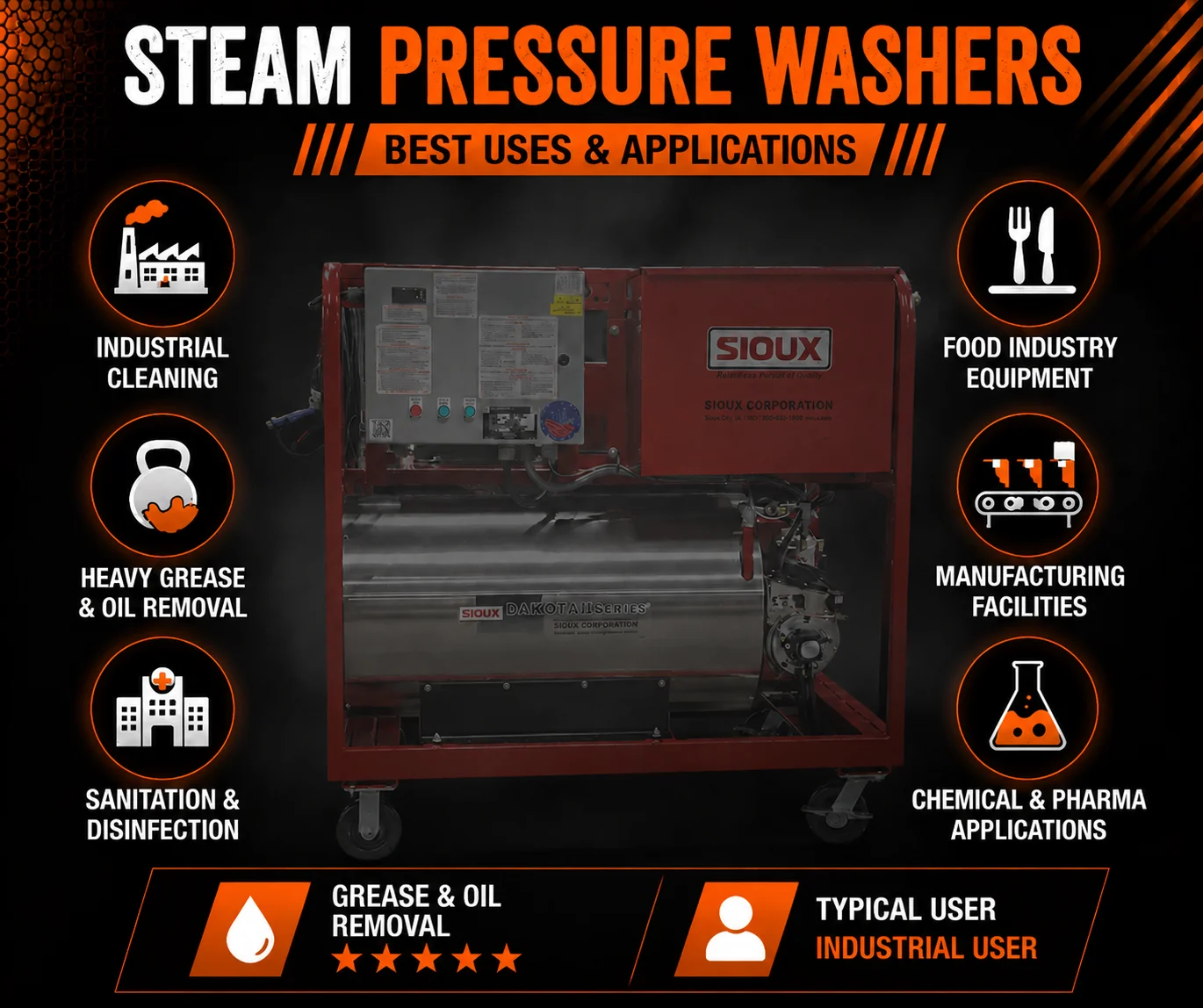
Functions: Cleaning oily machinery, engines, parts, and industrial tools. Removing stubborn grime from workshop or factory surfaces. Deep cleaning where hot water alone may not be enough.
Pros
- Strong cleaning effect on grease and oily grime
- Useful for industrial, automotive, and commercial environments
- Can reduce chemical use in some applications
Cons
- Too specialized for most home cleaning
- More expensive and complex than standard washers
- Needs careful handling because of high temperature and steam
Apart from these main types of pressure washers, pressure washers can also be classified by mobility (mobile or static) or duty level (light-, medium-, and heavy-duty), and these categories often overlap. For example, an electric pressure washer can also be a cold water, mobile, and light-duty model. A diesel pressure washer can be hot water, static, and heavy-duty at the same time. These classifications are useful because they help buyers understand the intended applications and operating environments of a pressure washer.
Conclusion
This article explored the question: “What are the different types of pressure washers?” Electric and cordless models are practical for home and light outdoor cleaning, while gasoline and diesel pressure washers are better for tough cleaning conditions. Cold water pressure washers are designed to handle everyday dirt and mud, but hot water and steam pressure washers work better on grease, oil, and stubborn grime. Therefore, different types of pressure washers are designed for different cleaning needs.
To choose the right pressure washer, consider the use of pressure washers for your task, then compare the power source, pressure, flow rate, water temperature, portability, and maintenance needs. The best pressure washer is not necessarily the most powerful model; it is the one that best matches your cleaning tasks, surface types, and working environment.
FAQ
1. What are the main types of pressure washers?
The main types include electric, gasoline, cordless, diesel, hot water, cold water, and steam pressure washers. Each type is built for different cleaning strength and applications.
2. When should I use a hot water pressure washer?
Hot water pressure washers are best for removing grease, oil, and sticky dirt in workshops, garages, and professional environments where cold water is not effective.
3. What is the difference between cold water and steam pressure washers?
Cold water pressure washers rely on pressure only, while steam pressure washers use high-temperature steam for deep cleaning and sanitization, making them more suitable for industrial use.
4. Do I need a diesel pressure washer for home cleaning?
No, diesel pressure washers are commonly used in industrial-level cleaning tasks. They are too powerful and expensive for normal household cleaning tasks.

Scott
19 June 2026