- 9min
- 558
- 0
Contents
Every year on June 5, World Environment Day reminds governments, businesses, and communities to look again at the choices that shape the health of our planet. In 2026, the official World Environment Day campaign focuses on climate change and the need for practical action across cities, industries, and everyday life. One environmental issue that deserves more attention in this conversation is noise pollution.
Noise pollution is often treated as a temporary inconvenience, especially around construction sites, workshops, road repairs, landscaping work, and building maintenance. But for workers and city residents, repeated exposure to loud equipment can affect comfort, concentration, sleep, communication, and long-term health. The European Environment Agency’s 2025 report shows that environmental noise remains a major public-health challenge in Europe, with transport noise affecting millions of people across urban areas.
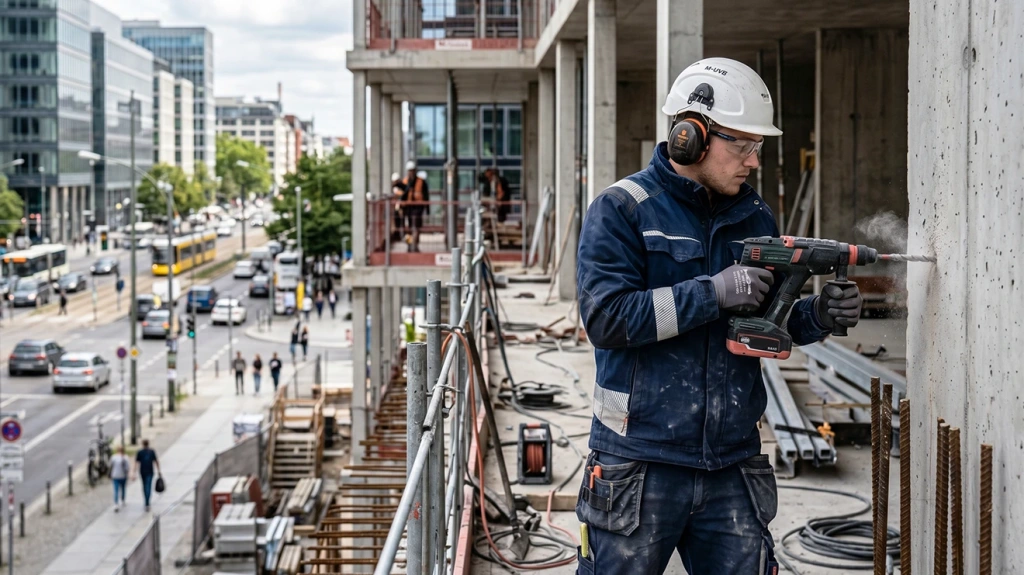
For construction and maintenance professionals, the issue is especially important. OSHA recognizes noise as a serious occupational hazard in construction, and NIOSH recommends an exposure limit of 85 dBA over an eight-hour work shift. Repeated exposure at or above this level can put workers at risk, which makes noise reduction not only an environmental concern but also a worker-safety and project-management issue.
The good news is that a new generation of power tools is helping professionals work in a smarter, cleaner, and more responsible way. Cordless power tools, brushless power tools, improved battery platforms, low-noise compressors, better accessories, and more efficient construction tools can all help reduce unnecessary noise on jobsites and in urban projects. While no powerful tool is completely silent, choosing the right professional tools for the job can make a real difference.
Why Noise Pollution Matters on Construction Sites
Construction noise comes from many sources: drilling, cutting, grinding, demolition, compressors, generators, landscaping equipment, impact tools, and material handling. Noise levels can become even more disruptive when work takes place in enclosed spaces, narrow streets, apartment buildings, hospitals, schools, offices, or residential neighborhoods.
For workers, excessive noise can make communication harder and increase fatigue. It can also make it more difficult to hear warning signals, instructions, or nearby hazards. For residents and nearby businesses, construction noise can disturb sleep, reduce concentration, and lead to complaints.
This is why jobsite noise reduction should not be seen only as a comfort issue. It is part of safer, more responsible project delivery.

How Modern Power Tools Can Help Reduce Noise Pollution
Tool design has changed significantly in recent years. Professional users now have more options that combine power, efficiency, control, and lower disturbance.
One major shift is the move from fuel-powered equipment to cordless power tools in some construction, landscaping, and maintenance applications. Battery-powered tools are often valued for zero direct emissions during use, lower maintenance needs, and, depending on the tool category and working conditions, quieter operation compared with traditional gas-powered alternatives.
This is especially useful for work in noise-sensitive environments such as:
- Residential buildings
- Schools and universities
- Hospitals and clinics
- Hotels and offices
- Indoor renovation projects
- Public parks and urban landscaping
- City-center repair and maintenance work
In these environments, reducing unnecessary noise can improve the experience for workers, clients, residents, and the public.
The Role of Brushless Power Tools
Brushless motor technology is another important part of modern tool development. Brushless power tools are designed for better efficiency, longer service life, and improved energy use compared with traditional brushed motor systems.
In real jobsite conditions, this can support smoother performance, better control, and reduced mechanical strain. A more efficient motor does not automatically make every tool quiet, but it can help the tool perform with less wasted energy, less heat, and less unnecessary vibration.
For contractors, this means tool selection can go beyond power alone. The right construction tools should also be suitable for the material, the task, the working space, and the people nearby.
Accessories and Maintenance Matter Too
Noise reduction is not only about buying new tools. It is also about using tools correctly.
A sharp blade, the correct drill bit, a suitable sanding disc, or the right cutting accessory can help a tool work faster and with less strain. When an accessory is worn, damaged, or poorly matched to the material, the tool may need more force and more time to complete the task. That often means more vibration, more friction, and more noise.
Regular maintenance also helps. Loose parts, worn bearings, damaged discs, poorly fitted accessories, and dirty ventilation areas can all make power tools louder than necessary. A well-maintained tool is usually safer, more efficient, and easier to control.
Practical Noise Reduction Checklist for Contractors
| Area | Practical Action | Why It Helps |
| Tool selection | Choose the right tool size and power level for the task | Oversized or unsuitable tools can create unnecessary noise |
| Accessories | Use sharp blades, correct bits, and suitable discs | Reduces friction, cutting time, and tool strain |
| Maintenance | Check loose parts, worn components, and damaged accessories | Helps reduce rattling, vibration, and inefficient operation |
| Work planning | Schedule louder tasks during permitted daytime hours | Reduces disturbance and complaints |
| Site control | Use barriers or distance where possible | Helps limit sound reaching nearby people |
| Operator training | Train users to avoid forcing tools or using poor technique | Improves efficiency and reduces unnecessary strain |
| PPE | Use proper hearing protection when needed | Helps protect workers from harmful noise exposure |
Noise reduction does not replace hearing protection. Workers should always follow local safety regulations, site rules, and manufacturer instructions when working with loud tools or equipment.
Smarter Planning to Reduce Construction Noise Pollution
Project planning plays a major role in construction noise control. Even when loud work cannot be avoided, teams can reduce disturbance through better scheduling and site management.

Contractors can help by:
- Scheduling noisy tasks during approved working hours
- Avoiding unnecessary equipment idling
- Choosing quieter methods when working near homes or public spaces
- Using cordless or electric options where suitable
- Keeping tools and accessories in good condition
- Separating noisy tasks from occupied areas when possible
- Using sound level meters or monitoring apps to identify major noise sources
These steps can improve communication on site, reduce complaints, and support smoother project delivery.
Cordless Tools and Cleaner Urban Work
A modern toolbox can support cleaner and quieter work in several ways. Cordless power tools reduce the need for cables in many applications, support mobility, and can be suitable for maintenance, installation, renovation, and landscaping tasks where access and flexibility matter.
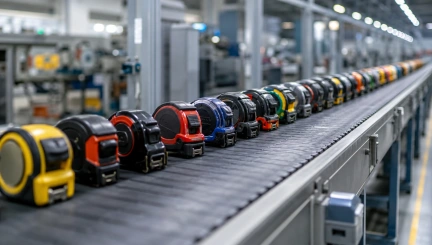
Battery-powered garden tools, cordless drills, impact drivers, saws, grinders, rotary hammers, and measuring tools can all contribute to more efficient jobsite workflows when selected correctly. Measuring tools also help reduce rework, which means fewer repeated cuts, holes, adjustments, and noise-producing corrections.
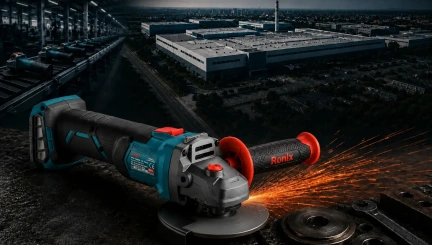
This is where professional cordless tool ranges, such as Ronix cordless tools, can be especially useful for contractors, technicians, landscapers, and maintenance teams working in urban or noise-sensitive environments. Options such as cordless drills, brushless angle grinders, rotary hammers, cordless garden tools, and battery-powered measuring tools can support more flexible, efficient, and organized work across different jobsite conditions.
For professionals, the goal is not simply to choose the newest tool. The goal is to choose the right tool for the job.
Where Low-Noise Tools Help Reduce Urban Noise Pollution
Quieter operation is especially valuable in places where construction or maintenance work happens close to daily life. These include apartment buildings, hospitals, schools, shopping centers, hotels, offices, public transport areas, and dense city streets.

In these locations, reducing unnecessary noise can help:
- Protect workers from repeated exposure
- Improve communication between team members
- Reduce complaints from residents and clients
- Make renovation work less disruptive
- Support more responsible urban development
- Improve the professional image of the contractor
Construction, renovation, landscaping, and infrastructure work are essential. But they should not make urban life unbearable. Better construction tools and better work practices can help cities grow while remaining more livable.
Ronix Perspective: Power, Precision, and Responsibility
Ronix believes professional tools should help users work with power, precision, and responsibility. As more cities, contractors, and industries pay attention to environmental impact, noise reduction will become an increasingly important part of tool selection.
This does not mean every job can be silent. Powerful tools will always produce sound, especially when cutting, drilling, grinding, or breaking hard materials. But professionals can make smarter choices by considering tool efficiency, motor technology, accessory quality, maintenance, work planning, and hearing protection.
A responsible toolbox may include efficient cordless power tools, brushless power tools, suitable accessories, measuring tools that reduce rework, and personal protective equipment such as hearing protection. Together, these choices can support cleaner, quieter, and safer work.
Conclusion
This World Environment Day, reducing noise pollution is a reminder that a better environment is not only something we see in cleaner air or greener spaces. It is also something we hear in quieter streets, safer jobsites, and more comfortable cities.
New-generation power tools cannot remove every sound from construction and maintenance work, but they can help professionals reduce unnecessary noise. By choosing the right tools, maintaining them properly, using suitable accessories, and planning work responsibly, contractors, technicians, landscapers, and workshop users can all contribute to cleaner, quieter, and more sustainable urban environments.
As cities continue to grow, responsible tool selection and smarter work practices can help balance productivity with quality of life.
FAQ
Can cordless tools reduce construction noise?
Cordless tools can help reduce unnecessary noise in some applications, especially when they replace fuel-powered equipment or poorly matched tools. However, the final noise level depends on the tool type, material, accessory, workload, and operating conditions.
Are brushless tools quieter than brushed tools?
Brushless tools are designed for higher efficiency and reduced mechanical wear. In some applications, this can support smoother performance and less unnecessary vibration, but noise levels still depend on the task, accessory, and material.
What is the best way to reduce noise on a jobsite?
The best approach is to combine proper tool selection, sharp accessories, regular maintenance, smart scheduling, operator training, site controls, and hearing protection.
Does noise reduction replace hearing protection?
No. Reducing jobsite noise is important, but workers should still use proper hearing protection when exposed to high noise levels and follow local safety requirements.
Why is construction noise important for cities?
Construction noise affects workers, residents, businesses, schools, hospitals, and public spaces. Reducing unnecessary noise helps make urban development safer, more comfortable, and less disruptive.

Giselle
6 June 2026