- 8min
- 796
- 0
Contents
Ever stood in front of a shelf full of grinding wheels and thought, “Which one am I supposed to pick?” With the first look they might look similar, something round with rotation for abrading different materials. But, it’s definitely not as easy as that! By the time you start working, it becomes far more complex to choose the suitable grinding disc type.
And that’s for a simple reason! Each type is designed for a different purpose based on the material, shape, grit, structure and bond type. It seems like many factors, right? In this article we’ll walk you through various grinding wheel types so that you can easily choose the right one for your task. Keep Reading!
What is a Grinding Wheel?
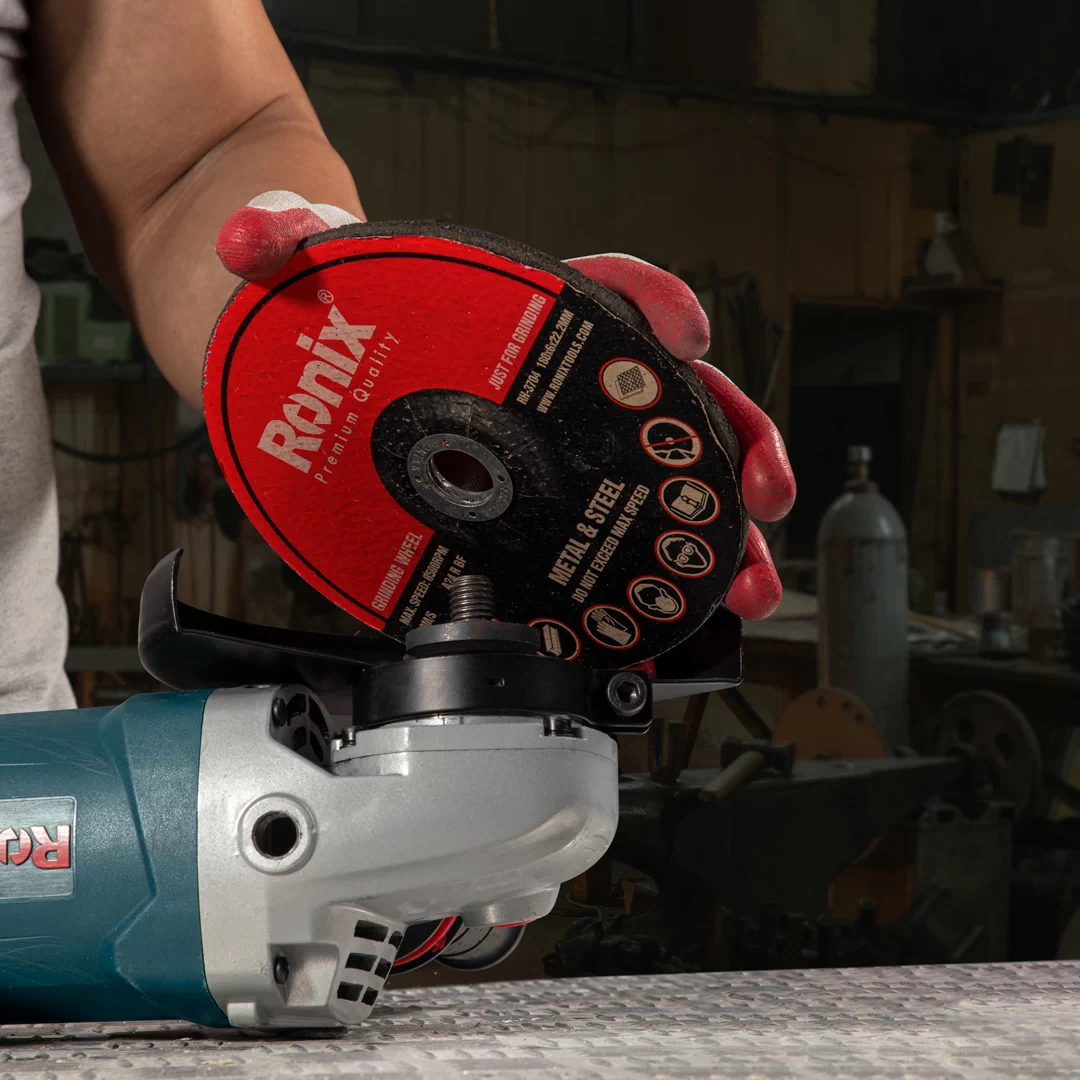
Think of it like a sandpaper, but much stronger obviously! Grinding wheels are discs (although you might see them like cones or cups) made of abrasive particles that are bonded together. Rotating at high speeds, the particles act like sharping edges making it suitable for shaping, cutting, or smoothing a surface.
Do you need a grinding wheel for removing rust, sharpening tools, or cutting metal? Whatever the task is, understanding the different types of grinding wheel is a must! The softness, thickness, roughness, etc. of the wheel are all deciding factors to make your job easier and faster.
Types of Grinding Wheels by Abrasive Material
What actually does the cutting in a grinding wheel defines the abrasive material inside. Different materials are for different jobs. It is very important to choose the right abrasive material to get a better result. Here are the most common grinding wheel types:
| Material | Best For | Key Feature |
| Aluminum Oxide | Steel, Iron | Durable & General-Purpose |
| Silicon Carbide | Stone, Glass | Sharp & Fast Cutting |
| Diamond | Concrete, Carbide | Extremely Hard |
| CBN | Hardened Steel | Long Life & Precision |
It is clear that choosing the right types of grinding disc depends on your purpose. While aluminum oxide, silicon carbide, diamond, and CBN are the most common, there are also other materials such as Ceramic alumina or Zirconia alumina used for very specific applications.
Types of Grinding Wheels by Bond Type
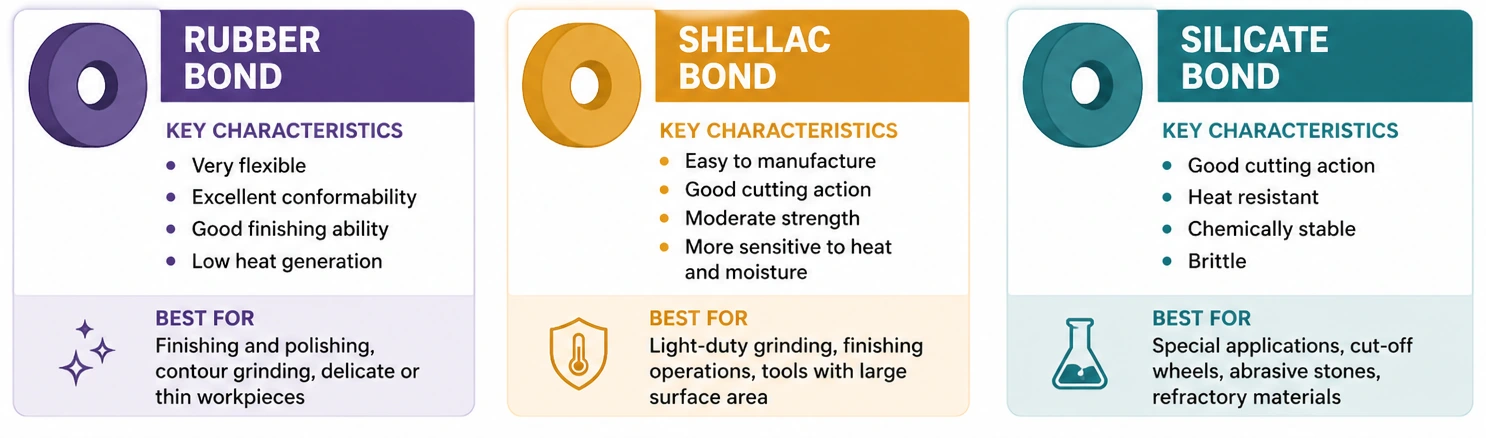
Now that we know the common types of grinding wheel materials, the next point is to know how these particles are held together. In a grinding wheel, the bond acts like a glue and affects the way it handles pressure, heat, and performance. Let’s take a look at the common types:
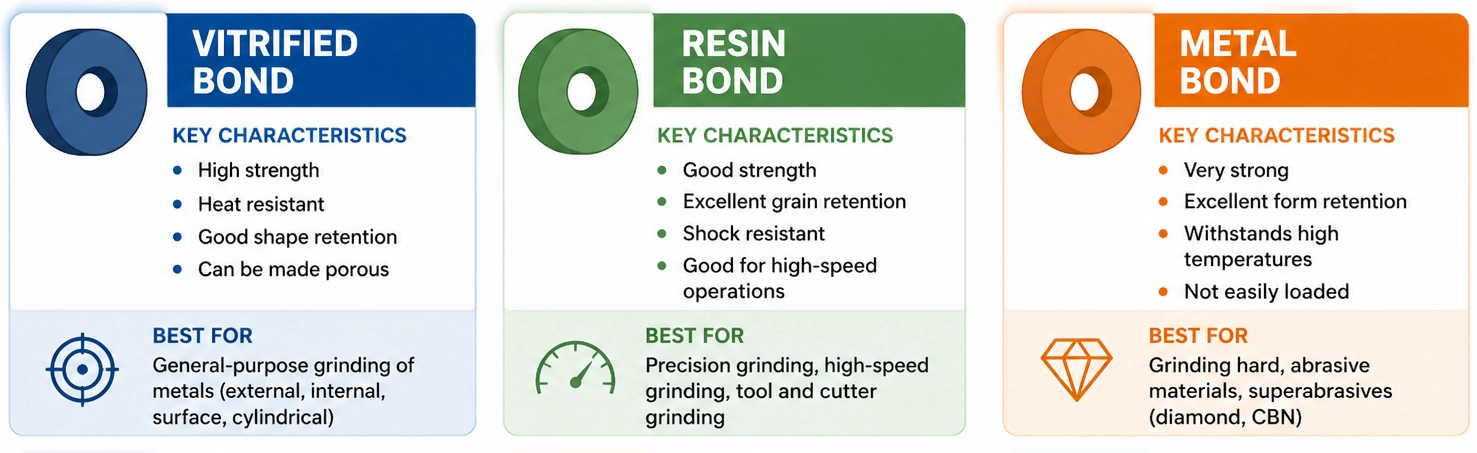
Each bond type changes how the grinding wheel behaves. Some are built for strength and durability, while others focus on smooth finishing or heat control, so choosing the right one depends on your specific task.
Types of Grinding Wheels by Shape
As you have probably noticed, not all grinding wheel types look the same. There are flat, thin, or unique shapes each for a specific purpose. If you want your job done easier, choosing the right grinding wheel shape is a deciding factor. Health and Safety Executive (HSE) listed 33 different types in the booklet called ‘Safety in the use of abrasive wheels’. Here, we discuss the 7 most common shapes and their uses:
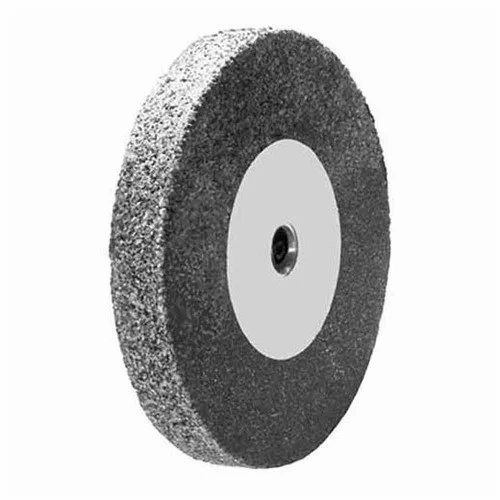
1. Straight Wheel
By far the most commonly used type of grinding wheel with a flat, straight surface. It is often used for surface finishing, general grinding, and sharpening tools. It is suitable for many purposes in jobsites.
2. Cylinder Wheel Designed for surface grinding work, it helps finish and smooth large flat surfaces. If you need consistent work across a wide area, a cylinder wheel is the best choice for you
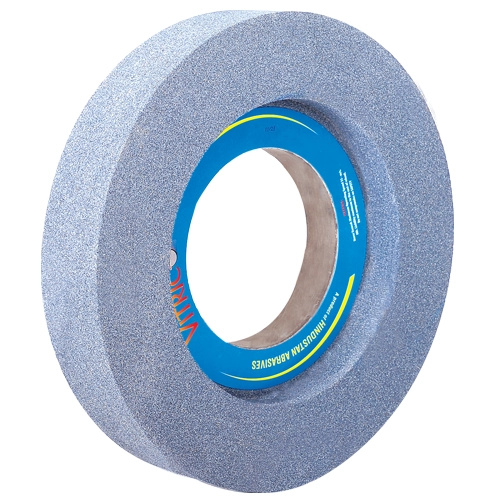
3. Tapered Wheel
Where control and precision are important, a tapered wheel plays an important role. With a slightly angled edge, this grinding wheel is suitable for hard-to-reach areas.
4. Dish Wheel Designed for accuracy and fine work, dish grinding wheels are mostly used for tool sharpening and detailed grinding tasks.
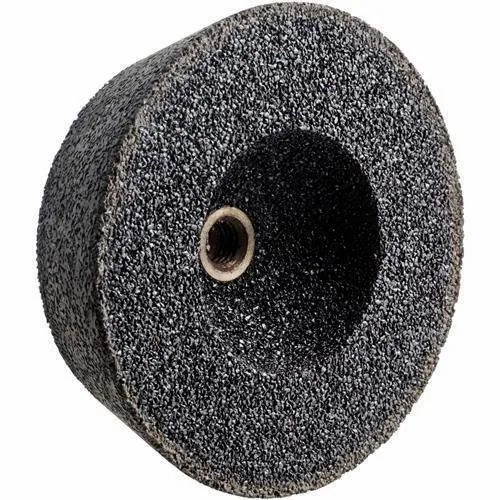
5. Cup Wheel
Cup wheels are a type of grinding wheel mostly used for heavy-duty grinding, especially on stone, concrete, and masonry surfaces. Faster material removal is possible due to the strong contact with the surface.
6. Saucer Wheel Similar to a dish shape but with a more curved and shallow profile. Mostly useful where a softer, more controlled contact is needed for specialized grinding and finishing tasks.
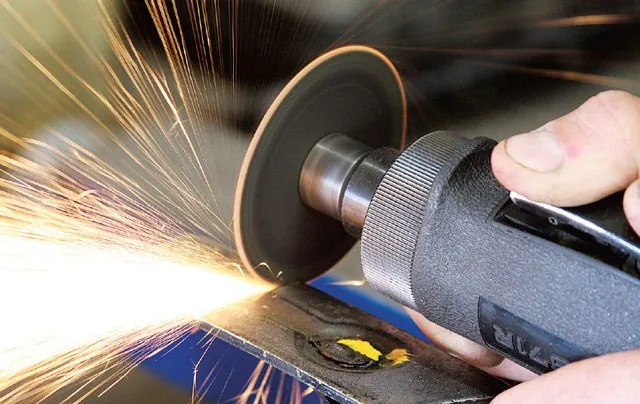
7. Cut-off Wheel
The thin flat wheels used for cutting rather than grinding. You can use this type of grinding disc for cutting through metal, pipes, and other hard materials.
Types of Grinding discs by Grit Size
Have you ever noticed that some grinding disc types give a smooth, polished finish while others feel rough and aggressive? The grit size defines how coarse or fine the abrasive particles on the wheel are. Cutting rate, surface finish, heat generation, and precision are all affected by the grit size. It is shown in standard sizes such as 10,24,46,80,120, etc. However, we can divide them into three general categories:
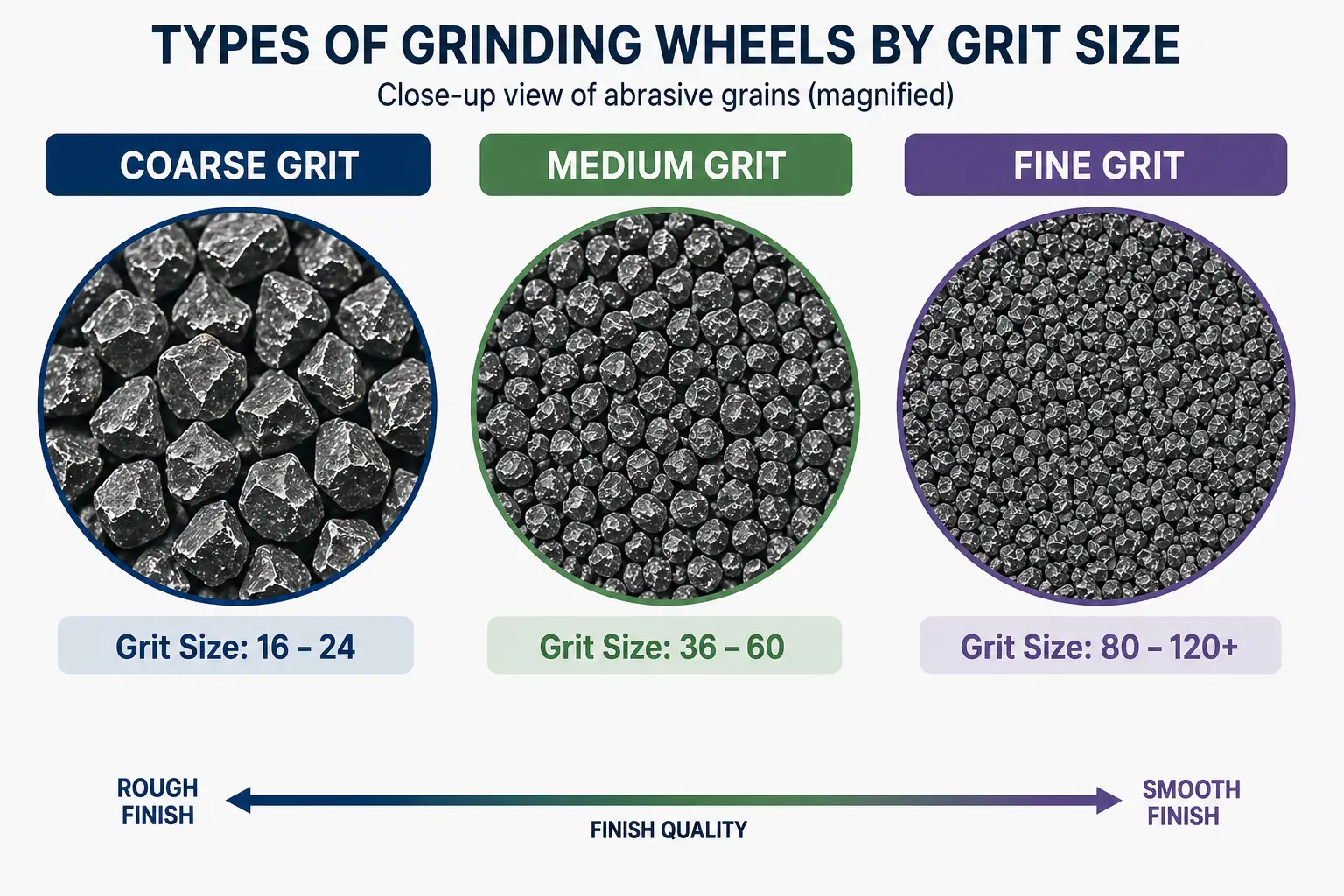
- Coarse Grit (Low Number): They are used where speed matters more than quality. Suitable for working on rough surfaces, these grits remove material rapidly and aggressively.
- Medium Grit: A balanced option between speed and surface refinement. In case you need decent material removal with a clean finish for general purposes, medium grit size suits you well.
- Fine Grit (High Number): Ideal for polishing and detailed work, fine grit wheels remove less material but provide a smoother and more precise surface.
Types of Grinding Wheels by Structure
So far, we have covered different types of grinding wheel based on their material, shape, bond, and grit issues. One more factor that can affect the performance is the structure. How closely packed the abrasive grains are inside the grinding wheel is referred to as the structure of the grinding wheel. It might sound unimportant but it directly affects removal rate, heat, and surface finish.
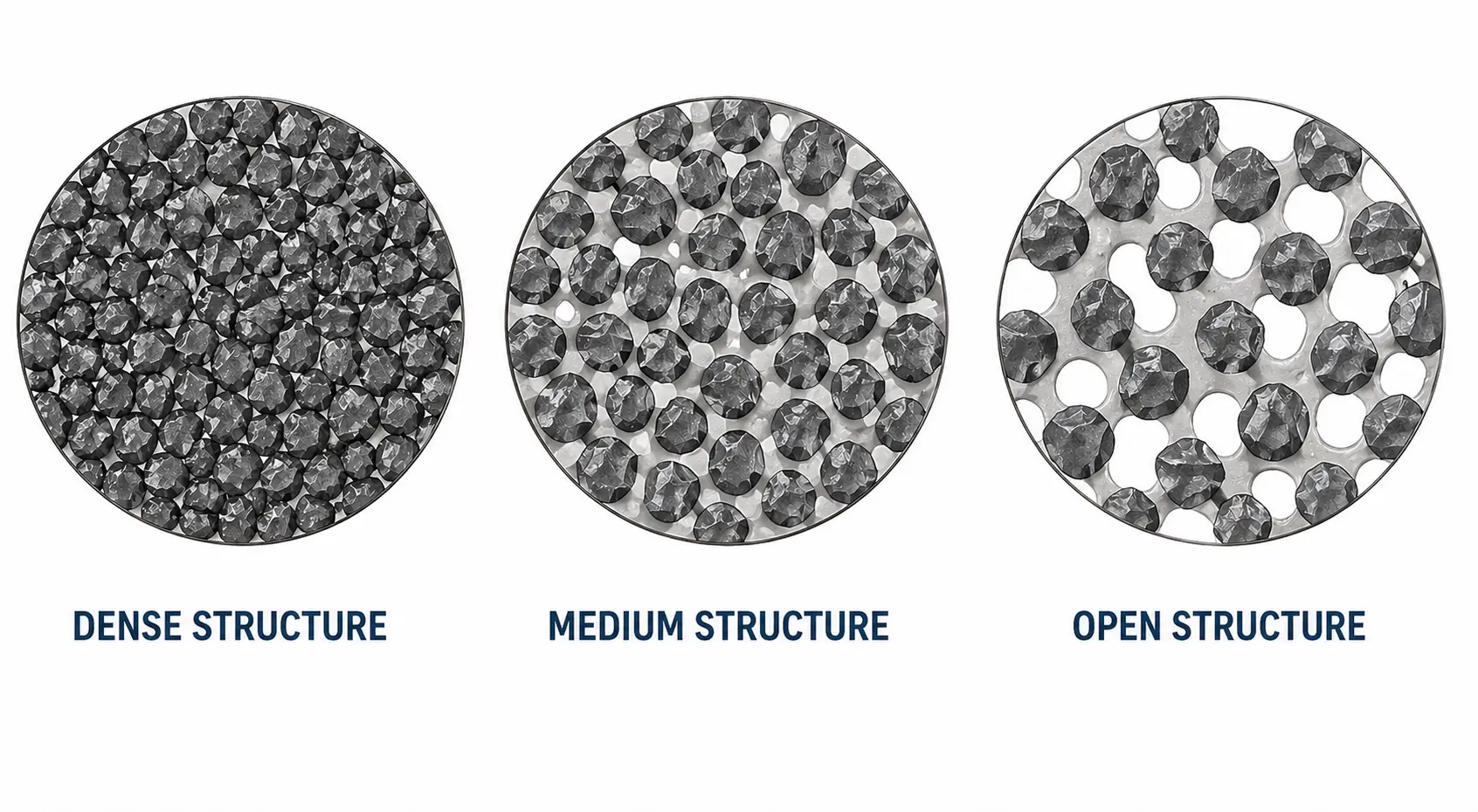
Classifying by numbers ranging typically from 1-15, we can divide the wheel structure into 3 categories:
Dense Structure (1-5)
In this structure, there’s minimal spacing between abrasive grains making the wheel stronger and more durable. Dense structure is mostly used for fine finishing tasks and hard materials such as tool steels.
Medium Structure (6-9)
Offering a mix of strength and cutting ability, this is the most balanced type. This structure is suitable for a wide range of materials and general-purpose grinding.
Open Structure (10-15) Ideal for softer materials and faster cutting applications, the open structure means more space between the abrasive grains. This structure allows for greater chip removal, reduced heat, and better airflow.
Types of Grinding discs by Application
Finally, after all these classifications by material, grit, bond, and structure, now you might ask “which one do I actually need?”
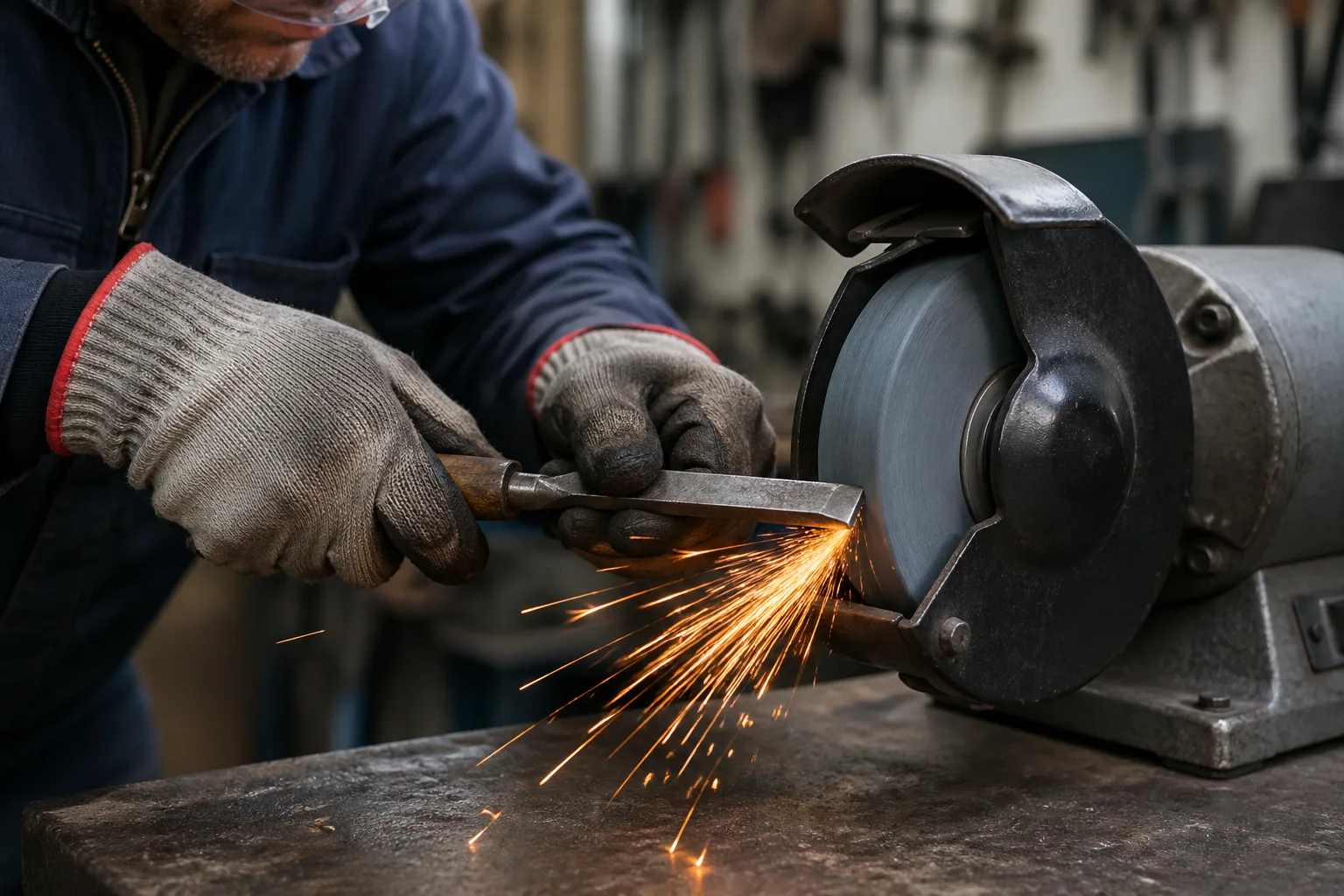
What is ultimately important is the real-world use and application of the tools. There are various grinding disc types for specific tasks. We can use these handy tools for grinding and sharpening tools, finishing surfaces, removing materials, shaping metal, polishing concrete and stone surfaces and many other tasks. In general, we can divide the applications into 6 categories:
- Cutting Wheels: Usually thin and designed to make fast, clean cuts rather than grinding.
- Grinding Wheels: Mostly thicker and more durable for removing materials, smoothing edges, and shaping surfaces.
- Polishing Wheels: Often used after grinding to create a smooth and shiny surface for finishing work.
- Sharpening Wheels: Providing more control and precision, they restore the sharpness of tools like drill bits, blades, and cutting tools.
- Surface Grinding Wheels: Creating flat and smooth surfaces, they are suitable for jobs where uniformity and accuracy are important.
- Masonry/Concrete Wheels: Designed for working on hard materials, they are strong and usually use diamond or similar materials.
How to Choose the Right Grinding Wheel
Now that you have enough information about grinding wheel types in different classifications, it becomes much easier to choose the right grinding wheel for your project. Before picking one, ask yourself: “What am I trying to do?”. The answer probably leads you to the answer.
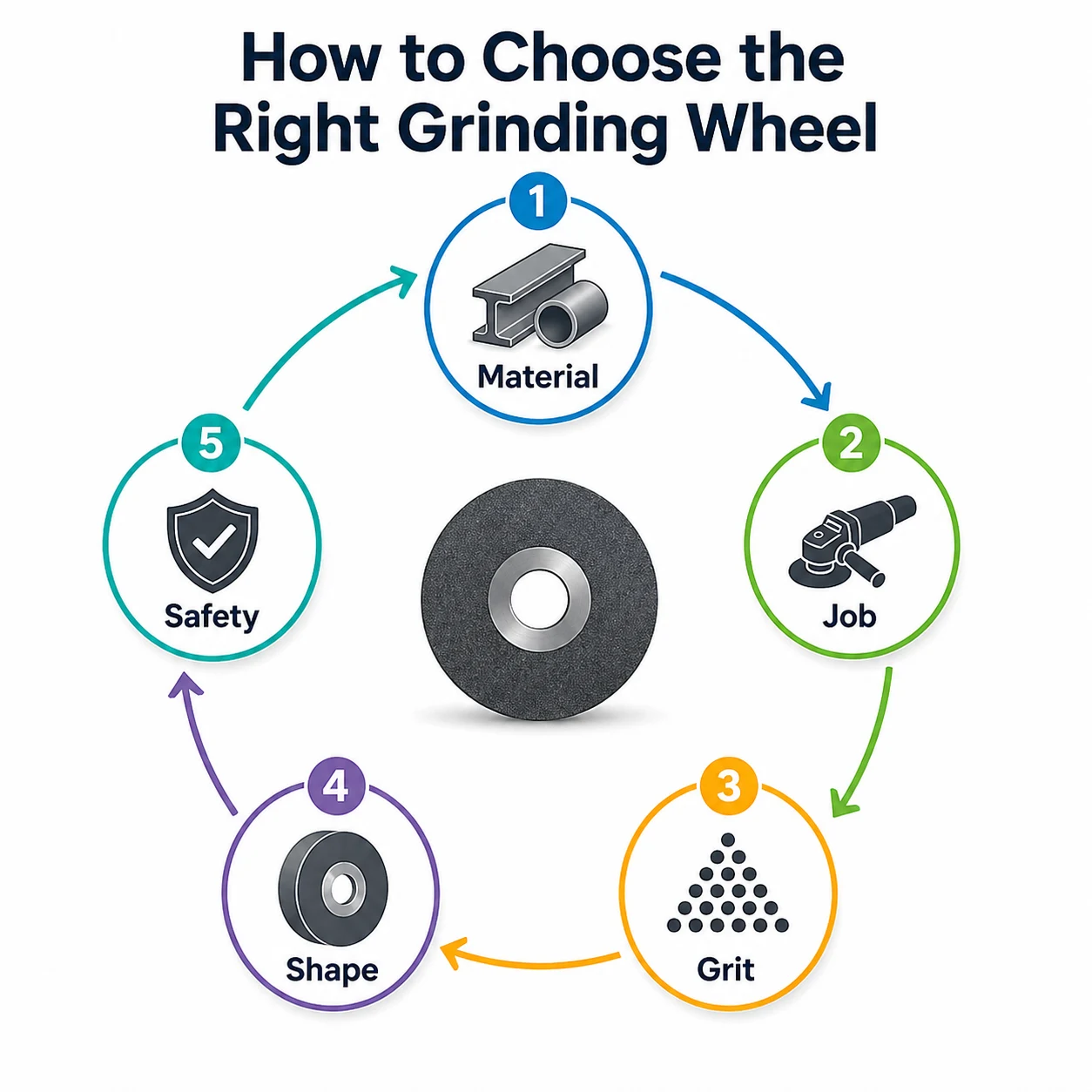
As the very first step, you need to define your material (e.g., CBN for metal & Diamond for stone or concrete). Then, choose the right type based on your job (e.g., thin cut-off wheel for cutting and thick stronger wheel for grinding). Next, you choose the correct grit size (coarse for fast material removal and fine for smooth finish). Finally, you choose the right shape (e.g., Cylinder or cup wheel). Don’t forget safety issues! Pay attention to the compatibility of your wheel and the machine speed as well.
Conclusion
Although grinding wheels seem like a simple tool, they exist in various types based on their material, shape, bond type, structure, grit size, and application. When you know the basics, you can have the right choice to improve your work quality and make the process faster, safer, and more efficient.

Scott
4 May 2026