- 11min
- 240
- 0
Contents
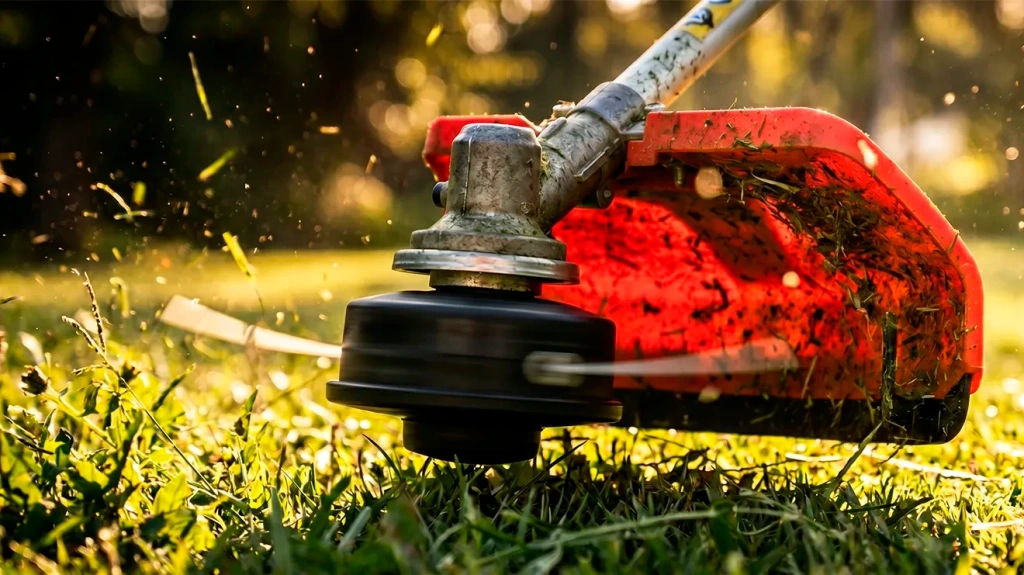
Cordless string trimmers have become a popular choice among homeowners, gardeners and tool enthusiasts these days. With so many models available, one question comes up again and again: Which one is the right one to buy?
Then, other questions quickly follow. Which trimmer has enough runtime? What cutting width do you need? How much weight is comfortable? Does the line feed system really matter?
With so many factors to consider, this guide breaks down the most important features to look at before buying a cordless string trimmer. By understanding how runtime, cutting width, weight, line feed, motor type, and shaft design affect performance, you can choose a tool that matches your needs, saves time, and makes yard maintenance easier.
What Is a Cordless String Trimmer?
A cordless string trimmer, also called a battery string trimmer, cordless weed trimmer, or cordless grass trimmer, is a battery-powered outdoor tool used to cut grass and weeds in areas that a lawn mower cannot easily reach.
It is commonly used for:
- Trimming grass along walls and fences
- Cutting weeds around trees and garden beds
- Cleaning lawn edges near sidewalks and driveways
- Maintaining small to medium gardens
- Supporting regular landscaping and property maintenance work
When you’re trimming in a risky spot, along a hard-to-reach edge, or in an area where precision matters, a string trimmer can become your best friend. Once you use it, you’ll quickly see how helpful this tool is.
Because it runs on a rechargeable battery, a battery-powered string trimmer is usually easier to start, easier to store, and more convenient for regular lawn care than many gas-powered alternatives. That’s why it’s popular among homeowners, gardeners, landscapers and lawn-care professionals.
Cordless vs Gas vs Corded String Trimmers
Cordless, gas, and corded string trimmers all have their own advantages, so there is no single option that works best for everyone. The right choice depends on where you plan to use the tool, how much power you need, and how much freedom of movement matters to you. But let’s take a look at their main advantage and main limitation so that you can make a better choice in this case.
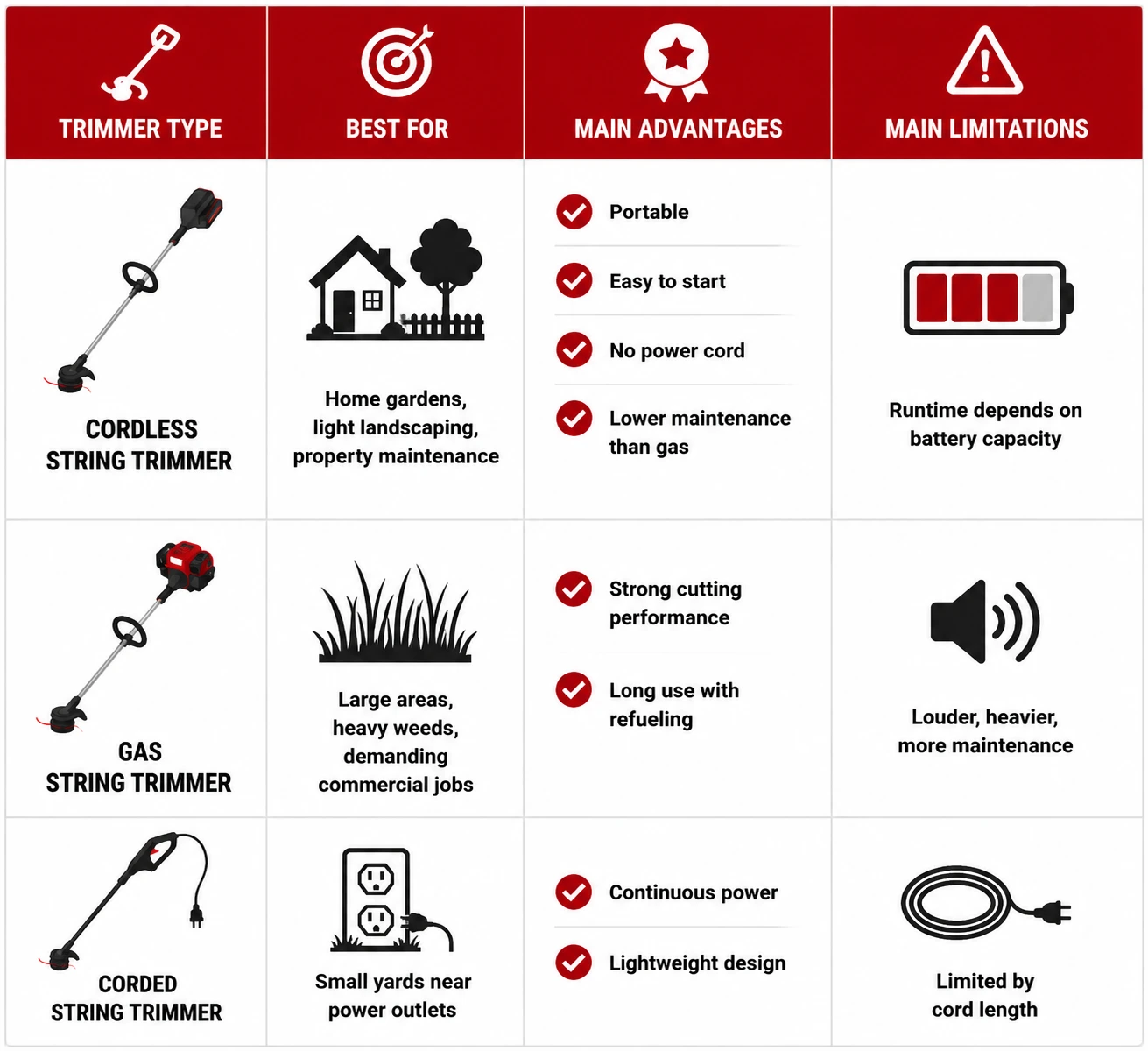
For many users, a cordless weed trimmer offers the best balance between mobility, ease of use, and practical cutting performance.
Key Features to Check Before Buying
Take a moment to write down the key factors and features that affect real-world use. The main factors that will help you the most are runtime, cutting width, weight, line feed system, motor type, and comfort. Let’s go through each of them separately to understand which ones you should pay the most attention to.
Battery Runtime
Cordless trimmer runtime is one of the most important buying factors and should be a priority when you want to buy one. Runtime shows how long the tool can operate on a single battery charge, so step back for a moment and think: do you need a full hour with your trimmer, or is 15 minutes enough? Then consider other factors.
For a small garden, a basic cordless string trimmer may be enough. For a medium yard, users should consider a higher-capacity battery or a spare battery. For thicker weeds or longer work sessions, runtime becomes even more important.
For distributors and dealers, runtime is also important because it affects customer satisfaction. A trimmer that matches the customer’s yard size is easier to sell and less likely to cause complaints.
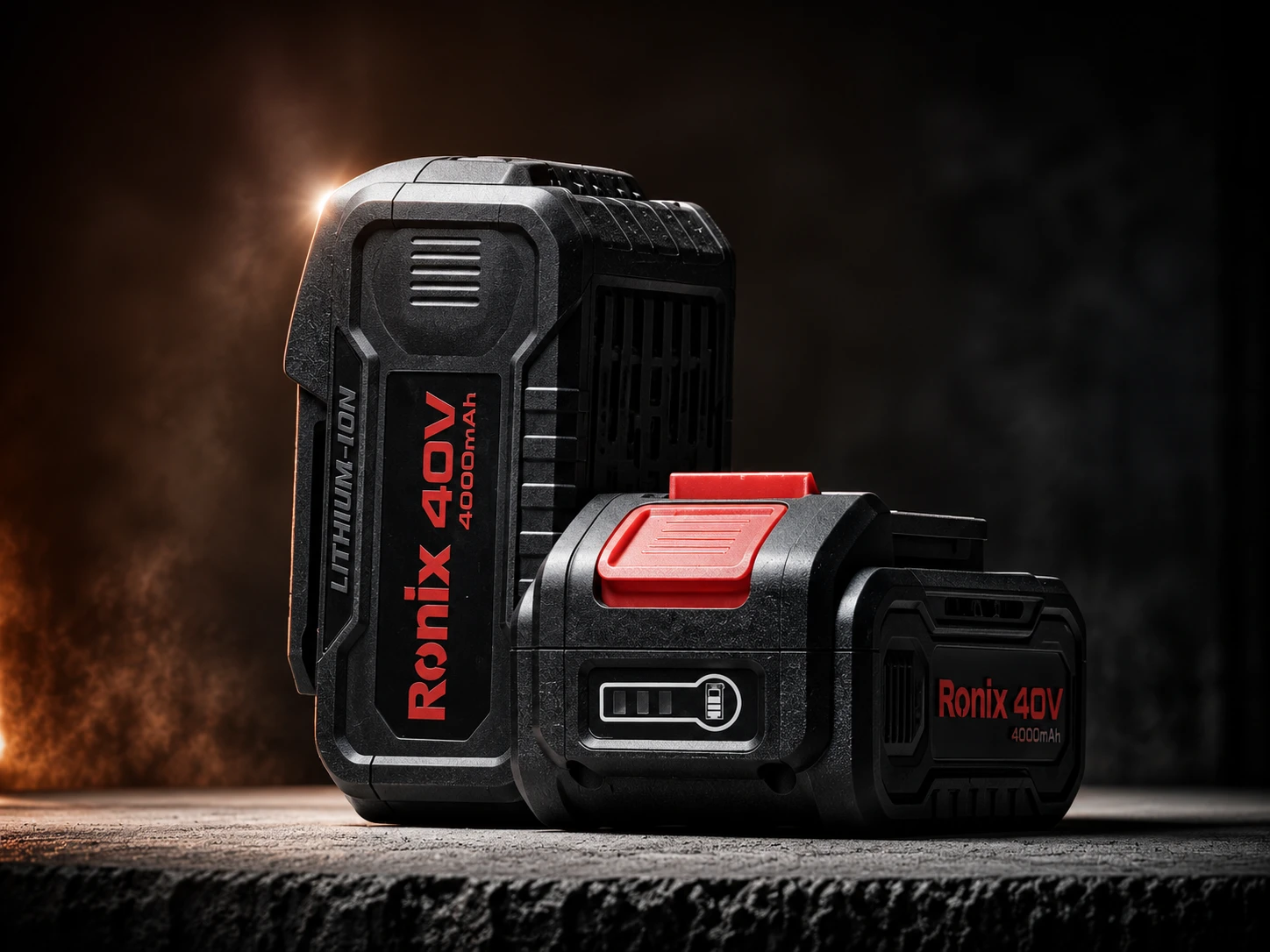
Battery runtime depends on several factors like:
- Battery capacity
- Grass or weed thickness
- Cutting speed
- Motor efficiency
- Line diameter
- How continuously the tool is used
For thicker weeds or longer work sessions, battery capacity and charging time become more important.
Voltage, Ah, and Wh
Battery specifications can sometimes be confusing, especially when comparing different cordless string trimmers. Three common specifications are:
Voltage (V)
Voltage shows the battery platform used by the tool. A higher voltage does not automatically mean longer runtime.
Amp-hours (Ah)
Amp-hours show battery capacity. On the same battery platform, a higher Ah battery usually provides more available capacity, although it may also add more weight.
Watt-hours (Wh)
Watt-hours can help compare the total battery energy. It can be calculated using:
Voltage × Amp-hours = Watt-hours
For example, a 20V 4Ah battery has about 80Wh of energy. However, Wh does not tell users exactly how long the trimmer will run because actual runtime still depends on the tool and working conditions. For this reason, buyers should avoid comparing cordless trimmers only by voltage.
Quick tip: Avoid treating “30 minutes” or “60 minutes” as universal ratings unless the test conditions are stated. A trimmer used continuously in dense growth can drain a battery much faster than the same tool used intermittently on light grass.
Cutting Width
A string trimmer doesn’t cut in a straight line like a lawn mower. Instead, a nylon line spins in a circle at very high speed. The cutting width is the full diameter of that spinning circle. A wider cutting width helps you cover more area faster, while a smaller cutting width can give better control in tight spaces. So, think about where you’ll use the trimmer most before choosing.
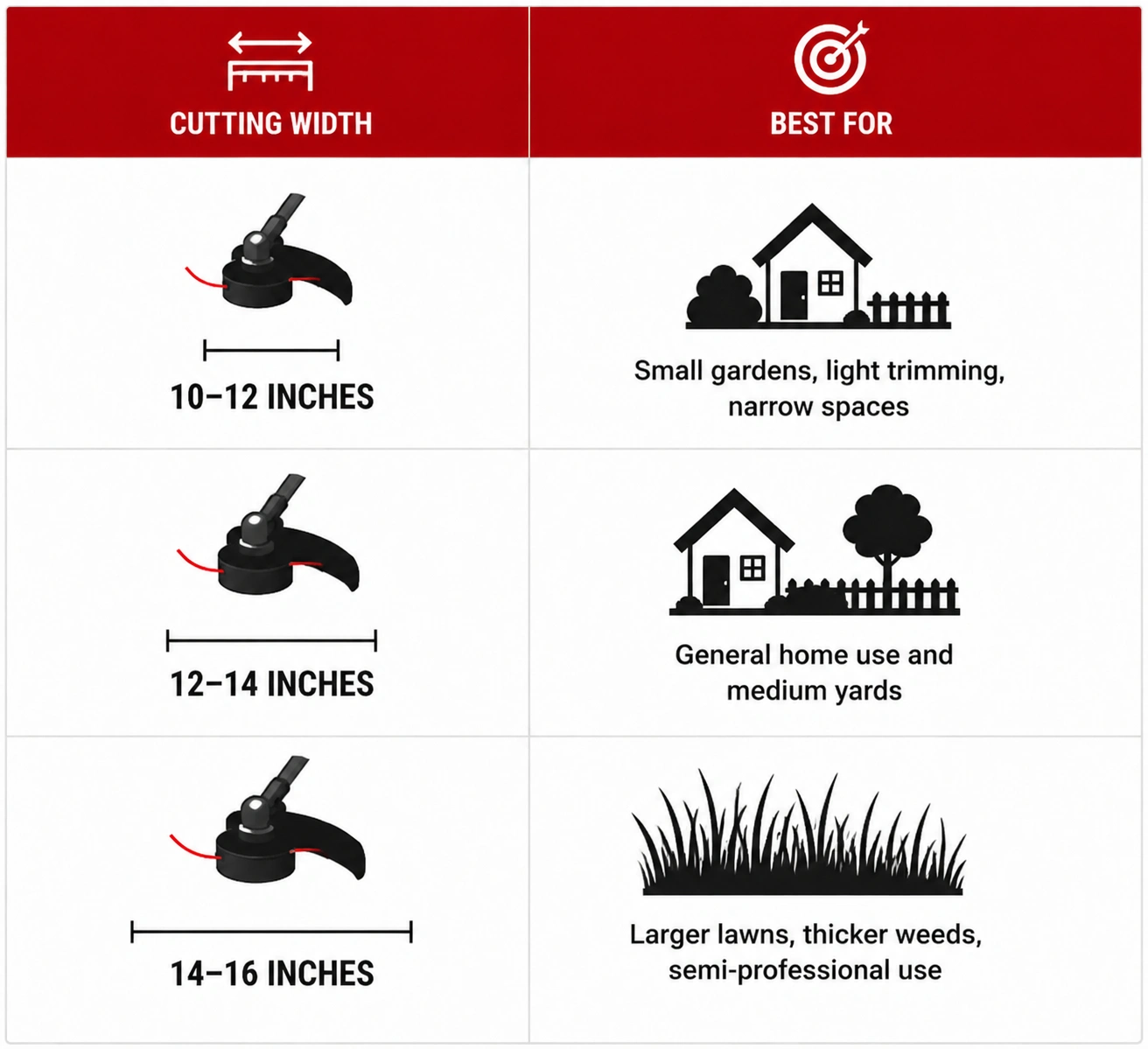
For most homeowners, a 12–14 inch cutting width is a practical balance between control and efficiency. For landscapers and frequent users, a wider cutting path may save time.
Quick tip: Choose a wider cutting width for open areas and a smaller one when you need more control around trees, fences, and garden beds.
Weight and Ergonomics
Planning to use your cordless string trimmer for several hours a day? Then weight and ergonomics should be high on your priority list.
A lightweight battery string trimmer is easier to control and more comfortable to use for longer periods, especially when working around fences, trees, garden borders, and other tight areas. Since you often need to hold the tool at an angle for several minutes, even a small difference in weight can have a big effect on comfort.
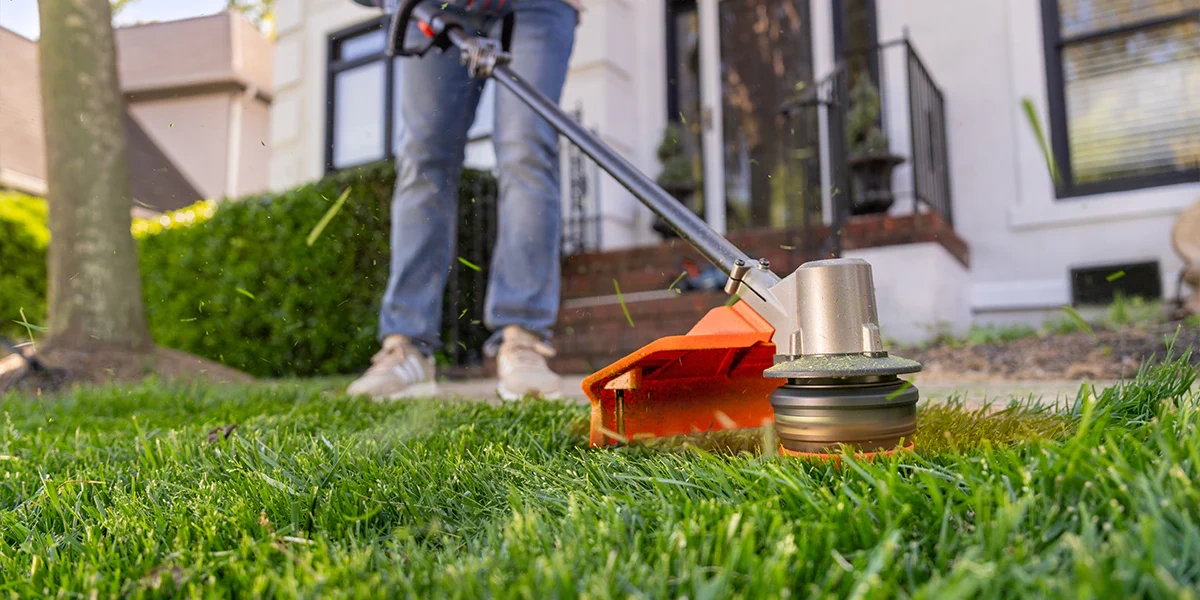
Here are some important ergonomic features to look for:
- Adjustable auxiliary handle
- Telescopic shaft
- Balanced battery position
- Comfortable grip
- Easy-to-use trigger
- Low-vibration design
- Shoulder strap compatibility, if available
A battery string trimmer that feels too heavy or poorly balanced can quickly cause hand, arm, and shoulder fatigue. Nobody wants that, right?
For this reason, weight and comfort should never be overlooked, especially for older users, professional landscapers, and maintenance teams who use the tool regularly.
Quick tip: Check whether the listed weight includes the battery. The tool may feel much heavier once the battery is attached.
Line Feed System
Nobody wants to stop trimming every few minutes just to pull out more cutting line! That’s where the line feed system comes in. It controls how fresh line is released while the string trimmer is working, making the job faster, easier, and much less frustrating.
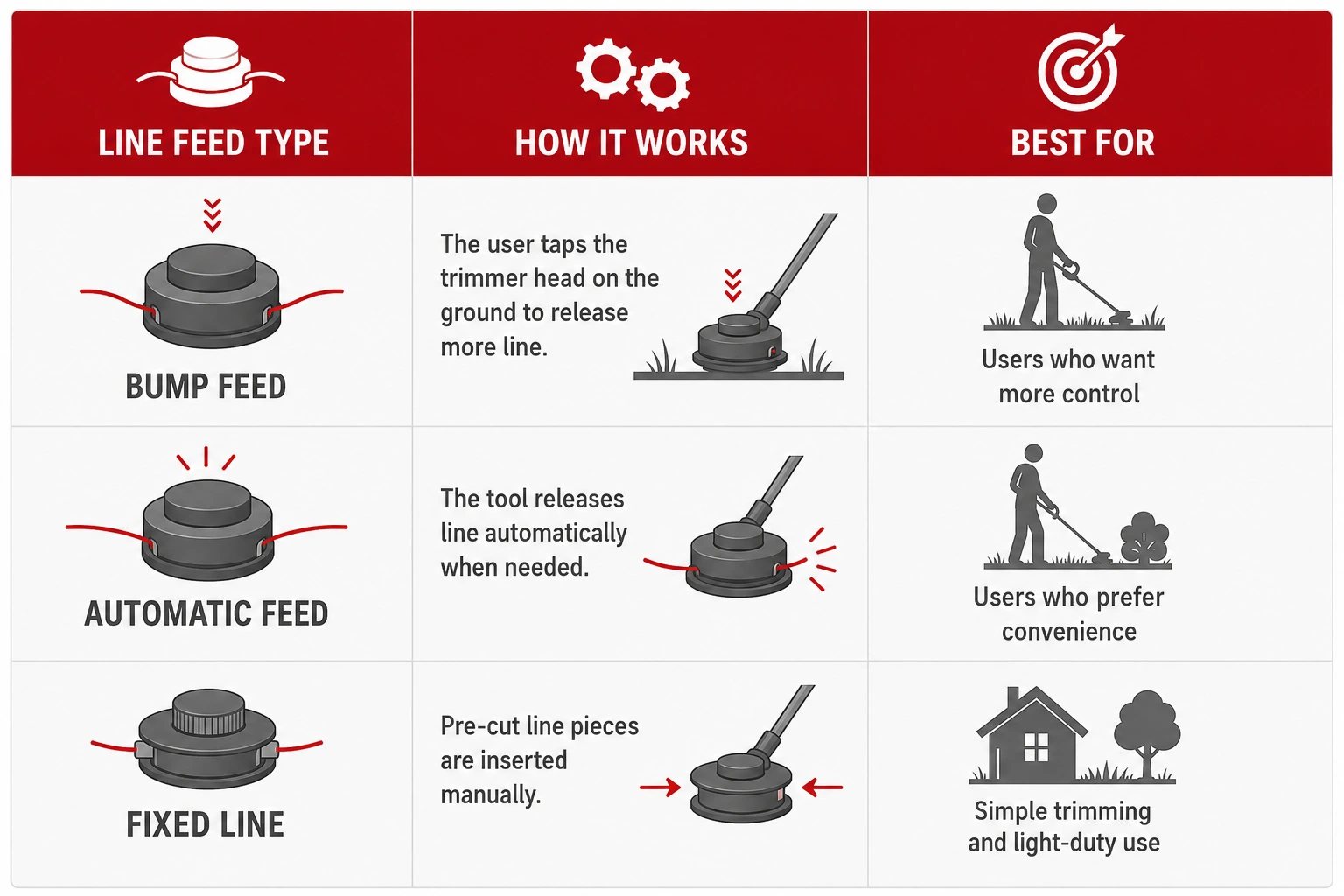
A reliable feed system means fewer interruptions and less maintenance. Distributors and dealers should also look for a system that customers can easily understand, operate, and maintain without any trouble.
Quick tip: Choose automatic feed for convenience and bump feed if you prefer more control over how much line is released.
Motor Type
Cordless string trimmers usually come with either a brushed or brushless motor. But what is the difference?
A brushless string trimmer generally offers better efficiency, requires less maintenance, and uses battery power more effectively than a brushed model. It can also provide smoother performance and a longer motor life.
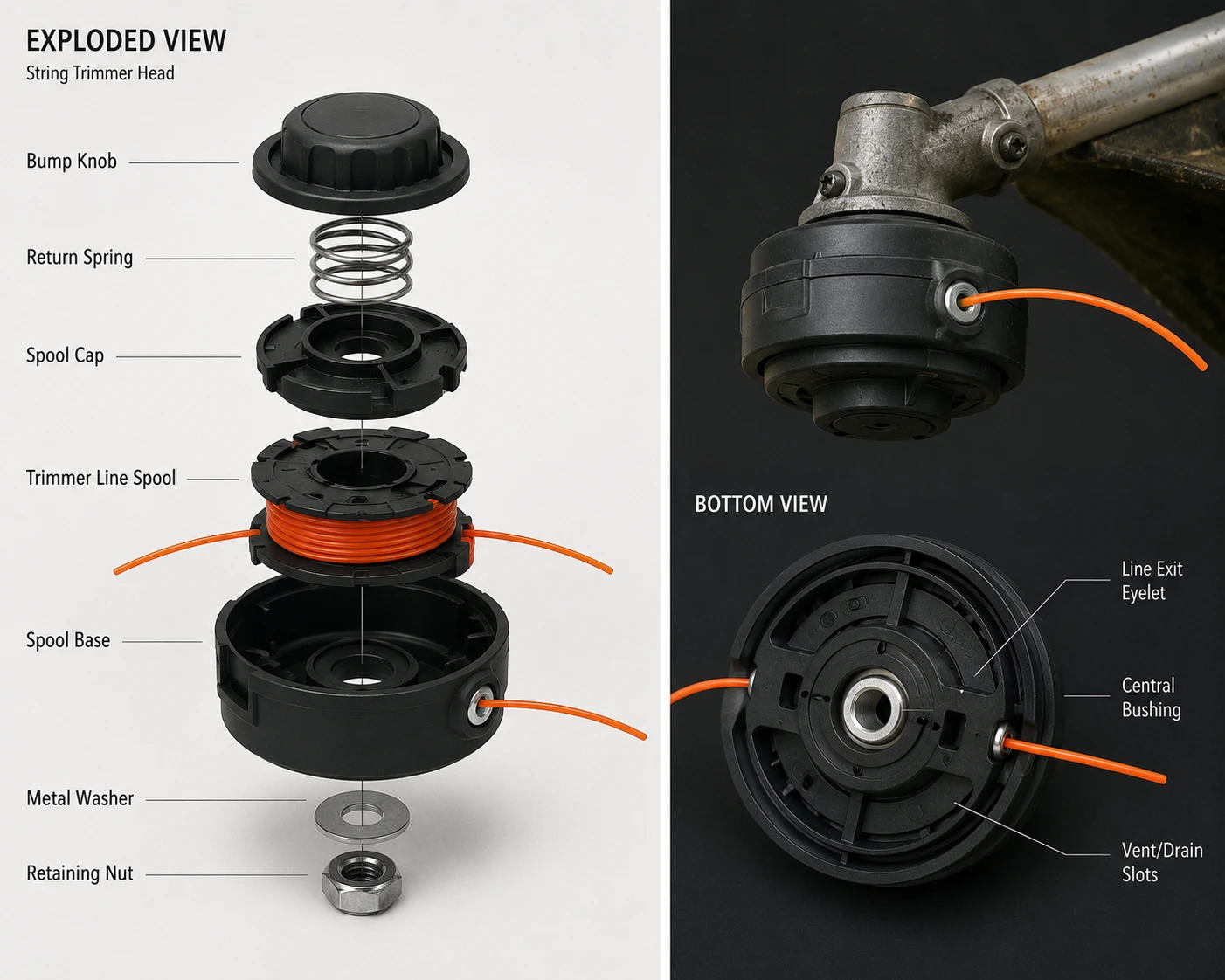
However, a brushless motor does not automatically make a trimmer the best option. Buyers should also compare important features such as battery capacity, cutting width, weight, line compatibility, and overall build quality before making a decision.
After all, the motor is important, but it is only one part of the whole tool.
Quick tip: Don’t choose a trimmer just because it has a brushless motor. Compare the battery, weight, cutting width, and line system too.
Shaft Design
The shaft design may look like a small detail, but it can make a big difference in reach, control, and comfort.
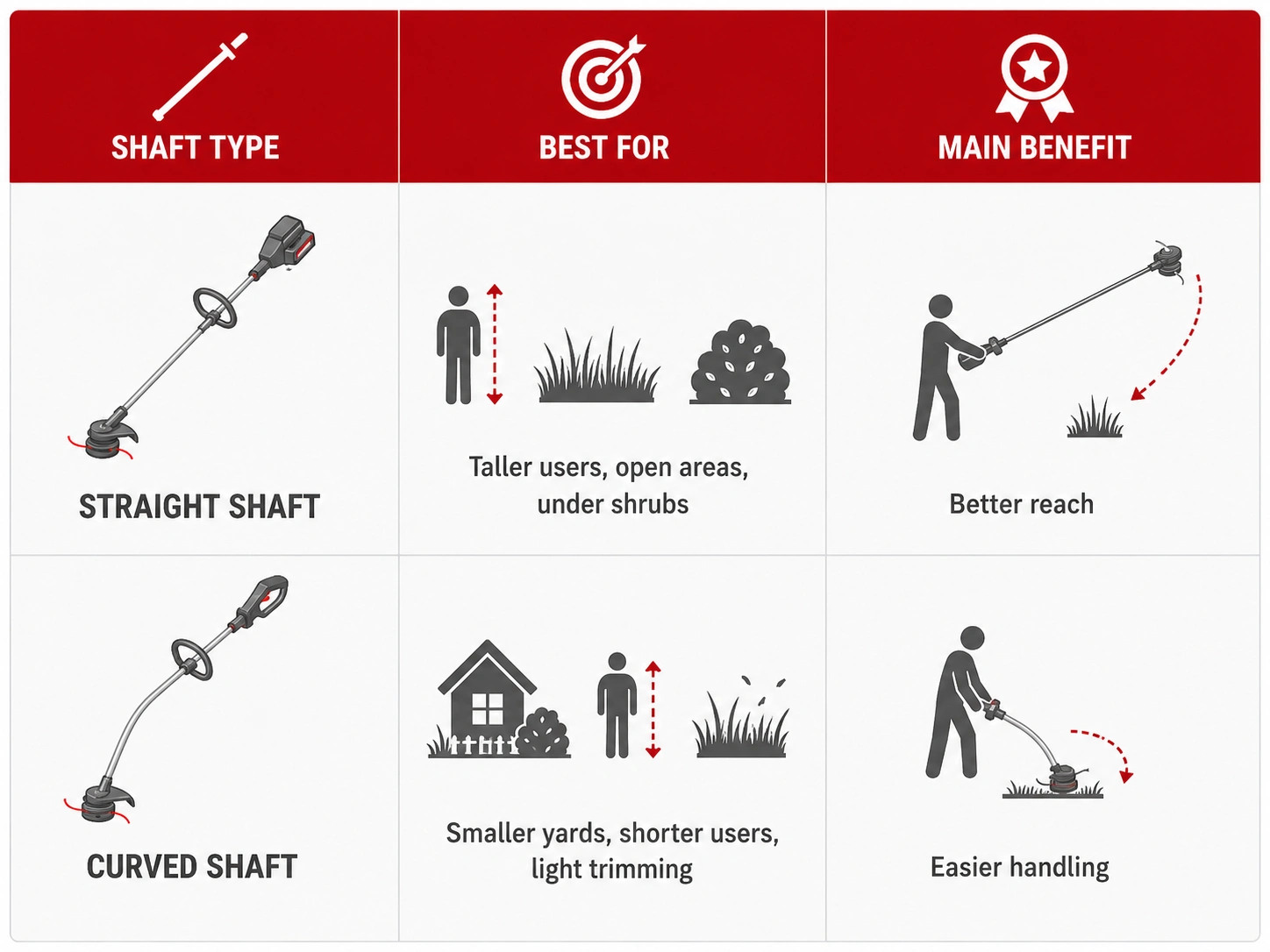
Some cordless grass trimmers come with an adjustable shaft, allowing users to change the tool’s length based on their height and working position. This feature can make trimming more comfortable and reduce the need to bend or stretch while working.
After all, a trimmer that fits the user properly is much easier to control, isn’t it?
Which Cordless String Trimmer Is Right for You?
So, which battery powered string trimmer should you choose? The answer depends on your yard size, how often you trim, and the conditions you usually work in.
A small garden may only need a lightweight model with a shorter runtime, while larger yards often require a wider cutting path, a stronger battery, and a more reliable line feed system.
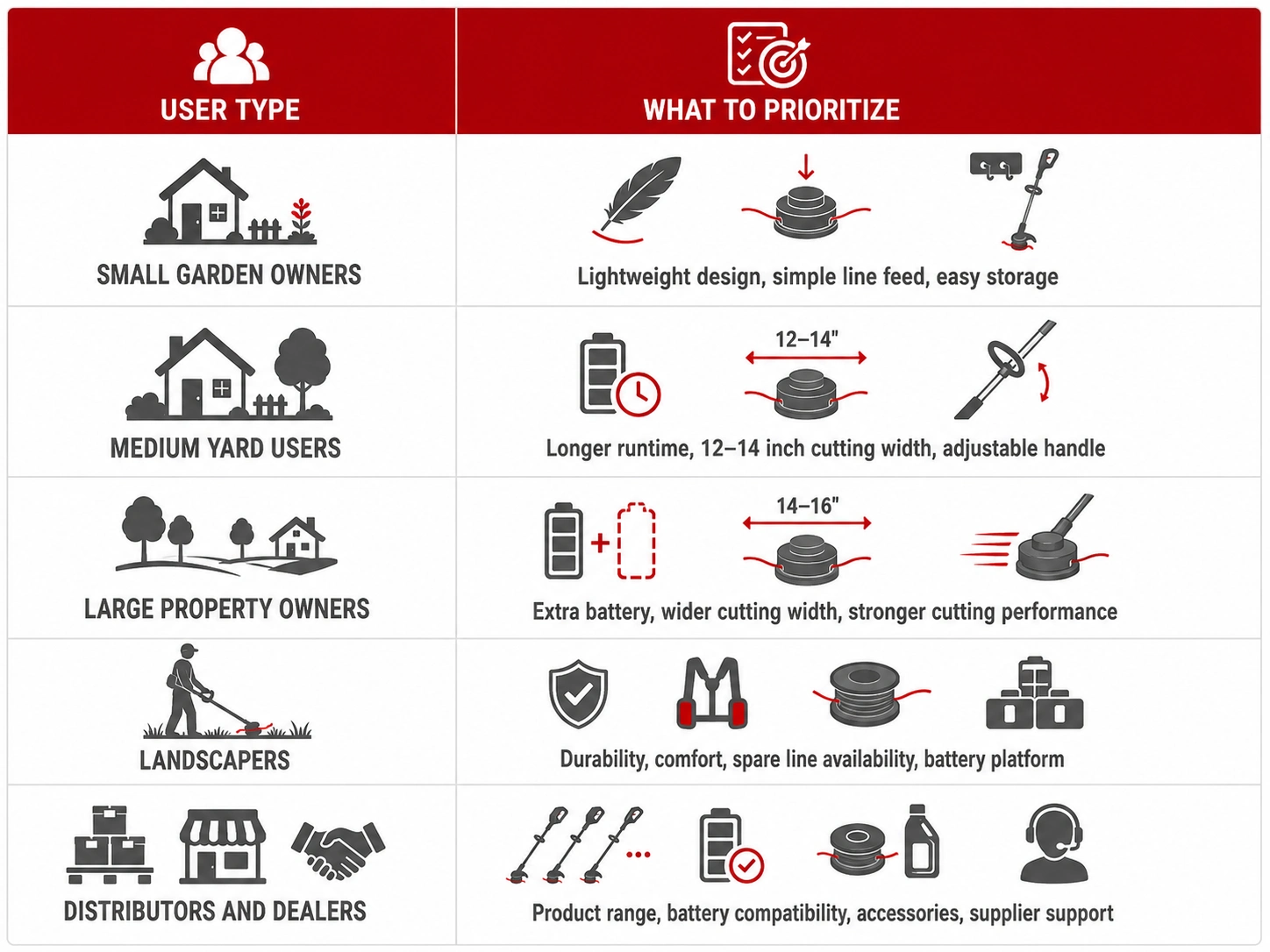
That is why a good buying guide should never focus on just one feature. Runtime, cutting width, weight, comfort, and line feed all work together to shape the overall user experience.
The right choice is not simply the trimmer with the biggest battery or the most powerful motor. It is the one that matches the user’s needs and makes trimming easier, faster, and more comfortable.
What Distributors and Dealers Should Consider
For distributors, wholesalers, and tool dealers, choosing a cordless string trimmer is about much more than selecting a single product. You also need to think about product variety, repeat sales, customer support, and reliable long-term supply.
A good supplier should offer more than just the trimmer itself. B2B buyers should look for a practical range of cordless garden tools, compatible batteries and chargers, replacement spools, clear product information, retail-friendly packaging, and dependable after-sales support.
Why does this matter? Because your customers will have different needs. Some may be homeowners looking for a simple trimmer for a small garden, while others may be landscapers or maintenance professionals who need longer runtime, better durability, and easier access to spare parts.For wholesalers and dealers, the best product line is usually one that is easy to understand, easy to sell, and supported by readily available accessories and replacement parts.
Quick tip: Look beyond the trimmer itself. Batteries, chargers, replacement spools, spare parts, and after-sales support can be just as important for repeat sales.
Cordless String Trimmer Buying Checklist
Still not sure which battery-powered string trimmer is the right choice? Before making a decision, go through this quick checklist:
- What size yard or work area will the trimmer be used for?
- Is the battery runtime long enough for the job?
- Does the cutting width match the user’s needs?
- Is the tool lightweight and comfortable to handle?
- What type of line feed system does it use?
- Is the shaft adjustable?
- Does it have a brushed or brushless motor?
- Are replacement spools and cutting lines easy to find?
- Is the battery compatible with other cordless tools?
- Does the supplier provide reliable product and after-sales support?
Checking these points can make it much easier to choose a cordless string trimmer that suits both the user’s needs and the dealer’s long-term business requirements.
Explore Ronix Cordless String Trimmers
Choosing the right cordless string trimmer starts with understanding the features that matter most, including battery runtime, cutting width, weight, motor type, shaft design, and line feed system.
For homeowners and gardeners, the right combination of these features can make trimming easier, faster, and more comfortable. For dealers, wholesalers, and distributors, they can also make it easier to offer suitable options for different customers and applications.
Explore the Ronix Wholesale Grass Cutters range to compare cordless trimming options and find the right tool for your garden, workload, or market.

FAQ
What is the best cordless string trimmer for home use?
The best cordless string trimmer for home use is usually lightweight, easy to control, and powerful enough for regular grass and weed trimming. For most home gardens, a model with practical runtime, comfortable handling, and a 12–14 inch cutting width is a good choice.
How long does a cordless string trimmer battery last?
Cordless trimmer runtime depends on battery capacity, grass thickness, cutting speed, motor efficiency, and how continuously the tool is used. Trimming light grass uses less battery power than cutting thick weeds.
What cutting width should I choose for a cordless weed trimmer?
For small gardens, 10–12 inches may be enough. For general home use, 12–14 inches is often practical. For larger areas or thicker grass, a wider cutting width can help finish the job faster.
Is a brushless string trimmer better?
A brushless string trimmer usually offers better efficiency and requires less motor maintenance than a brushed model. However, buyers should also compare battery size, tool weight, cutting width, and line feed system.
What should distributors look for in a cordless string trimmer supplier?
Distributors should look for product range, battery and charger availability, spare parts, replacement spools, packaging quality, technical information, after-sales support, and the supplier’s ability to support repeat orders.

Giselle
8 August 2026